Scammers are increasingly using artificial intelligence to run complex pharmaceutical fraud schemes that put public health at risk. According to research by the cybersecurity firm Check Point, cybercriminals are exploiting AI tools to create convincing impersonations of doctors and clinics while promoting unapproved or counterfeit medications online.
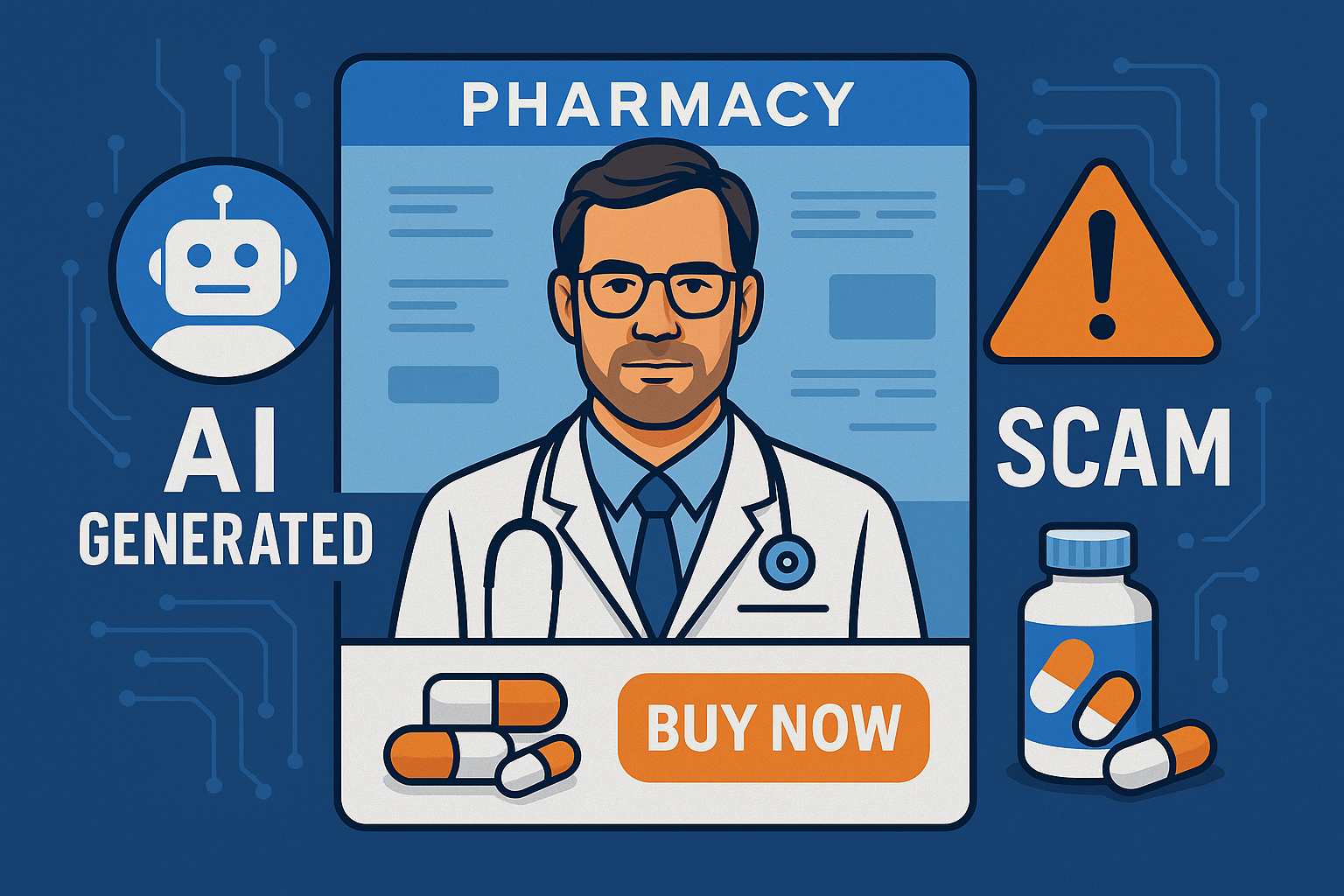
The scams usually begin with advertisements that appear to come from trusted medical professionals. Using advanced image and video generation, scammers create realistic photos and videos of people who look and sound like real physicians. These materials are then shared across social media and other platforms, leading users to fake medical websites that mimic legitimate healthcare providers.
Check Point found that this activity started to grow rapidly in early 2025. The campaigns often advertise products that claim to deliver quick or dramatic health results. One example involved a product called “PEAKA GLP-1 Slimming Pearls,” which falsely promised effects similar to prescription drugs used for diabetes or weight loss. The medication was unregulated and unverified.
Victims who buy from these websites face two major risks. Some never receive the products they pay for, while others receive pills or liquids with unknown ingredients that may cause allergic reactions, worsen medical conditions, or delay real treatment. Experts warn that these schemes go beyond financial crime and can directly endanger lives.
Check Point researchers estimate that more than five hundred fake medical websites are created every day. Many use stolen logos, fabricated testimonials, and carefully designed branding to look credible. They also employ manipulative marketing tactics such as countdown timers, limited stock alerts, and large discounts to pressure users into quick purchases without verifying legitimacy.
A typical scam follows a consistent pattern. It starts with a paid advertisement on social media that appears to be endorsed by a well-known doctor or clinic. When users click the ad, they are redirected to a fake website that looks almost identical to a real healthcare provider’s site. After payment, the victims may receive nothing or receive counterfeit products that can be harmful or even toxic.
The introduction of artificial intelligence into these scams has made them much more convincing. Criminals use AI-enabled content generation to produce custom images, videos, and testimonials that match the interests of targeted users. Many of the campaigns focus on sensitive topics such as weight loss or chronic illnesses, exploiting the vulnerability of people who are desperate for affordable or fast treatment options.
This new trend has created significant challenges for both healthcare regulators and cybersecurity professionals. The line between online fraud and medical malpractice is becoming increasingly blurred. The scams do not simply steal money; they create direct health risks by encouraging people to take unapproved substances or delay legitimate medical care.
Medical experts and patient safety advocates stress that consumers should be cautious whenever a health product is advertised online. Warning signs include a lack of verified contact information, prices that seem unusually low, and the absence of a requirement for a valid prescription. Websites that request payment through cryptocurrency or offshore financial services should be treated as highly suspicious.
Healthcare organisations and regulators are now working to identify and dismantle the networks that support these fraudulent operations. This includes tracking linked domains, hosting services, and payment processors. Many fake pharmaceutical sites share the same underlying infrastructure, which allows investigators to connect them and take coordinated action.
Cybersecurity researchers recommend that companies in the healthcare sector strengthen monitoring systems to detect brand impersonation and fraudulent advertising. Collaboration between social media platforms, financial institutions, and government agencies is also essential to limit the reach of these campaigns.
AI-enabled pharmaceutical scams show how quickly digital fraud is evolving. By using artificial intelligence to simulate medical authority and credibility, scammers can manipulate public trust and cause real-world harm. The combination of financial fraud and health risk makes this a uniquely dangerous category of cybercrime.
Consumers, healthcare providers, and regulators must remain alert and act quickly to stop these schemes before they spread further. Protecting patients from misinformation and counterfeit medication will require stronger verification systems and closer cooperation across both the technology and healthcare industries.