Swiss financial institution Habib Bank AG Zurich is investigating reports of a major cyberattack after a ransomware group claimed responsibility for stealing around 2.5 terabytes of internal data. The attackers, known as Qilin, said they obtained nearly two million files from the bank, including sensitive customer information and internal documents.
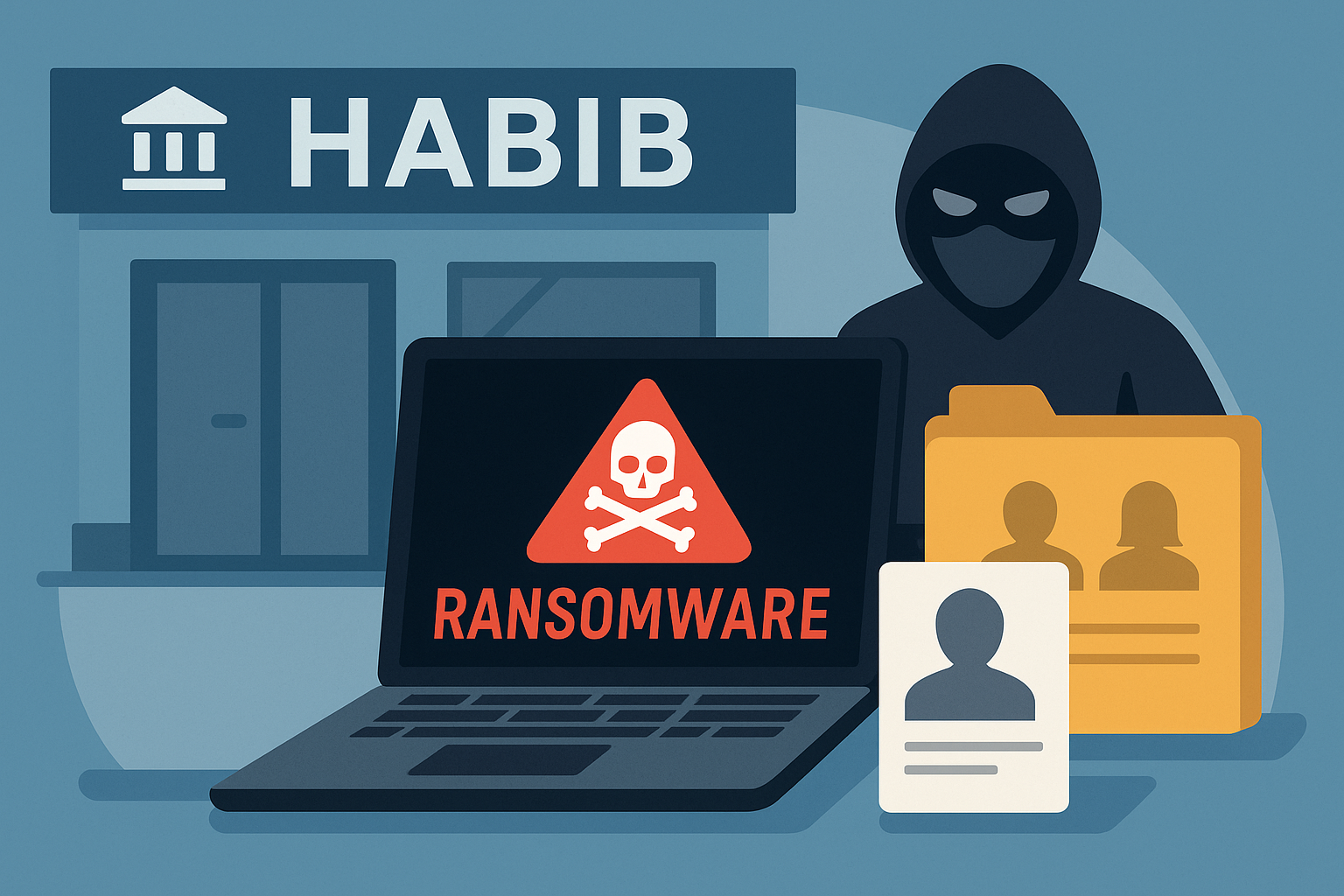
The group posted the claim on its leak site on November 5 and published screenshots that appear to show passport scans, bank account balances, transaction records, and sections of the bank’s internal software code. Cybersecurity researchers who reviewed the leaked material said it appears consistent with data taken from a financial institution, although the breach has not yet been independently verified.
Habib Bank, which was founded in 1967, operates in several regions, including Switzerland, the United Kingdom, the United Arab Emirates, Hong Kong, and Kenya. The company employs close to 8,000 people across nearly 600 branches worldwide and reported about $750 million in revenue last year. The bank has not yet commented publicly on the incident or confirmed whether its systems were compromised.
If confirmed, the breach would be one of the most serious attacks on a European financial institution this year. The scale of data allegedly taken suggests the attackers had deep access to operational systems. Cybersecurity experts say the inclusion of internal source code could allow further attacks or expose weaknesses in the bank’s digital infrastructure.
The Qilin group, which has been linked to several large extortion campaigns, typically uses a double extortion model. It encrypts victims’ systems and steals large volumes of data, then threatens to release the stolen information unless a ransom is paid. Public disclosure on the group’s leak site is often used to increase pressure and reputational damage for the victim organisation.
Financial institutions remain frequent targets for such operations because of the volume of sensitive information they hold and the potential financial leverage attackers can gain. Banks are also interconnected across multiple jurisdictions, which complicates response and regulatory oversight. Experts warn that ransomware groups often exploit outdated systems, third-party software dependencies, and complex legacy infrastructure that is difficult to patch quickly.
For Habib Bank customers, the potential exposure of personal identifiers and transaction records raises the risk of fraud and identity theft. If the leaked data is authentic, it could also enable phishing or social engineering attempts targeting account holders and staff. Authorities in Switzerland and the UK are expected to review whether the bank must notify regulators or affected clients under data-protection law.
Investigations are now focused on confirming the extent of the breach and determining how attackers gained access. Forensic teams are likely examining whether the compromise originated from internal systems, vendor access, or employee credentials. Given the claim that internal source code was taken, the bank may need to audit its software development tools and monitor for attempts to exploit newly exposed code.
Ransomware attacks on financial institutions are becoming more structured and professional. Analysts say threat actors are shifting from opportunistic phishing to multi-stage campaigns that combine data theft with financial extortion and market manipulation. Criminal groups now operate with corporate-style hierarchies and often rely on partners for data laundering, negotiation, and infrastructure maintenance.
This case also reflects the ongoing challenge of balancing security and transparency. Banks rarely confirm cyber incidents immediately because of the potential impact on market confidence. However, public claims on leak sites can rapidly force a response. If the Qilin group releases more data, regulators and law enforcement agencies may intervene to coordinate a cross-border investigation.
For the wider financial sector, the incident is another reminder that operational resilience depends on more than compliance audits or standard cybersecurity certifications. Institutions are being urged to adopt real-time monitoring, improve detection of abnormal file transfers, and strengthen internal access controls. Regular security testing, staff awareness programs, and external audits are also considered essential.
The Habib Bank case demonstrates that even long-established financial institutions are vulnerable to modern ransomware attacks. If the claims prove accurate, the exposure of both customer data and source code could have long-term consequences for the bank and its clients. As investigations continue, the incident adds to growing evidence that ransomware remains one of the most disruptive and costly threats to the global banking industry.
Incoming search terms:
Site Disclaimer
2-remove-virus.com is not sponsored, owned, affiliated, or linked to malware developers or distributors that are referenced in this article. The article does not promote or endorse any type of malware. We aim at providing useful information that will help computer users to detect and eliminate the unwanted malicious programs from their computers. This can be done manually by following the instructions presented in the article or automatically by implementing the suggested anti-malware tools.
The article is only meant to be used for educational purposes. If you follow the instructions given in the article, you agree to be contracted by the disclaimer. We do not guarantee that the artcile will present you with a solution that removes the malign threats completely. Malware changes constantly, which is why, in some cases, it may be difficult to clean the computer fully by using only the manual removal instructions.