Italy has adopted new regulations requiring websites that provide adult content to verify the age of users before granting access. The rules, approved by the communications authority AGCOM under Resolution No. 96/25/CONS on 8 April 2025, implement Article 13-bis of the so-called “Caivano Decree” (Law No. 159 of 13 November 2023) and apply to video-sharing platforms and pornographic websites.
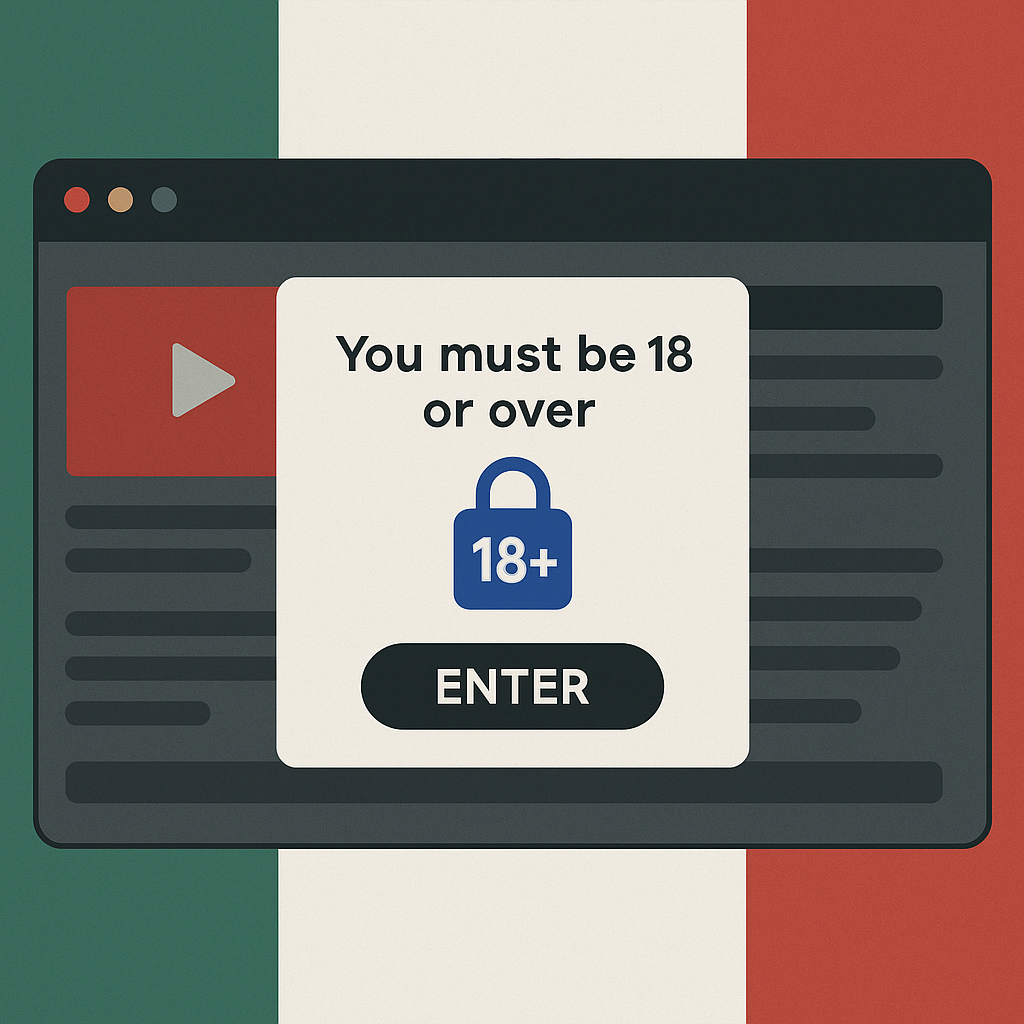
Under the new requirements, operators of adult content services must use certified independent third parties to confirm that each user is at least 18 years old. The verification process must include two steps: identification of the individual and authentication of their age proof for each session access. The rules require compliance each time a user visits an adult site or platform. Failure to implement such systems may result in access being blocked until compliance is achieved.
AGCOM’s regulation aims to strike a balance between protecting minors and preserving user privacy. The rules mandate that age assurance systems uphold data-protection principles, including minimisation of data, avoidance of profiling, and limiting storage of user information. Systems relying on ID documents, facial recognition, or credit-card checks may be restricted or subject to higher scrutiny. AGCOM emphasised that the obligation also applies when users switch devices or return after inactivity.
The legal basis for these measures lies in the earlier Decree-law n.123 of 15 September 2023, which entered into force on 15 November 2023 and prohibited minors from accessing pornographic content online. That decree required platforms and online services to ensure age verification for adult content, and AGCOM’s regulation sets out the technical and procedural standards to comply.
Industry groups and privacy watchdogs have raised concerns about enforcement and implementation timelines. Officials at Italy’s data protection authority described the regime as difficult to enforce and potentially burdensome for platforms, particularly smaller services without in-house verification systems. Some have warned that the cost and complexity of session-based verification might drive users toward unregulated or international services.
From a practical standpoint, adult content providers must now ensure that each time a user accesses their service, they obtain proof of age either via a certified third party or through a digital identity wallet. The user must then present evidence of verification at the point of access. Operators must respect the 45-minute inactivity rule and end verification validity when the session ends, the browser is closed, or the device enters standby.
AGCOM signalled that compliance with the regulation will be monitored, and platforms that do not adhere may face access blocks under the regulatory authority’s powers. The consultation phase involved major stakeholders, consumer groups, and industry associations. The regulation was notified to the European Commission as a technical rule under Directive (EU) 2015/1535.
For users, the changes will mean stronger verification when accessing adult sites in Italy. Platforms will need to display and enforce age verification controls in a clear and user-friendly fashion. The system is intended to protect minors from exposure to content considered harmful to their dignity or development and to reduce the reliance on simple checkbox self-certification.
While implementation begins now, enforcement will depend on platforms integrating the certified verification systems into their access flows. This will require both technical adaptation and user education efforts to ensure that adults can access content legally without undue friction, while minors are effectively blocked. AGCOM noted that the regulatory framework is technologically neutral, allowing providers freedom in choosing the tools so long as they meet the standards of security, accuracy, and data protection.
The broader context includes ongoing European-wide efforts. Italy’s shift aligns with global movements toward stronger online age verification for adult material and other age-sensitive content categories, such as gambling or social media services. The new rules may influence how other jurisdictions design their frameworks and how platforms implement verification across markets.
Italy’s new age verification regime marks a significant step toward regulating user access to adult content online by requiring session-based proof of age and independent third-party verification. While the process poses implementation challenges for platforms and concerns around privacy remain, the regulatory direction is clear. Protecting minors and ensuring compliance with European standards will now shape how adult content services operate in Italy.