Cybersecurity researchers are warning that luxury fashion brands face a sharp rise in online impersonation ahead of the 2025 holiday shopping season. Criminal groups have registered more than 1,300 fake domains imitating major fashion, jewellery, and watch brands, setting up the potential for phishing campaigns and counterfeit sales during the busiest retail months of the year.
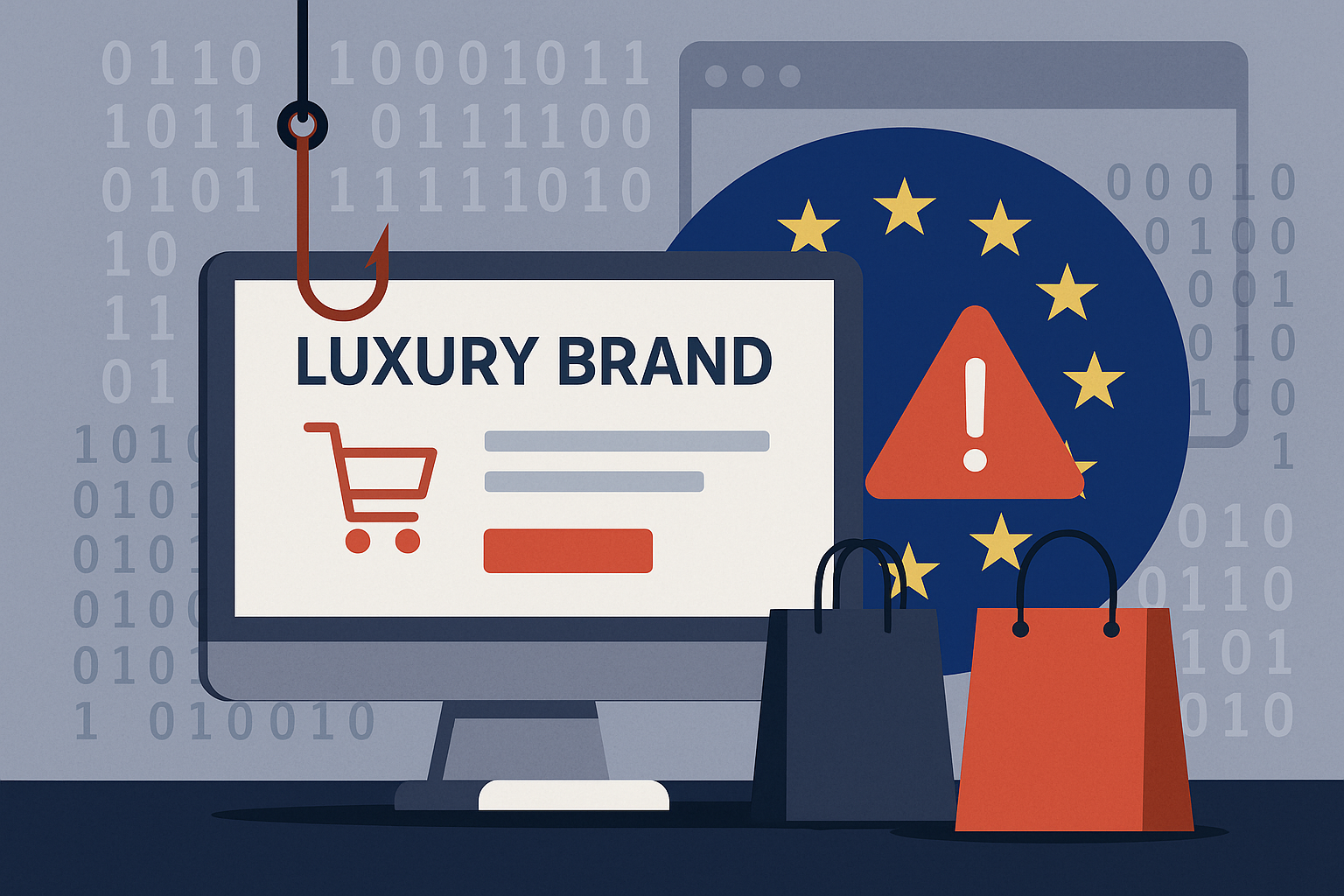
The findings come from BforeAI’s research division, PreCrime Labs. Between mid-August and late September 2025, analysts identified 1,330 new domain registrations, with 1,213 mimicking one of 23 luxury brands under review. The registrations clustered around key shopping dates, suggesting a coordinated effort timed to exploit the seasonal surge in online spending.
Many of the fraudulent domains contained words such as “outlet,” “store,” or “sale,” while others used small spelling changes or extra characters designed to resemble authentic brand websites. Variations on names like Gucci, Prada, Louis Vuitton, Chanel, and Rolex were among the most common. Several domains were designed to look like discount outlets, a tactic that frequently lures customers searching for luxury bargains.
PreCrime Labs reported that roughly two-thirds of all suspicious registrations appeared in late September, with the highest single-day spike recorded on 11 September. That timing coincides with preparations for major sales events, including Black Friday and Christmas. Many of the domains are inactive for now, which researchers say could indicate that operators are waiting to activate them when online traffic peaks later in the year.
Patterns across the dataset suggest links between different groups of domains. Some were registered through the same low-cost providers or used identical configuration details. Investigators even identified a recurring email address associated with multiple fraudulent “cheap outlet” sites, pointing to organised operators controlling several brands’ impersonations simultaneously.
The purpose of these domains varies. Some are likely intended for phishing pages that collect payment or login information, while others may promote counterfeit goods. Even inactive domains can be monetised later through resale or sudden activation during the shopping season. Because luxury items command high prices and rely on consumer trust, each impersonation carries both financial and reputational risk for the targeted brand.
Luxury brands with strong online sales channels appear to face the greatest exposure. Houses such as Louis Vuitton, Dior, and Gucci were targeted most often, while brands that still rely primarily on in-store retail, such as Van Cleef & Arpels and TAG Heuer, saw fewer than ten imitation domains each. Analysts say this pattern indicates that attackers are prioritising labels with the largest digital presence and global recognition.
The report warns that companies must act before these domains become active. Detecting and taking down fraudulent sites after launch can be difficult once phishing campaigns are underway. Researchers recommend that brands register predictable variations of their domain names, monitor for new registrations containing their trademarks, and coordinate with hosting providers and law-enforcement authorities to report malicious activity quickly.
Experts also emphasise that domain impersonation often serves as the first stage in broader scams. Fraudulent sites are typically used to host phishing pages or spoofed shops that replicate the design of genuine websites, complete with copied product photos and checkout pages. Victims who make purchases through these channels often discover too late that they have been defrauded, damaging confidence in the legitimate brand.
PreCrime Labs describes the surge in domain activity as part of a recurring seasonal pattern. Fraudsters typically prepare infrastructure in advance of peak shopping periods, then launch coordinated campaigns when consumer demand is highest. Once the holiday season begins, hundreds of inactive domains can go live within hours, creating a large attack surface for unsuspecting shoppers.
Early detection and brand protection remain essential for luxury retailers heading into 2025’s final quarter. With brand impersonation now a predictable component of online retail fraud, companies are encouraged to combine threat-intelligence monitoring with consumer education and rapid takedown processes.
Researchers caution that the scale of the 2025 domain surge suggests organised, transnational activity rather than isolated opportunists. Luxury brands that rely on digital platforms for growth will need to stay vigilant long after the holiday period ends, as fraudulent domains often resurface under new names once earlier ones are blocked.
The latest data underlines a growing challenge for high-value retailers in an era where digital presence equals vulnerability. As the holiday season approaches, the intersection of brand prestige, consumer trust, and online crime will remain one of the most sensitive areas in the global retail landscape.