Cybercriminals have claimed to be selling a database containing more than eight million records of Mexican debtors. According to reports, the data is being advertised on a hacking forum with an asking price for interested buyers.
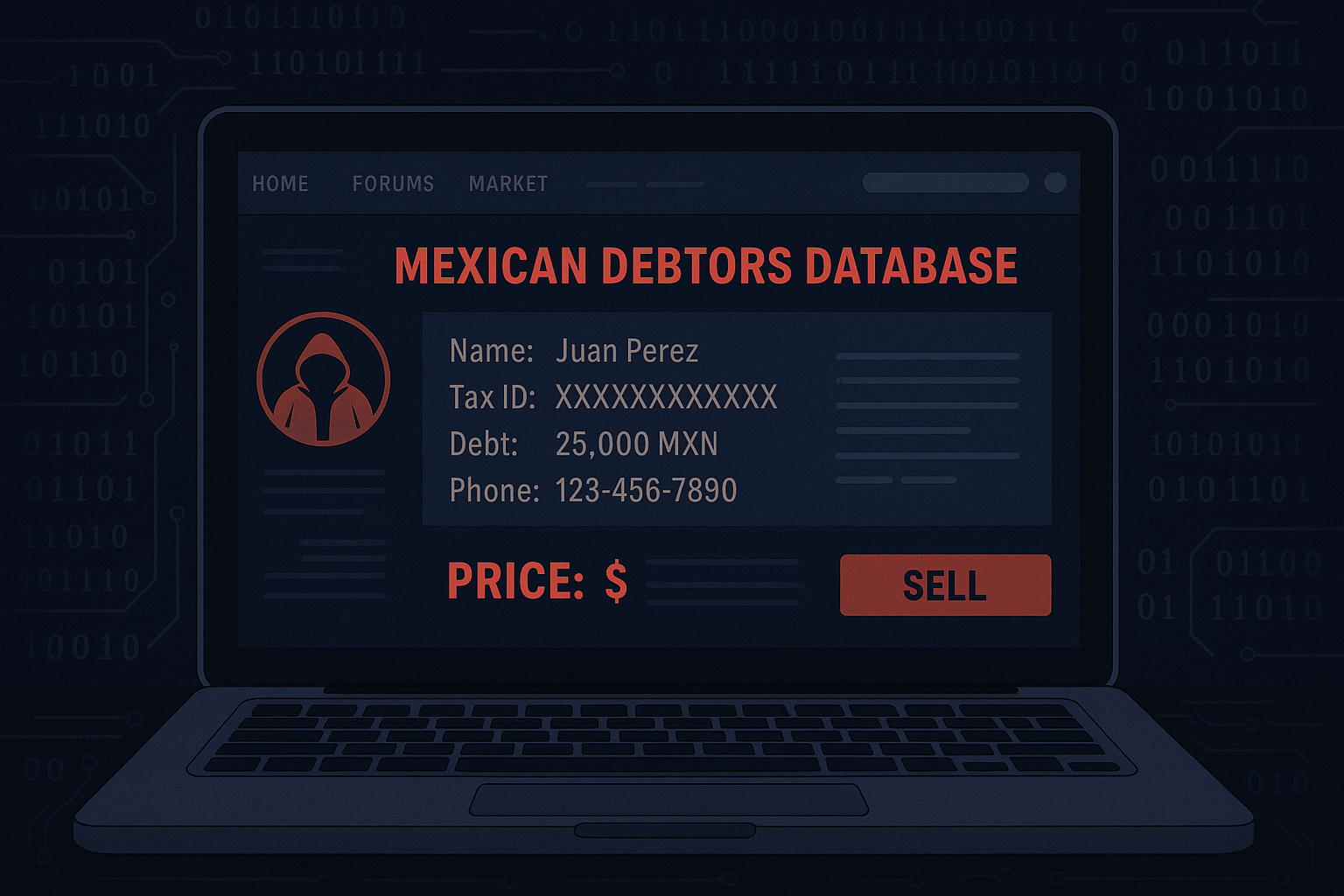
The listing states the dataset includes full names, tax identification numbers, outstanding debts, and personal contact details of individuals who owe money to collection agencies in Mexico. While the seller provided some sample entries for verification, there is no public confirmation that the full dataset has been authenticated by independent researchers or the affected organisations.
The hacker posting described the data as belonging to debtors recorded with Mexican firms contracted by the government or private lenders. The group emphasised that the records cover individuals with late payments or defaulted accounts, and claimed the campaign is still ongoing.
Although the listing appears genuine at a glance, hackers often recycle previously leaked data from multiple sources and then present it as a single large dataset to maximise profit. At this stage, the authenticity of the listing remains uncertain, and no official acknowledgement has been published by Mexican authorities or the companies named in the listing.
Why is this data so valuable
Debt records like these contain sensitive personal identifiers such as tax numbers and contact information, which can be exploited for identity theft, social engineering, or further fraud. Criminals can use the data to craft convincing scams pretending to be lenders, or to impersonate debt collection agencies and pressure individuals into paying non-existent debts.
Because the records are already linked to financial obligations, they carry inherent credibility when used by fraudsters, which increases the risk for targeted individuals. The sale of this type of data illustrates how digital breaches can turn private financial liabilities into tools for criminal exploitation.
No Mexican government agency or private lender has publicly confirmed a breach of this magnitude. The listing could contain outdated, partially accurate, or aggregated data from multiple smaller breaches. As of now, the seller’s claims are unverified, and it is unclear how much of the dataset is legitimate.
Without confirmation, it is difficult to assess the full scope of exposure or the specific institutions involved. For individuals whose data might be included, the uncertainty makes it hard to determine whether there is a current risk of misuse or what mitigation steps are required.
What should affected individuals do
Anyone who was involved in debt collections in Mexico, or whose tax identification number may have been used in financial proceedings, should consider taking precautions. One way to reduce risk is to monitor credit reports and bank statements for unusual activity, and to be alert for unsolicited claims from organisations requesting payments or personal information.
Reject any calls or messages that demand payment of debts without documented proof and identity verification. If unsure, contact the original creditor or collection agency using validated contact details rather than responding to the approach. Victims of identity theft should also consider placing fraud alerts on their credit files and reporting any fraudulent activity promptly.
Debt collection firms and financial institutions in Mexico may need to review their data security policies, particularly how they store, share, and protect large volumes of debtor information. The sale of allegedly exposed records highlights that weak links in data handling can lead to broad threats beyond direct operational impact.
Regulators may need to investigate whether a leak or series of leaks allowed the compilation of this list and whether data protection frameworks in Mexico are adequate for guarding sensitive financial information. Auditing data flows, updating retention policies, and ensuring proper encryption can help reduce the chances of future exposure.
This incident follows other significant data exposure events in Mexico’s public and private sectors. While the current listing is debt-oriented, prior leaks have targeted healthcare systems, government agencies, and private firms, showing that the country’s data security posture faces persistent challenges.
With digital records proliferating and data marketplaces flourishing, the intersection of financial liabilities and personal data becomes an increasingly attractive target for cybercriminal enterprises. Effective prevention depends on both technical safeguards and prompt disclosure of breaches.