The “IT Security Protection” email scam is a phishing email that claims the recipient’s email account has been restricted due to a detected security issue. The message presents itself as an official notice from an “IT Security Protection” system and states that protective measures have already been applied. According to the email, access to the account will remain limited until the recipient completes a required verification step.
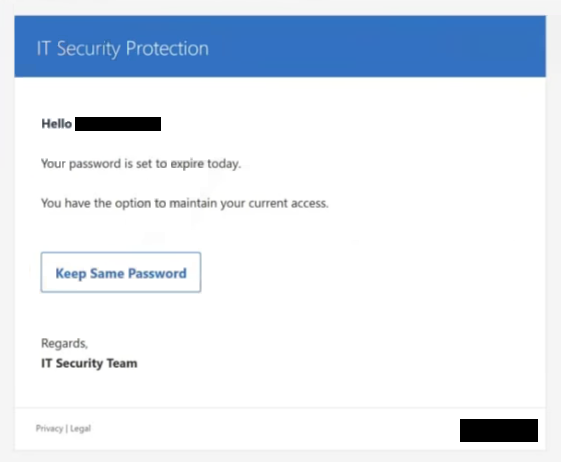
The email states that the restriction was triggered automatically to prevent unauthorized access. It asserts that the account is currently protected but partially blocked and that confirmation is required to restore normal access. The message does not reference any real activity. It does not list login attempts, locations, devices, timestamps, or affected messages. The claim of a detected issue exists only within the text of the email.
The “IT Security Protection” email scam instructs the recipient to click a link included in the message. This link is described as the official verification or protection step. The email does not advise signing in through a known email provider website, using an official application, or checking account status through existing settings. All actions are directed through the embedded link.
Clicking the link opens a phishing page that imitates a standard email sign-in screen. The page requests the recipient’s email address and password. Entering these credentials does not confirm account security, remove restrictions, or activate protection. The credentials are sent to scammers who operate the page. Some versions of the phishing page display messages stating that verification is in progress or completed to make the process appear legitimate.
In some cases, the page requests the password more than once or displays additional confirmation screens. These steps exist to ensure the credentials are captured accurately. The page does not connect to any real email system and does not perform security checks. The “IT Security Protection” claim is entirely false.
The scam does not involve malware, system scanning, or real security enforcement. An unsolicited email cannot determine the security state of an email account. A web page reached through an email link cannot restrict or restore access. The message uses security language to justify why credentials are being requested.
If valid credentials are submitted, scammers can attempt to sign in to the real email account. Email access allows them to read stored messages, collect sensitive information, and intercept password reset emails for other services. The compromised account can also be used to send phishing emails to contacts, making further scams appear more credible.
The full “IT Security Protection” phishing email is below:
Subject: (Security Notification) Maintenance Required for –
IT Security Protection
Hello -,Your password is set to expire today.
You have the option to maintain your current access.
Keep Same Password
Regards,
IT Security Team
Privacy | Legal –
Signs of a phishing email
The “IT Security Protection” email scam is distributed through bulk phishing campaigns. The same message is sent to large numbers of recipients without verifying which email service they use or whether they belong to an organization with an IT department. The wording is intentionally generic so it can apply to both personal and workplace email accounts.
The sender’s name often references an IT or security team, but the sending address does not belong to a legitimate provider. The domain used to send the email is unrelated to recognized email services or corporate IT systems. This mismatch is visible when the full sender details are reviewed.
The email content is specific in its claim of restriction but vague in its explanation. It states that protection has been applied, yet it provides no technical context. There is no mention of policy violations, login history, or security logs. Legitimate security notices include verifiable information or direct users to review details after signing in through official channels.
The link included in the “IT Security Protection” email leads to a domain that does not match official login addresses. Even if the phishing page looks convincing, the web address reveals that it is not part of a real service. Any request to enter email credentials on a page reached from an unexpected security email should be treated as unsafe.
Another indicator is the lack of alternative verification options. The email does not suggest checking account status through the normal website, reviewing security settings, or contacting support using known contact details. The entire process depends on clicking the link and entering credentials, which is a defining characteristic of phishing.
The “IT Security Protection” email scam also relies on implied consequences. It claims access will remain limited if action is not taken, but it does not explain how long the restriction will last or how it can be reviewed independently. This pressure is used to discourage verification and encourage immediate compliance.
The “IT Security Protection” email scam is specific in its use of account restriction language and false protection claims. Verifying sender domains, avoiding embedded login links, and accessing email accounts only through official provider websites are reliable ways to identify and avoid this scam.
Site Disclaimer
2-remove-virus.com is not sponsored, owned, affiliated, or linked to malware developers or distributors that are referenced in this article. The article does not promote or endorse any type of malware. We aim at providing useful information that will help computer users to detect and eliminate the unwanted malicious programs from their computers. This can be done manually by following the instructions presented in the article or automatically by implementing the suggested anti-malware tools.
The article is only meant to be used for educational purposes. If you follow the instructions given in the article, you agree to be contracted by the disclaimer. We do not guarantee that the artcile will present you with a solution that removes the malign threats completely. Malware changes constantly, which is why, in some cases, it may be difficult to clean the computer fully by using only the manual removal instructions.