The Polymarket Community Rewards scam is a cryptocurrency phishing scheme that impersonates the Polymarket platform in order to steal cryptocurrency assets from users. The scam revolves around the fraudulent website market.polydistrib.com, which is presented as a Polymarket-related rewards portal supposedly offering bonus distributions and community incentives. Instead of providing legitimate rewards, the operation is designed to trick victims into connecting cryptocurrency wallets and approving malicious transactions.
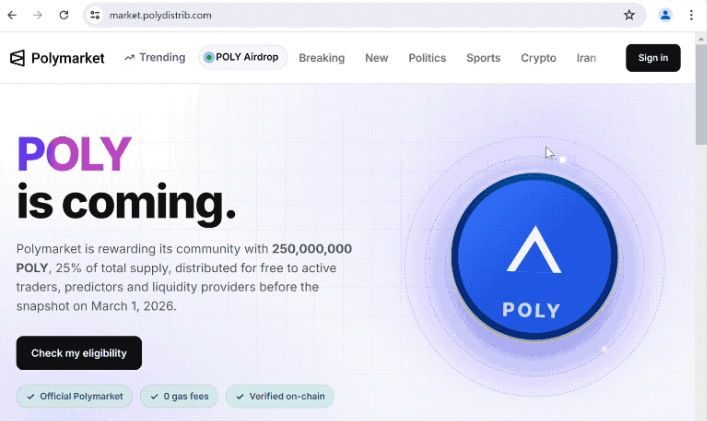
The fraudulent market.polydistrib.com website imitates a legitimate cryptocurrency rewards portal and encourages visitors to connect their wallets in order to check eligibility and claim rewards. The site uses Web3-style design elements, cryptocurrency terminology, and wallet integration prompts to appear trustworthy and convincing to potential victims.
The scam becomes dangerous once users connect their wallets and approve the requested transaction. Instead of verifying reward eligibility, the approval activates a crypto drainer embedded within the phishing operation. Crypto drainers are malicious scripts designed to automatically transfer cryptocurrency assets from victims’ wallets to addresses controlled by attackers.
Once activated, the crypto drainer may rapidly steal tokens, stablecoins, NFTs, and other digital assets stored inside the connected wallet. Because blockchain transactions are generally irreversible, victims usually cannot recover stolen funds after the transfers are completed.
The Polymarket Community Rewards scam specifically relies on the growing popularity of cryptocurrency reward campaigns and airdrop programs. Legitimate blockchain projects often distribute incentives to users, which allows fake reward schemes hosted on sites like market.polydistrib.com to appear believable. Attackers exploit this familiarity to encourage victims to trust the fake platform and connect wallets without carefully verifying the website.
Another reason the scam appears convincing is its professional presentation. The fake website includes cryptocurrency-themed graphics, reward-related messaging, and wallet connection systems similar to those found on legitimate decentralized applications. Some sections may reference limited-time opportunities, participation rewards, or community distributions to pressure users into acting quickly.
The phishing operation is commonly promoted through social media posts, cryptocurrency discussions, advertisements, and direct messages. Fraudulent promotional campaigns may falsely claim that Polymarket users qualify for exclusive rewards or bonus distributions. These messages are intended to direct traffic toward market.polydistrib.com and increase the number of wallet connections.
Unlike traditional phishing scams that focus on usernames and passwords, the Polymarket Community Rewards scam targets cryptocurrency wallets directly through malicious blockchain approvals. Victims may not immediately realize that connecting the wallet and approving the transaction grants attackers permission to access their assets.
Anyone who connected a wallet to market.polydistrib.com and approved suspicious requests should immediately revoke wallet permissions and move remaining assets to a secure wallet if possible. Crypto drainer approvals may continue allowing unauthorized transfers even after leaving the phishing website.
How to recognize cryptocurrency scam websites
Cryptocurrency phishing websites like market.polydistrib.com are designed to imitate legitimate blockchain platforms and reward campaigns in order to deceive users. Recognizing the warning signs associated with fraudulent cryptocurrency websites can significantly reduce the risk of financial loss.
One major warning sign is an unexpected reward claim. The Polymarket Community Rewards scam promises cryptocurrency incentives and bonus distributions without prior confirmation or verification. Users should approach unsolicited reward offers carefully, especially when they appear through advertisements, social media posts, or direct messages.
Website addresses should always be checked carefully before interacting with cryptocurrency platforms. In this case, the scam operates through market.polydistrib.com, which is not an official Polymarket domain. Fraudulent cryptocurrency campaigns frequently use misleading or unofficial domains that imitate real blockchain services.
Another important warning sign is an immediate request to connect a cryptocurrency wallet. Scam platforms often push users to connect wallets quickly under the pretense of verifying eligibility or unlocking rewards. Connecting wallets to unfamiliar websites can expose users to malicious transaction requests and unauthorized asset transfers.
Users should also examine all transaction prompts carefully before approving them. The Polymarket Community Rewards scam relies on deceptive wallet approvals that may grant attackers permission to move cryptocurrency assets. Approving transactions without fully understanding the requested permissions can result in direct financial loss.
Artificial urgency is another common tactic used in cryptocurrency scams. Fraudulent reward websites frequently claim that rewards are available only temporarily or that participation windows are closing soon. These messages are intended to pressure victims into acting quickly instead of carefully verifying whether the promotion is legitimate.
Social media promotion should also be treated cautiously. Cryptocurrency phishing campaigns are often spread through fake accounts, compromised profiles, sponsored advertisements, and manipulated engagement designed to make fraudulent promotions appear trustworthy.
The safest approach is to verify all cryptocurrency reward campaigns through official project websites and trusted communication channels. Users should avoid connecting wallets to unfamiliar platforms and should never approve suspicious transaction requests without understanding their consequences.
Site Disclaimer
2-remove-virus.com is not sponsored, owned, affiliated, or linked to malware developers or distributors that are referenced in this article. The article does not promote or endorse any type of malware. We aim at providing useful information that will help computer users to detect and eliminate the unwanted malicious programs from their computers. This can be done manually by following the instructions presented in the article or automatically by implementing the suggested anti-malware tools.
The article is only meant to be used for educational purposes. If you follow the instructions given in the article, you agree to be contracted by the disclaimer. We do not guarantee that the artcile will present you with a solution that removes the malign threats completely. Malware changes constantly, which is why, in some cases, it may be difficult to clean the computer fully by using only the manual removal instructions.