SparroWocky is a Windows backdoor designed to give attackers long-term, hidden access to compromised computers. It is written in C++ and has been linked to FamousSparrow, a China-aligned cyberespionage group that has been conducting attacks since at least 2019.
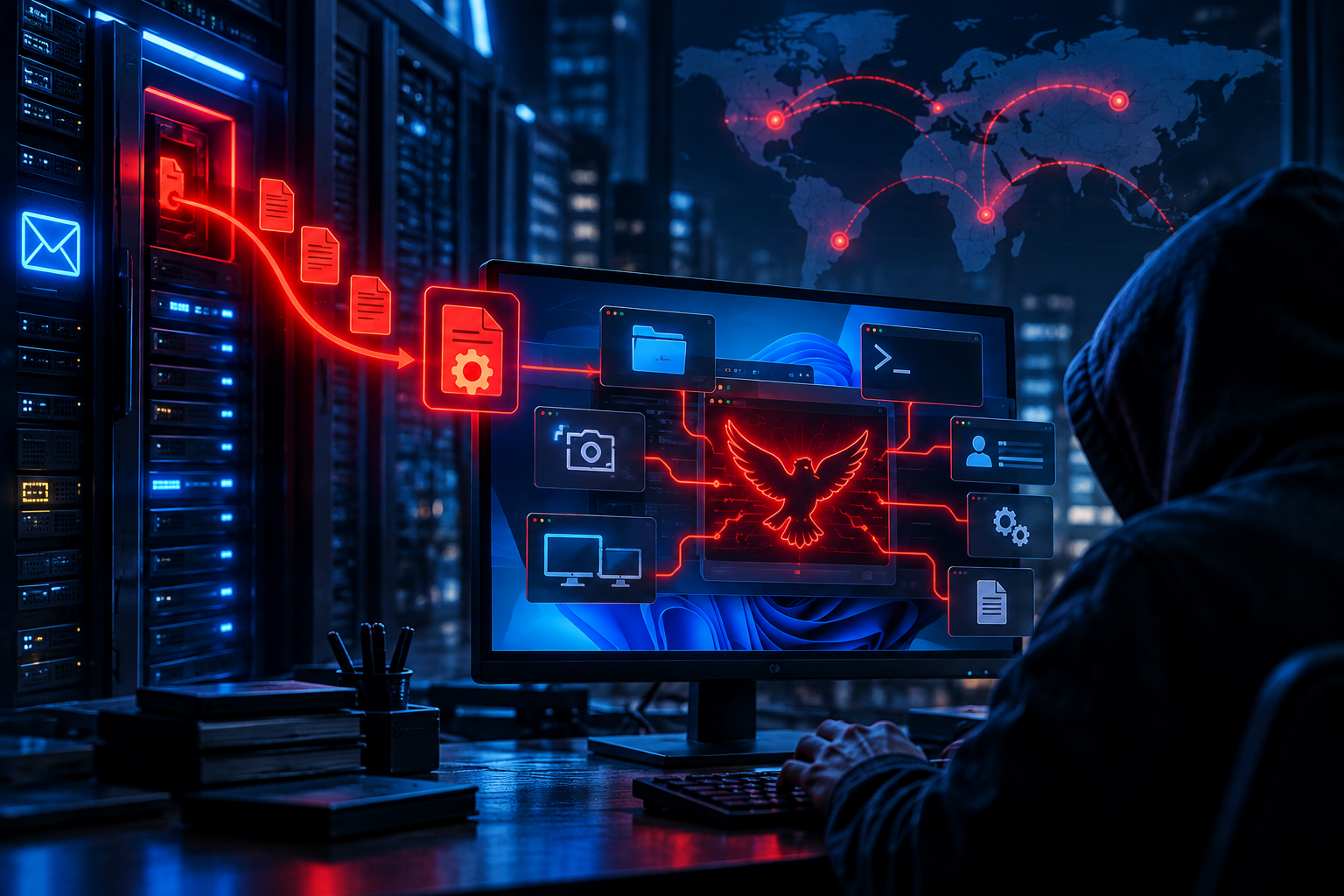
The malware emerged in August 2025 as a successor to an earlier FamousSparrow backdoor called SparrowDoor. SparroWocky has primarily been used in targeted espionage operations rather than broad attacks against ordinary home users. Government organizations in several Latin American countries have been among the targets.
Once SparroWocky is running, attackers can remotely control many aspects of the infected computer. The backdoor supports more than 30 commands, including launching programs, executing shell commands, uploading and downloading files, and managing files already stored on the system.
It can also examine the infected machine and collect information such as the computer name, username, domain, IP addresses, Windows version, available drives, directories, and active user sessions. These details help the attackers understand the environment they have compromised.
SparroWocky also provides surveillance capabilities. It can capture screenshots as frequently as every 500 milliseconds. Instead of repeatedly transmitting the entire screen, it can send only portions that changed between captures, reducing the amount of data transferred while still allowing attackers to closely monitor activity.
The backdoor can execute programs within another logged-in user’s session and load additional Beacon Object Files directly into memory. This gives its operators a way to extend the malware’s functionality without necessarily installing conventional executable files for every additional task.
Another capability turns the compromised computer into a network proxy. Attackers can route TCP traffic through the infected machine, potentially using its network position to support further activity.
Communication with SparroWocky’s command-and-control infrastructure is encrypted. The malware can connect directly or communicate through HTTP and SOCKS5 proxies. Individual command messages are additionally protected using RC4 encryption with a new key generated for each transmission.
SparroWocky is also built to remain on a compromised computer. Depending on its privileges, it can install a Windows service named “ProcAuditManager” or create a Registry Run entry called “SnapCart.” These mechanisms allow the malware to start again after a restart or user login.
Several techniques are used to make detection more difficult. SparroWocky uses a method called SilentMoonwalk to create misleading call stacks, making malicious activity appear as though it originated from legitimate Windows threads. It also disguises thread creation and resolves Windows API functions dynamically rather than keeping easily recognizable function names in its code.
When attackers decide to leave a compromised system, SparroWocky can remove its persistence mechanisms and delete related files. This can reduce the evidence left behind after an operation.
The overall risk is significant because an infected computer can remain under covert remote control while attackers collect information, monitor activity, steal files, execute additional tools, and use the machine as part of further network operations.
How does SparroWocky infect computers
The documented SparroWocky attacks began with vulnerable, publicly accessible Microsoft Exchange servers. Attackers exploited known ProxyLogon vulnerabilities on systems that had not received the necessary security updates.
After gaining access, the attackers used DLL side-loading to deploy the backdoor. This technique combines three components: a legitimate executable, a malicious DLL, and an encrypted payload.
When the legitimate program starts, it loads the malicious DLL placed alongside it. The DLL then decrypts the SparroWocky payload and maps it directly into the computer’s memory. As a result, the final backdoor does not have to appear on the disk as an obvious standalone malicious executable.
This memory-based approach, combined with SparroWocky’s other defense-evasion techniques, can make the infection more difficult for security products and administrators to identify.
The most important defensive measure against the documented attack method is keeping internet-facing servers fully patched. Known vulnerabilities in software such as Microsoft Exchange can provide attackers with an initial route into an organization when security updates have not been applied.
Organizations should also monitor servers for unusual DLL loading, unexpected services, suspicious Registry changes, and unexplained network connections. The presence of a service called “ProcAuditManager” or a Run entry named “SnapCart” can be relevant when investigating a suspected SparroWocky compromise, although these indicators alone should not replace a complete security investigation.
Backdoors in general can also be distributed through targeted phishing, compromised remote-access services, and malicious installers. However, these should not be presented as confirmed delivery methods for the documented SparroWocky campaign. The confirmed activity involved exploitation of vulnerable Exchange servers followed by DLL side-loading.
Users and organizations should keep Windows, server software, and other applications updated, restrict unnecessary externally accessible services, and use reputable endpoint security tools. Unexpected attachments, links, and software downloads should also be treated cautiously.
A confirmed SparroWocky infection should be treated as a serious security incident rather than simply deleting a suspicious file. Because the backdoor provides extensive remote access and can transfer files or run additional code, affected systems may need to be investigated for stolen information, additional malware, compromised credentials, and other attacker activity that occurred while access was available.
Site Disclaimer
2-remove-virus.com is not sponsored, owned, affiliated, or linked to malware developers or distributors that are referenced in this article. The article does not promote or endorse any type of malware. We aim at providing useful information that will help computer users to detect and eliminate the unwanted malicious programs from their computers. This can be done manually by following the instructions presented in the article or automatically by implementing the suggested anti-malware tools.
The article is only meant to be used for educational purposes. If you follow the instructions given in the article, you agree to be contracted by the disclaimer. We do not guarantee that the artcile will present you with a solution that removes the malign threats completely. Malware changes constantly, which is why, in some cases, it may be difficult to clean the computer fully by using only the manual removal instructions.