Vanta Stealer is an information-stealing Trojan written in Python. It is designed to collect sensitive information from infected Windows computers, including browser credentials, session tokens, gaming account data, cryptocurrency wallet information, and other valuable data. After collecting the targeted information, Vanta packages it into an archive and sends it to a server controlled by the attackers.
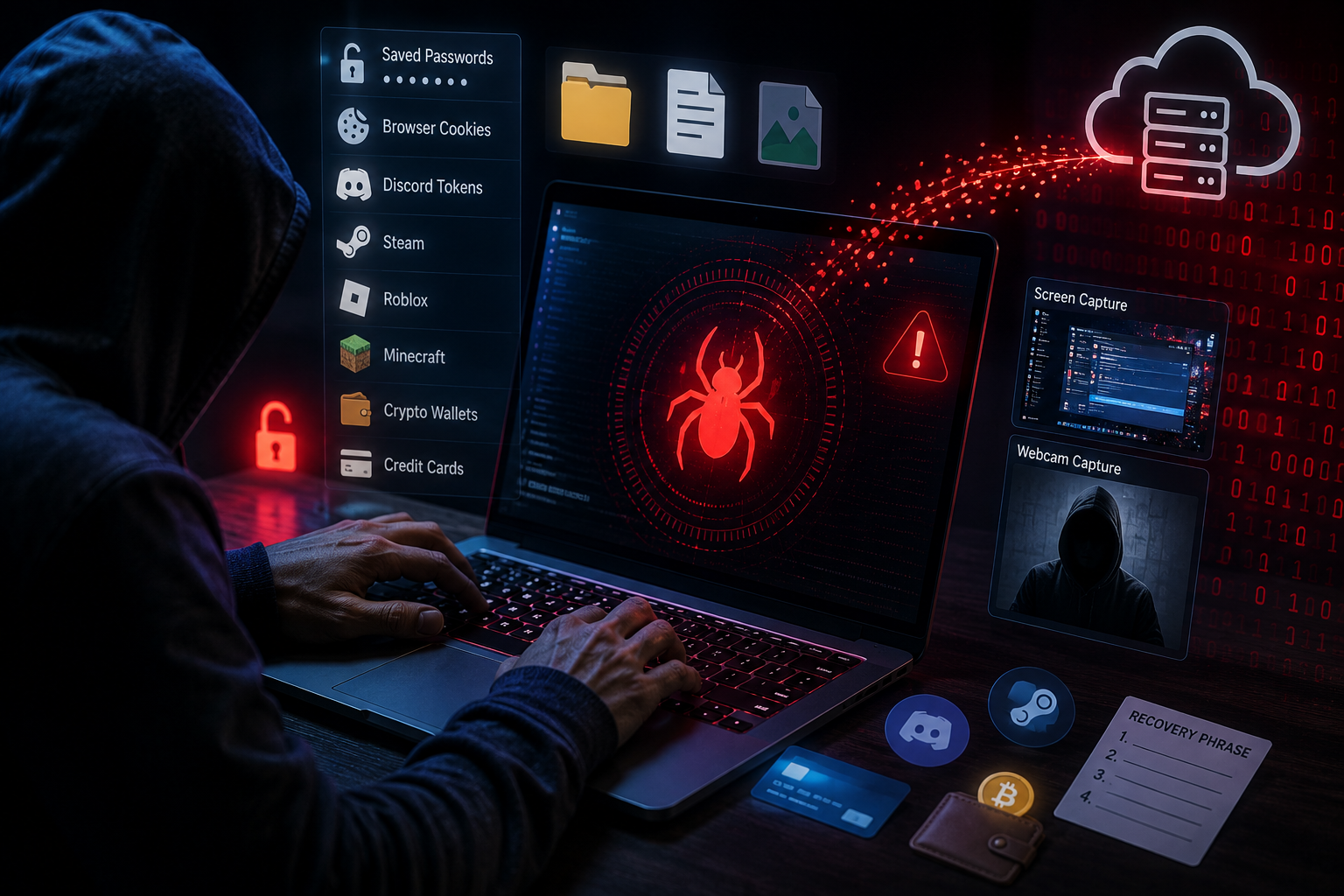
The malware is distributed as a standalone Windows executable created with PyInstaller, allowing the Python-based program to run without requiring Python to be installed separately. After execution, Vanta downloads a dedicated browser credential extractor and begins running modules responsible for collecting information from different applications. Browser-related theft focuses on Chromium-based browsers. The stealer can obtain saved passwords, cookies, and stored payment card information, potentially exposing accounts for which credentials have been saved in the browser.
Vanta Stealer also targets messaging platforms. It extracts Discord tokens and collects additional account information, including subscription and billing details. Telegram Desktop session files are another target. Stolen session information can be particularly valuable because it may provide attackers with access to accounts without requiring the victim to manually enter credentials again.
Gaming accounts are extensively targeted as well. Vanta searches for information associated with Steam, Valorant, Roblox, and Minecraft. This makes the malware relevant to users who store gaming account information or active sessions on the compromised computer.
Cryptocurrency-related information represents another major target. Vanta searches for cryptocurrency wallet files and wallet recovery phrases. It also looks through documents for information that could contain recovery phrases. Access to a valid wallet seed phrase can allow an attacker to gain control of the corresponding cryptocurrency wallet and transfer its assets.
The stealer additionally targets Mullvad VPN configuration files. Beyond stealing stored information, Vanta can take screenshots of the victim’s desktop and capture images through the computer’s webcam. These images are included with the other collected information sent to the attackers.
Once collection is complete, Vanta creates an inventory of the stolen information, places the gathered data into a ZIP archive, and transmits it to the attacker’s server using HTTP POST requests. The malware checks the server response to determine whether the upload was successful and also handles situations in which the resulting archive exceeds the server’s upload limits.
How does Vanta Stealer infect computers?
Potential distribution methods include trojanized game cheats, mods, cracked utilities, and malicious software installers. This is particularly relevant because Vanta targets several gaming platforms and accounts. Files advertised as cheats, cracks, modifications, or other unofficial gaming tools can be disguised to appear legitimate while containing malware.
Phishing emails containing malicious attachments are another possible delivery method. Fake software update pages, malicious code repositories, SEO poisoning, and malvertising can also direct users toward downloads containing trojanized installers. Peer-to-peer networks, unverified file-sharing services, and messaging platforms used to exchange pirated software can similarly expose users to malicious executables.
Users can reduce the risk of infection by obtaining applications from official developer websites and trusted distribution platforms. Game cheats, cracks, key generators, and applications shared through unofficial forums, repositories, or Discord communities should be treated cautiously, particularly when their origin cannot be verified.
Unexpected email attachments and download links should also be examined before opening them. A file should not be trusted solely because it appears to come from a familiar contact or is presented as a legitimate installer. Keeping Windows and installed applications updated can additionally reduce exposure to vulnerabilities that malware may exploit.
Remove Vanta Stealer trojan
If Vanta Stealer has already executed, the computer should be treated as potentially compromised because the malware targets passwords, browser cookies, payment card information, messaging sessions, gaming accounts, cryptocurrency wallet data, and recovery phrases. The system should be scanned with reputable security software and the malware removed.
Credentials potentially exposed on the infected computer should be changed from a clean device. Active sessions should also be revoked where appropriate. Cryptocurrency wallets require particular attention if wallet files or recovery phrases were accessible on the compromised system, since Vanta specifically searches for this information before transmitting collected data to the attacker’s server.
Site Disclaimer
2-remove-virus.com is not sponsored, owned, affiliated, or linked to malware developers or distributors that are referenced in this article. The article does not promote or endorse any type of malware. We aim at providing useful information that will help computer users to detect and eliminate the unwanted malicious programs from their computers. This can be done manually by following the instructions presented in the article or automatically by implementing the suggested anti-malware tools.
The article is only meant to be used for educational purposes. If you follow the instructions given in the article, you agree to be contracted by the disclaimer. We do not guarantee that the artcile will present you with a solution that removes the malign threats completely. Malware changes constantly, which is why, in some cases, it may be difficult to clean the computer fully by using only the manual removal instructions.