The “Wells Fargo suspicious card activity detected” email scam is a phishing email that pretends to be a fraud alert from Wells Fargo. It claims suspicious card activity has been detected and presents the situation as urgent, implying that immediate action is needed to protect the account. The email is not a legitimate bank notification. It is sent by scammers attempting to steal personal and financial information.
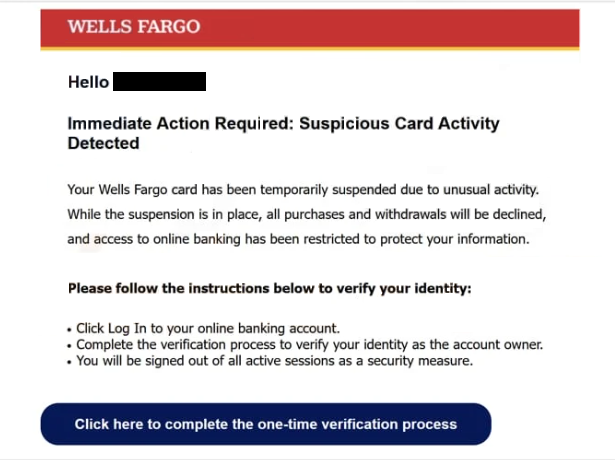
The email typically warns that a payment, purchase, or card transaction was flagged. It may claim the activity was blocked or that the card will be temporarily restricted unless the recipient confirms the transaction. This type of wording is used to trigger concern and encourage quick action, especially from recipients who want to avoid fraud or account disruption.
A link or button is usually included, presented as a way to review the alert or secure the account. The destination is not a real Wells Fargo website. It leads to a fake page designed to look like an online banking sign-in screen or verification form. If the recipient enters login credentials, the information is captured by scammers.
Some versions of the “Wells Fargo suspicious card activity detected” email scam request additional details beyond a username and password. The fake page may ask for card numbers, CVV codes, PINs, Social Security numbers, or other identifying information. This data can be used for unauthorized purchases, identity theft, or further account access attempts. In some cases, the scam may also request one-time passcodes, which can allow scammers to bypass security controls during a live login attempt.
If banking credentials are compromised, scammers may attempt to sign in, transfer funds, change account settings, or add new payees. They may also use the stolen details to target other services linked to the same email address or phone number. Even if direct access fails, the collected information can still be valuable for follow-up scams and fraud attempts.
The email itself is meant to look official, but it does not provide real account protection. Real fraud alerts from a bank do not rely on unexpected email links that lead to unfamiliar sign-in pages. A genuine bank notification can be verified through the official banking app, by signing in through the bank’s known website address, or by contacting the bank using contact details found on official statements or the bank’s website.
The full “Wells Fargo – Suspicious Card Activity Detected” phishing email is below:
Subject: Immediate Action Needed – Account Review Required
Wells Fargo
Hello -,
Immediate Action Required: Suspicious Card Activity Detected
Your Wells Fargo card has been temporarily suspended due to unusual activity. While the suspension is in place, all purchases and withdrawals will be declined, and access to online banking has been restricted to protect your information.Please follow the instructions below to verify your identity:
Click Log In to your online banking account.
Complete the verification process to verify your identity as the account owner.
You will be signed out of all active sessions as a security measure.Click here to complete the one-time verification process
Note: Your account will be fully secured once the verification process is completed.
How this phishing email is sent and how to recognize it
The “Wells Fargo suspicious card activity detected” email scam is distributed through spam campaigns. These emails are sent to many recipients, including people who may not have Wells Fargo accounts. The scam does not depend on knowing the recipient’s real banking relationship. It depends on the fact that a suspicious activity warning can worry almost anyone.
Sender information is one of the first signs to check. The display name may reference Wells Fargo, but the sending address often comes from a domain that is unrelated to the bank. Some scam emails also use reply-to addresses that do not match the sender. These inconsistencies are common in phishing attempts.
The email content often uses urgent language and short deadlines. It may claim that immediate confirmation is required, or the card will be locked. This pressure is meant to reduce careful review and push the recipient toward clicking the link. Legitimate bank alerts are designed to be verified safely, not handled through rushed login prompts from an email.
Links are another key indicator. Phishing emails often hide the real destination behind a button such as “Review activity” or “Verify transaction.” If the link does not lead to a domain that belongs to Wells Fargo, it should not be trusted. A fake page can look convincing, but the domain name and the way the page is reached matter more than appearance.
Another warning sign is requests for sensitive information that banks do not ask for through email. A bank does not request full card details, PINs, or Social Security numbers through a page opened from an unsolicited email. Pages that demand these details as part of “verification” should be treated as fraudulent.
Site Disclaimer
2-remove-virus.com is not sponsored, owned, affiliated, or linked to malware developers or distributors that are referenced in this article. The article does not promote or endorse any type of malware. We aim at providing useful information that will help computer users to detect and eliminate the unwanted malicious programs from their computers. This can be done manually by following the instructions presented in the article or automatically by implementing the suggested anti-malware tools.
The article is only meant to be used for educational purposes. If you follow the instructions given in the article, you agree to be contracted by the disclaimer. We do not guarantee that the artcile will present you with a solution that removes the malign threats completely. Malware changes constantly, which is why, in some cases, it may be difficult to clean the computer fully by using only the manual removal instructions.