The “Your email will be disconnected” email scam is a phishing attack that falsely claims the recipient’s email account is scheduled for disconnection. The email states that the account has been flagged for policy violations related to spam activity and that outgoing email privileges are at risk. It instructs the recipient to click a link to review the issue and prevent the disconnection. This claim is false. The email is not sent by any legitimate email provider and does not reflect the status of the recipient’s account. Its sole purpose is to direct users to a phishing website that captures login credentials.
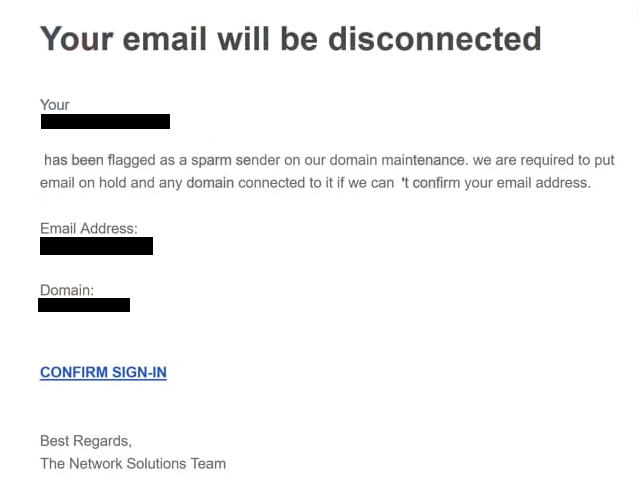
The email is written to create concern about the loss of email access. It claims that failure to respond will result in the account being disconnected from email services. The wording suggests that the disconnection is imminent and that the provided link is the only way to resolve the issue. The email uses formatting that resembles system notifications, but it does not include any specific information that would confirm a real account issue. The sender address does not belong to a recognised email provider and does not match official domains used for account notifications.
When the recipient clicks the link in the “Your email will be disconnected” email, they are taken to a website that imitates a webmail login page. The page displays fields requesting the user’s email address and password. The design may resemble common email services, but the website is controlled by attackers. Any credentials entered on this page are transmitted to the attackers and are not used to verify or restore the email account.
Once attackers obtain access to the email account, they can read stored emails, access contact lists and review personal information. Email accounts often contain sensitive data, including billing notices, password reset emails and private conversations. Attackers may use this information to attempt unauthorised access to other services linked to the same email address. If the same password is reused elsewhere, attackers may gain access to additional accounts without further interaction from the victim.
A compromised email account can also be used to send phishing emails to other people. Emails sent from a known address are more likely to be trusted by recipients. Attackers may use the account to distribute similar phishing emails or requests for sensitive information. This can extend the impact of the original compromise beyond the initial victim.
The “Your email will be disconnected” email does not represent any real administrative process. Email providers manage spam issues internally and notify users through secure account dashboards. They do not require users to click links in unsolicited emails to resolve such matters. Any user who entered their login details on the phishing website should change their email password immediately and update passwords for other accounts that use the same credentials.
The full “Your email will be disconnected” email is below:
Subject: We cant confirm your email address
Your email will be disconnected
Your
–has been flagged as a sparm sender on our domain maintenance. we are required to put email on hold and any domain connected to it if we can ‘t confirm your email address.
Email Address:
–Domain:
–CONFIRM SIGN-IN
Best Regards,
The Network Solutions Team
How to recognise phishing emails
Phishing emails, such as the “Your email will be disconnected” scam, share clear indicators that allow users to identify them as fraudulent. Recognising these indicators reduces the risk of account compromise.
One indicator is the sender address. The email claims to originate from an email service administrator, but the sender’s domain does not match the domain of the actual provider. The address may contain additional words, numbers or unrelated domain names. Official notifications about account status come from verified provider domains.
Another indicator is the absence of personalised information. The phishing email does not include the recipient’s name or reference specific account activity. It does not identify which messages were flagged or provide timestamps or message identifiers. Legitimate notifications include detailed information tied to the account. The absence of such information suggests that the email is not linked to any real event.
The link included in the “Your email will be disconnected” email is a critical warning sign. Hovering over the link reveals a destination that does not belong to the email provider. The link leads to a website unrelated to the service the email claims to represent. Any email that directs users to unfamiliar websites for account verification should be treated as unsafe.
Requests for login credentials through email links indicate phishing. Legitimate providers do not ask users to enter their passwords on a web page reached through an unsolicited email. Account access should only be performed by visiting the provider’s official website directly.
Urgency is another feature of this scam. The email claims that disconnection will occur if the user does not act immediately. Genuine providers do not rely on threats or short deadlines to prompt action. They provide clear explanations and allow users to review issues without pressure.
Language quality and formatting may also reveal the scam. While the email may appear structured, its wording may differ from official communication standards. Inconsistent phrasing or generic descriptions of technical issues can indicate that the email was not created by a legitimate provider.
If any of these signs are present, users should not click links or provide information. The safest response is to delete the email and check the account status by signing in directly through the provider’s official website. This approach ensures that credentials are not exposed to attackers and confirms whether any real issue exists.
Site Disclaimer
2-remove-virus.com is not sponsored, owned, affiliated, or linked to malware developers or distributors that are referenced in this article. The article does not promote or endorse any type of malware. We aim at providing useful information that will help computer users to detect and eliminate the unwanted malicious programs from their computers. This can be done manually by following the instructions presented in the article or automatically by implementing the suggested anti-malware tools.
The article is only meant to be used for educational purposes. If you follow the instructions given in the article, you agree to be contracted by the disclaimer. We do not guarantee that the artcile will present you with a solution that removes the malign threats completely. Malware changes constantly, which is why, in some cases, it may be difficult to clean the computer fully by using only the manual removal instructions.