Ryanair is facing new cybersecurity concerns after a threat actor claimed to have breached the airline’s systems, allegedly putting sensitive passenger data up for sale on underground forums.
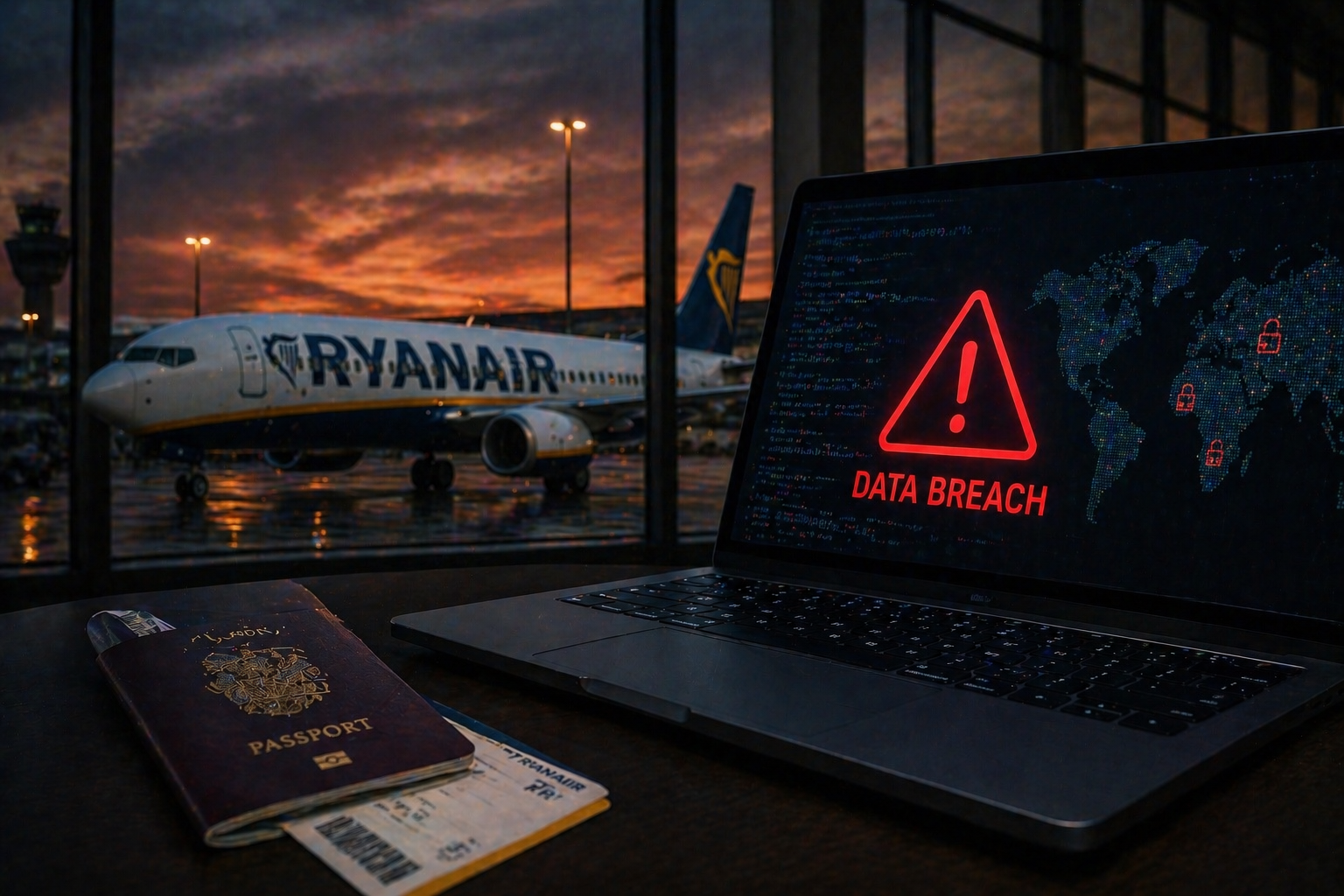
According to reports, the attacker is offering what appears to be data linked to flight compensation claims, a process that typically requires passengers to submit detailed personal and financial information. The claims were first identified through cybercrime monitoring channels, where samples of the alleged dataset were shared to demonstrate access.
The exposed information reportedly includes internal email communications, legal correspondence, and structured case management data tied to compensation requests. This material appears to originate from internal systems used to handle disputes and claims, suggesting potential access to backend operational platforms rather than public-facing services.
Leaked records may contain email content, timestamps, sender and recipient details, as well as references to court proceedings and associated documents. Some entries also include procedural notes and deadlines, indicating the data could be part of ongoing or historical legal cases involving passenger claims.
Of particular concern is the potential exposure of financial information. Compensation claims often require passengers to provide bank account details to receive payouts, meaning the dataset could carry a higher risk of fraud if verified.
At the time of reporting, Ryanair has not confirmed that a breach has occurred. The company has not publicly validated the authenticity of the leaked data or the attacker’s claims, leaving uncertainty around the scope and legitimacy of the incident.
Security analysts note that even unverified breach claims can pose risks. Threat actors frequently publish partial or outdated datasets to attract buyers, but the inclusion of structured internal data increases the likelihood that at least some level of unauthorized access occurred.
The incident highlights the sensitivity of compensation systems within the aviation sector. These platforms often aggregate identity data, travel records, and financial details in a single workflow, making them attractive targets for cybercriminals seeking high-value information.
If confirmed, the breach could expose affected passengers to phishing campaigns, identity theft, and financial fraud. The situation remains under investigation, with no confirmation on whether the data has been widely distributed or sold.