A reverse engineer has raised serious privacy concerns about Samsung smart TVs after discovering software components allegedly capable of collecting environmental audio, monitoring connected devices, and building detailed profiles of viewers. The findings, shared online by a researcher using the name Log4j, have prompted questions about the extent of data collection built into modern televisions.
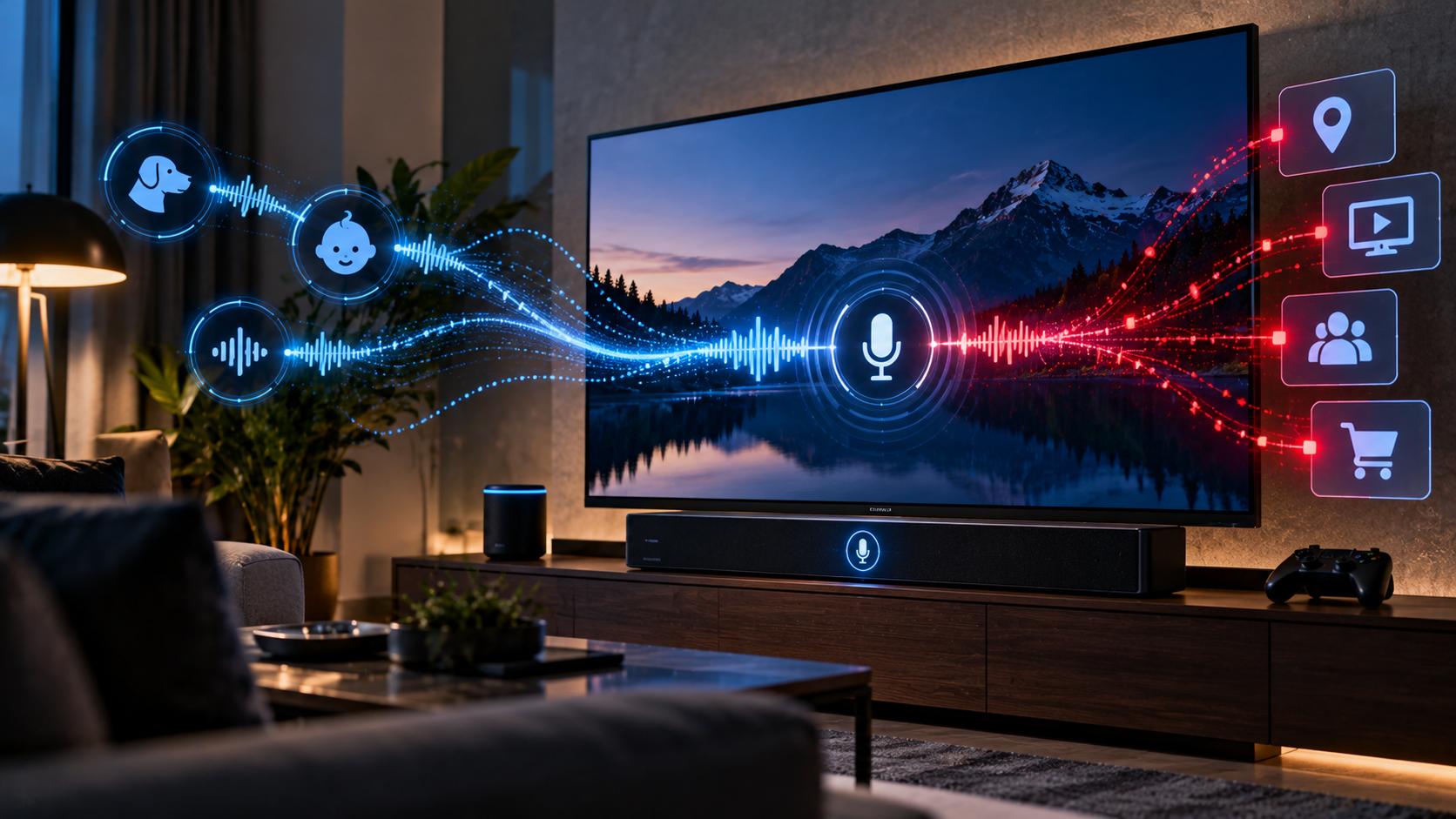
The investigation began when the researcher noticed unusually personalized advertisements appearing on a 2025 Samsung television. After examining the device’s software, Log4j reported finding a component called “always on voice,” which they believe could enable persistent microphone access.
According to the researcher, the television’s software also contains telemetry functions associated with sound detection, including counters for events such as dogs barking and babies crying. However, the presence of these functions does not independently establish that Samsung continuously records conversations or transmits private audio.
Log4j further alleged that Samsung televisions could access microphones in connected equipment, including soundbars and Bluetooth devices. The researcher suggested that these connections might allow audio collection even when the television itself lacks a built-in microphone. The precise behavior of these features has not been independently verified.
The reported discoveries extend beyond audio monitoring. Log4j identified software associated with automatic content recognition, location information, network mapping, and targeted advertising. Such technologies can help manufacturers understand viewing habits and deliver personalized recommendations or advertisements.
The researcher also claimed that Samsung uses AI-based analysis to evaluate viewing behavior, including which videos users watch and which advertisements they skip. According to the allegations, collected information may be shared with Samsung and more than 400 partners, although the scope and conditions of that sharing remain unclear.
Another identified component, called “rmdemon,” reportedly supports remote device management for technical diagnostics. While remote support functionality can serve legitimate maintenance purposes, its discovery has raised additional questions about access controls and user consent.
The controversy also extended to OpenAI after Log4j reported that their account had been deactivated for alleged cyber abuse. The researcher disputed the justification, maintaining that AI tools had been used for reverse engineering rather than malicious activity. The circumstances surrounding the account restriction have not been independently established.