Scammers impersonating federal agents are adopting increasingly elaborate methods to convince victims they are speaking with legitimate law enforcement, including creating fake FBI office environments for video calls.
The FBI’s Newark field office issued a warning after receiving reports of criminals combining several impersonation techniques that make their identities difficult to verify. Instead of simply claiming to work for a federal agency, scammers are using the names of genuine agents while manipulating caller ID so incoming calls appear to originate from real government offices.
This creates a particularly convincing trap when victims attempt to check the caller’s identity. A person who independently contacts the relevant FBI office may discover that an agent with the name provided by the scammer really does work there, potentially reinforcing the false impression that the original caller was legitimate.
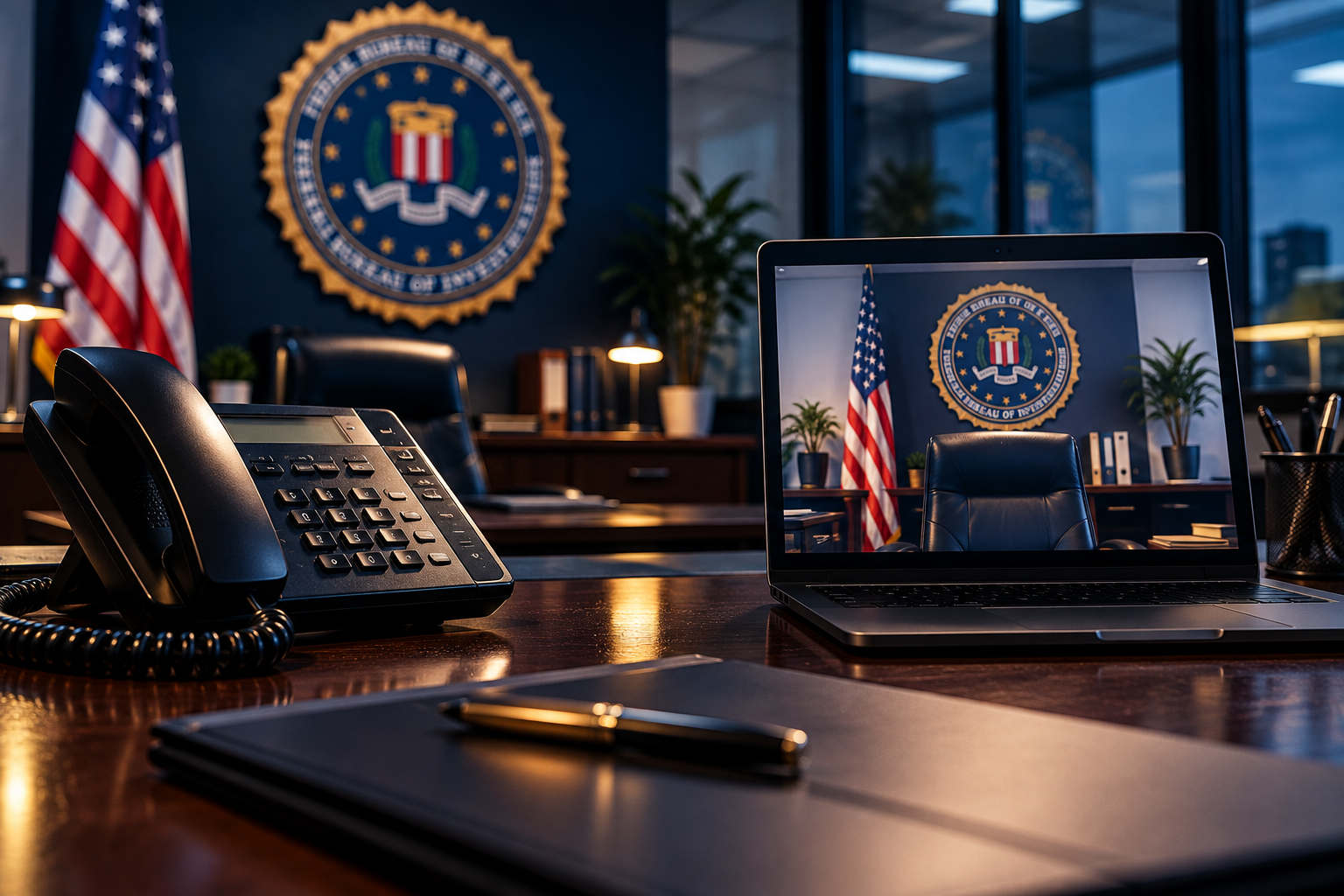
Criminals are also adding video to the deception. In one case described by the FBI, a fraudster participated in an online meeting from a staged environment designed to resemble an FBI office, including a desk and FBI seal. A man wearing a suit appeared in the setup to strengthen the illusion that the conversation was taking place inside a federal facility.
The techniques are part of a much broader government impersonation problem. Between January 2025 and July 2026, the FBI’s Internet Crime Complaint Center received nearly 61,000 complaints involving criminals pretending to represent law enforcement or government agencies. Victims reported combined losses exceeding $1.6 billion.
Phone calls remain the main way these scams begin, although criminals also use emails and text messages. They can spoof legitimate phone numbers, employee names, email addresses, and credentials belonging to agencies such as the FBI, DEA, and Secret Service.
Once contact is established, victims are frequently accused of being connected to criminal activity. Scammers may claim there is an arrest warrant, suggest the victim’s identity has been used by criminals, or threaten prosecution unless instructions are followed.
Payment demands can involve bank transfers, prepaid cards, cryptocurrency, cash delivered by couriers or deposits into cryptocurrency kiosks. Fraudsters may also insist that victims remain on the phone and avoid discussing the situation with relatives, banks or police, reducing the chance that another person will recognize the scam.
Artificial intelligence is making some impersonation attempts harder to identify. The FBI has separately warned that criminals are using AI-generated videos and voices to imitate government personnel and create apparently convincing real-time communications.
Even a professional-looking video call does not prove that someone represents law enforcement. The FBI says federal agents will not call members of the public and demand money, cryptocurrency, or prepaid cards to avoid arrest or resolve an investigation.
Anyone receiving a suspicious call should independently find the agency’s official contact details rather than relying on a number supplied by the caller. When verifying an alleged agent, the FBI recommends specifically telling the agency that the contact may be an impersonation attempt, since merely confirming that an employee with that name exists may no longer be enough.
The Newark warning shows how that verification process itself is now being exploited. By combining the identity of a real agent, a genuine-looking caller ID, and a fabricated government office on video, scammers are attempting to make several separate signs of authenticity support the same false story.