Signal is introducing new privacy controls designed to prevent artificial intelligence assistants integrated into mobile operating systems from accessing private conversations. Announced on November 20, 2026, the measures restrict screenshots within the encrypted messaging application on supported Android devices and iPhones running iOS 27.
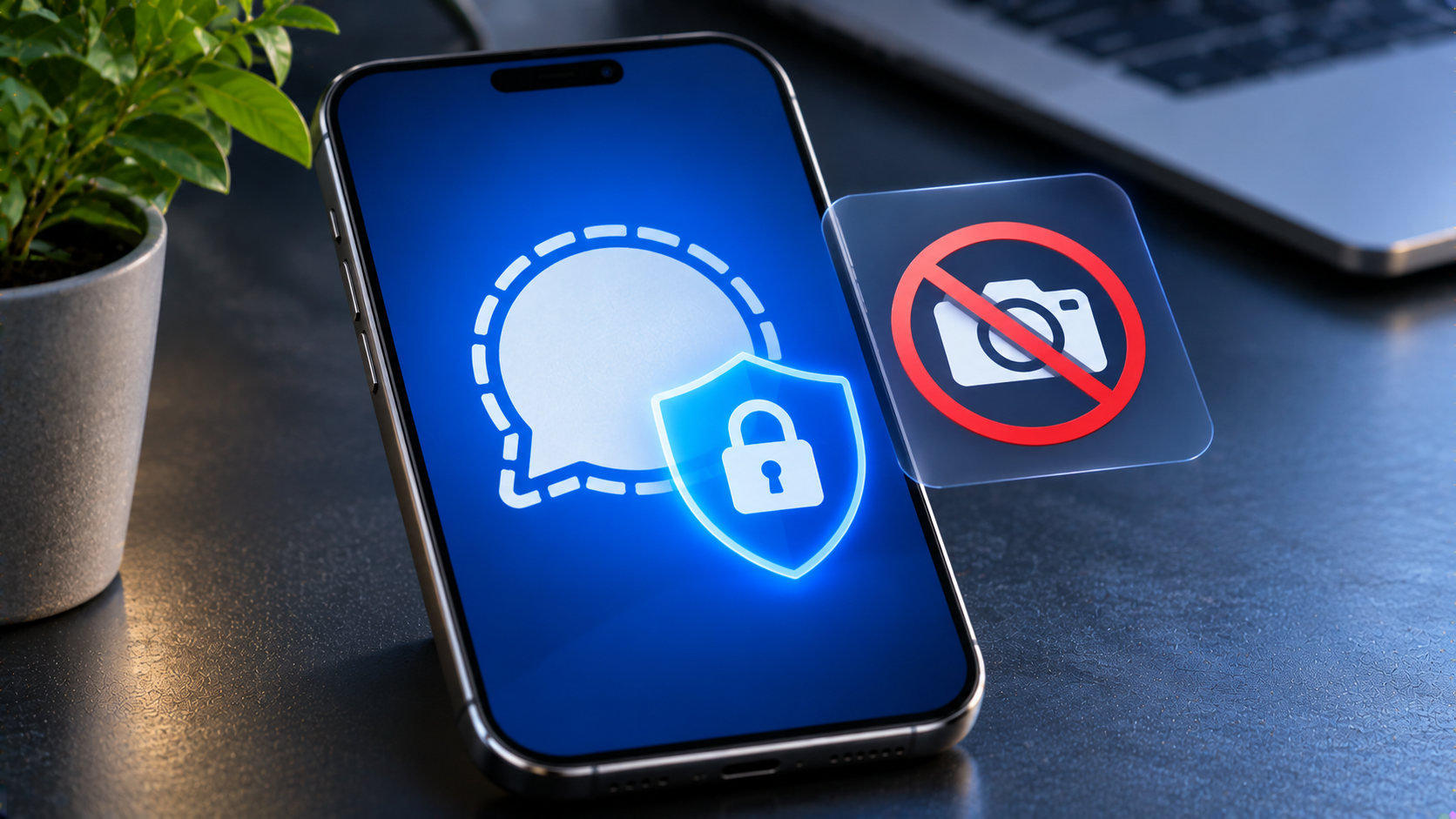
The decision addresses a privacy problem that end-to-end encryption alone cannot resolve. While encryption protects conversations during transmission, AI assistants with screen-reading capabilities can potentially capture their contents once they are displayed on a device.
Signal Foundation president Meredith Whittaker warned that information collected by operating system-level AI agents could be transferred to external servers or retained in local databases beyond Signal’s control. Such activity could compromise the privacy of everyone participating in a conversation, including individuals who do not use AI assistants themselves.
The new protections operate differently depending on the mobile platform. On iOS 27, Signal enables its new Block Siri AI setting by default. On compatible Android devices, the application automatically activates its Screen security feature upon detecting an AI assistant attempting to read the display.
Users can disable these restrictions through Signal’s privacy settings. iPhone users can also temporarily restore screenshot functionality for ten minutes, after which the protection automatically reactivates.
The mobile restrictions follow a similar measure introduced for Windows 11 in 2025. Signal previously disabled screenshots by default to prevent Microsoft’s Recall feature from capturing private conversations and retaining them in a searchable database.
However, Signal acknowledges that its latest safeguards do not provide comprehensive protection. AI agents could potentially obtain application data through alternative mechanisms, including access to locally stored files.
Technical limitations also prevent Signal from implementing equivalent screenshot protections on macOS. The organization currently recommends that macOS 27 users exclude Signal from Siri’s proactive application access through their operating system settings.
Signal is calling on Apple, Google, and Microsoft to introduce mechanisms allowing application developers to prevent AI assistants from accessing sensitive information. These controls should extend beyond screen capture to cover notifications, application programming interfaces, and filesystem access.
The organization also wants technology companies to provide more detailed documentation explaining how their AI agents collect, process, and store information obtained from other applications.
Signal emphasized that the new restrictions do not alter its encryption protocol or message delivery mechanisms. Instead, they are intended to reduce the risk of private information being collected outside the application’s protected environment. Full protection against operating system-level AI access remains dependent on the capabilities provided by platform developers.