The US Supreme Court has ruled that law enforcement’s use of broad “geofence warrants” constitutes a search under the Fourth Amendment, marking a major victory for digital privacy and raising the legal bar for police seeking location data from technology companies such as Google and Apple.
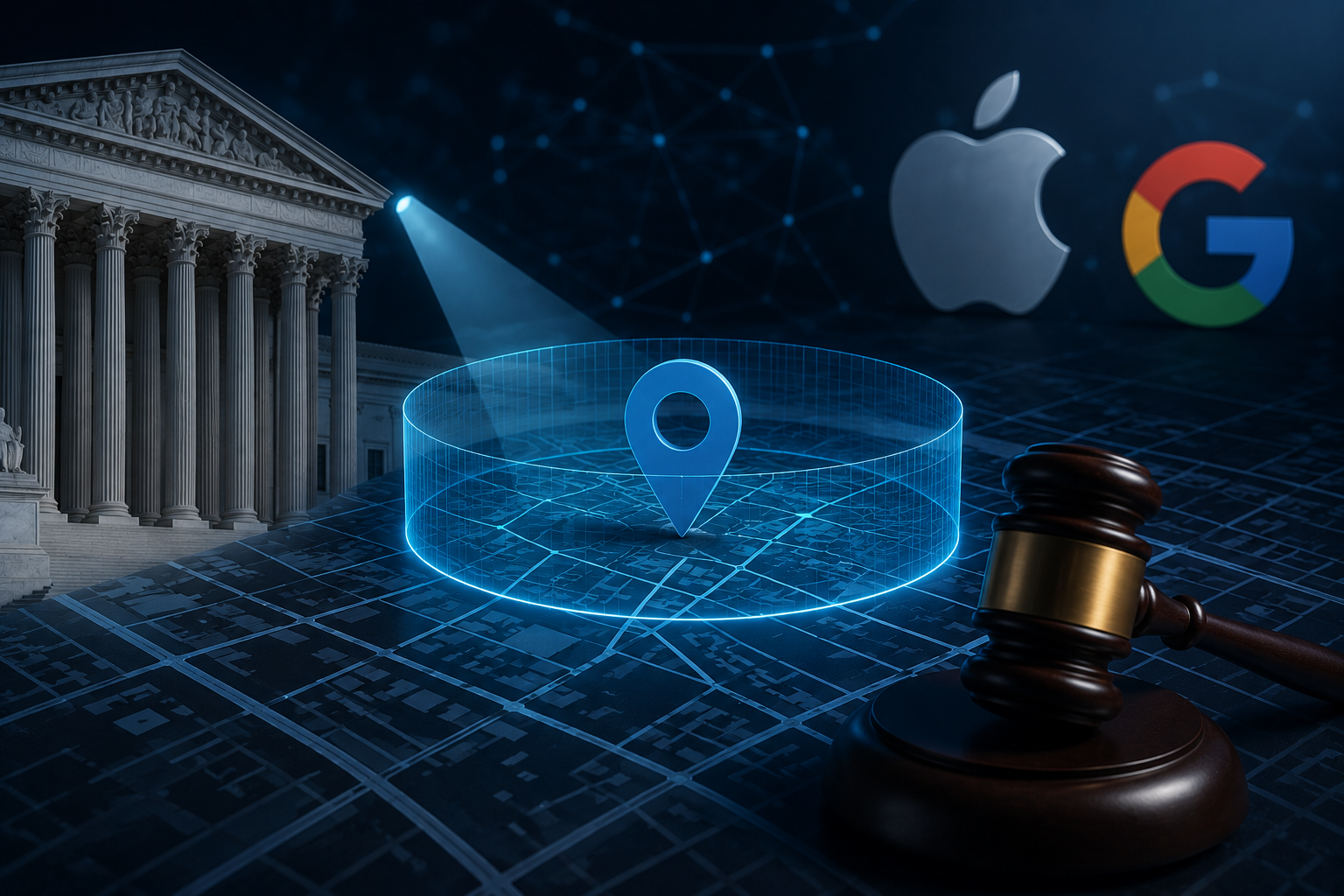
The decision stems from the case of Okello Chatrie, who challenged the use of a geofence warrant issued during the investigation of a 2019 armed robbery in Virginia. Investigators obtained anonymized location history from Google for every device detected within a 150-meter radius of the crime scene before narrowing the list until Chatrie was identified.
Writing for the 6-3 majority, Justice Elena Kagan said individuals have a reasonable expectation of privacy in their cellphone location history, even when that information is stored by third-party technology companies. The Court rejected the argument that users automatically surrender constitutional protections simply by enabling location services.
The justices did not declare geofence warrants unconstitutional. Instead, they ruled that obtaining this type of location data is a Fourth Amendment search and sent the case back to a lower court to determine whether the specific warrant satisfied constitutional requirements, including probable cause and sufficient particularity.
Geofence warrants allow investigators to compel technology companies to disclose information about every device detected within a defined geographic area during a specified time period. Privacy advocates have long argued that the practice amounts to a digital dragnet because it can sweep up the location history of hundreds or even thousands of people who have no connection to a crime.
Although Google’s historical Location History database has traditionally been the primary source for geofence requests, other companies that collect location information, including Apple, may also receive similar legal demands depending on the data they possess. The ruling is therefore expected to influence how future warrants are issued to major technology providers.
Privacy groups welcomed the decision, arguing that it reinforces constitutional protections in an era when smartphones continuously generate detailed records of people’s movements. Law enforcement agencies, meanwhile, are expected to face greater judicial scrutiny when seeking broad location datasets during criminal investigations.
The ruling builds on the Supreme Court’s earlier digital privacy decisions, including Carpenter v. United States, and signals that courts are increasingly treating detailed location history as highly sensitive personal information deserving strong constitutional safeguards. While geofence warrants remain available in some circumstances, investigators will now need to satisfy stricter Fourth Amendment standards before obtaining large-scale location data from technology companies.