The UK’s communications regulator has thrown its support behind Prime Minister Keir Starmer’s planned ban on social media access for children under 16, as officials begin working on the systems needed to enforce the sweeping new restrictions.
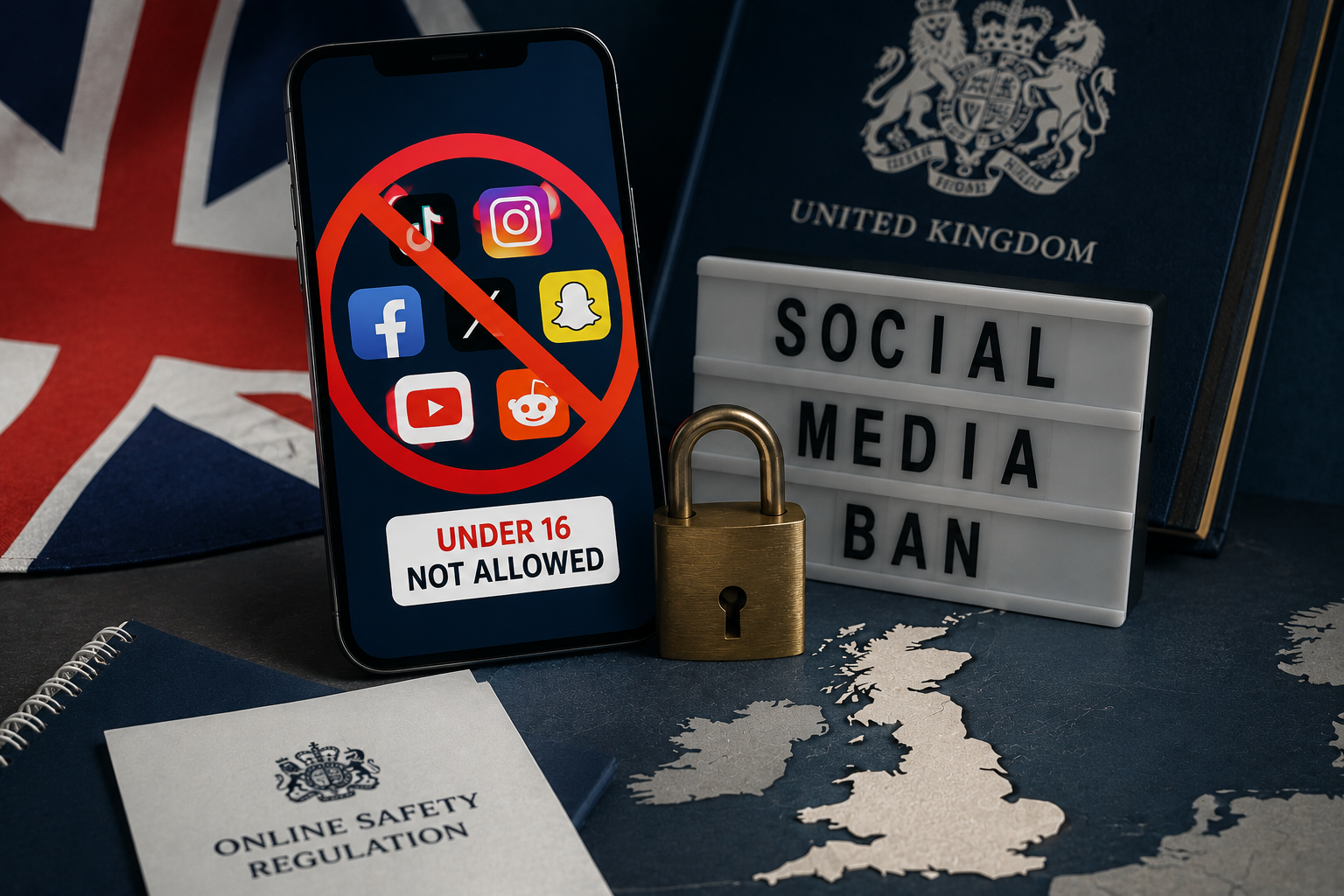
Ofcom has been tasked with developing age-verification proposals and enforcement measures after the government confirmed that major social media platforms will be blocked for under-16s starting in spring 2027. The regulator has been asked to deliver detailed implementation plans by October.
The proposed rules would apply to platforms including TikTok, Instagram, Snapchat, Facebook, X, Reddit, Twitch, Threads, YouTube, and other services that allow users to interact, share content, and engage with algorithm-driven feeds. Messaging platforms such as WhatsApp and Signal are not currently expected to be included.
Government officials say the restrictions are designed to address concerns about online bullying, addictive platform features, harmful content, and the impact of excessive social media use on children’s mental health. Starmer has described the move as a necessary step to improve child safety online after reviewing evidence from Australia, which introduced a similar ban in 2025.
The regulator’s support comes despite ongoing questions about how the ban will be enforced. Officials are evaluating a range of age-assurance technologies, including digital identity systems and facial age estimation tools. However, regulators have acknowledged that current methods are not foolproof and that preventing teenagers from bypassing restrictions through VPNs or other workarounds remains a major challenge.
Technology companies have pushed back against the proposal, arguing that blanket bans could drive young users toward less regulated platforms and reduce access to online communities that provide support and educational content. Critics have also raised concerns about privacy implications linked to large-scale age verification systems.
Supporters of the policy, including child-safety groups and many parents, argue that stronger action is needed after years of concerns about the impact of social media on children. Government consultation data showed overwhelming parental backing for raising the minimum age for social media access to 16.
The ban is expected to form part of a broader online safety package that could also introduce restrictions on livestreaming, communication with strangers, and certain AI-powered services aimed at younger users. Ministers are additionally considering overnight social media curfews for older teenagers, although details have not yet been finalized.
With regulations expected to pass before the end of the year, the focus is now shifting from whether the ban will happen to how it will be enforced across some of the world’s largest technology platforms.