Millions of social media users in the United Kingdom could face identity or facial age checks under plans to prevent children younger than 16 from accessing major platforms. The country’s communications regulator, Ofcom, has identified four verification methods it considers sufficiently reliable to support the restrictions scheduled for 2027.
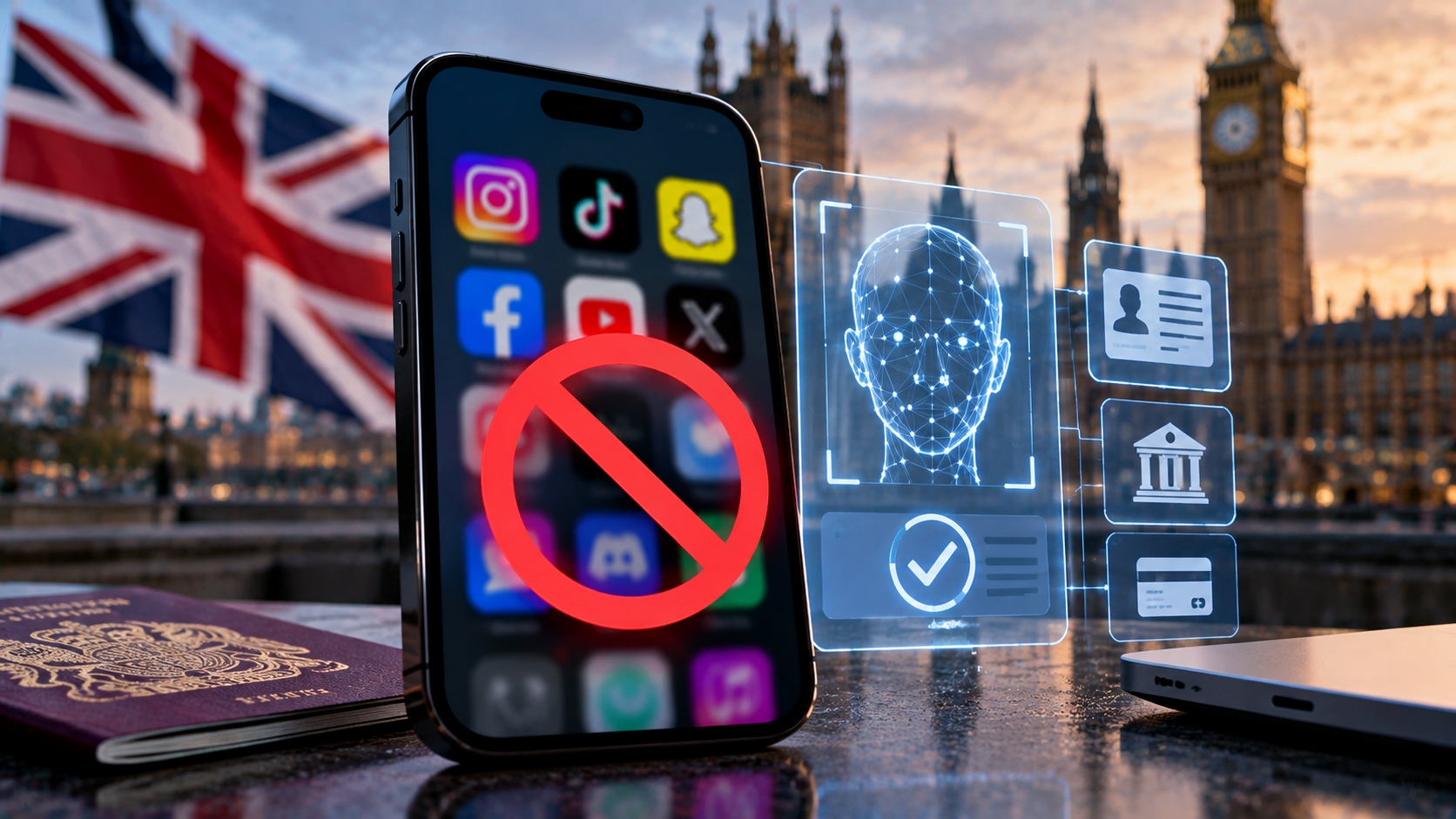
In a report published on October 29, 2026, Ofcom recommended photo ID matching, digital identity services, banking-based verification and facial age estimation. The assessment was requested by the government as it prepares detailed rules for the proposed social media ban.
Photo ID checks would compare a passport, driving licence or another accepted identification document with a live image of the user. Banking-based verification would rely on age information already held by financial institutions, while digital identity services could allow users to confirm their age without repeatedly submitting identification documents.
Facial age estimation offers another option, but Ofcom acknowledged that the technology can produce inaccurate results, particularly around the age of 16. The regulator therefore recommended additional verification when an estimated age falls close to the legal threshold.
The requirements could affect adults as well as teenagers. Although platforms may already possess reliable information confirming some users’ ages, Ofcom expects many existing account holders to undergo additional checks before continuing to access restricted services.
Privacy is another consideration. Age verification systems may involve processing identity documents, facial images or banking information. Ofcom maintains that the recommended approaches can comply with data protection legislation, provided companies implement appropriate safeguards.
The regulator also acknowledged that no verification system can completely prevent children from bypassing restrictions. Social media companies could supplement age checks with mechanisms allowing users to report suspected underage accounts and systems that identify potentially inaccurate age declarations.
Under the government’s plans, the ban would cover major social media services such as Instagram, TikTok, Snapchat and Facebook. Private messaging services, including WhatsApp and Signal, are not expected to fall within the restrictions.
Ofcom separately examined the role of mobile app stores in protecting children. Its research found that three-quarters of children who use the internet primarily access online services through downloaded applications, while the app stores examined generally relied on self-declared ages.
The regulator suggested that stronger age checks at the app-store level could provide additional protection, although app stores are not currently covered by the relevant provisions of the Online Safety Act.
The government intends to publish its first detailed regulations before the end of 2026, with implementation expected in spring 2027. Ofcom will then consult on guidance for technology companies and oversee compliance once the restrictions take effect.