Online dating scams that exploit trust, emotion, and privacy are becoming increasingly common, particularly among younger people. Cybersecurity experts and fraud prevention organisations warn that a growing number of victims are being manipulated into sharing explicit photos or videos and then blackmailed for money.
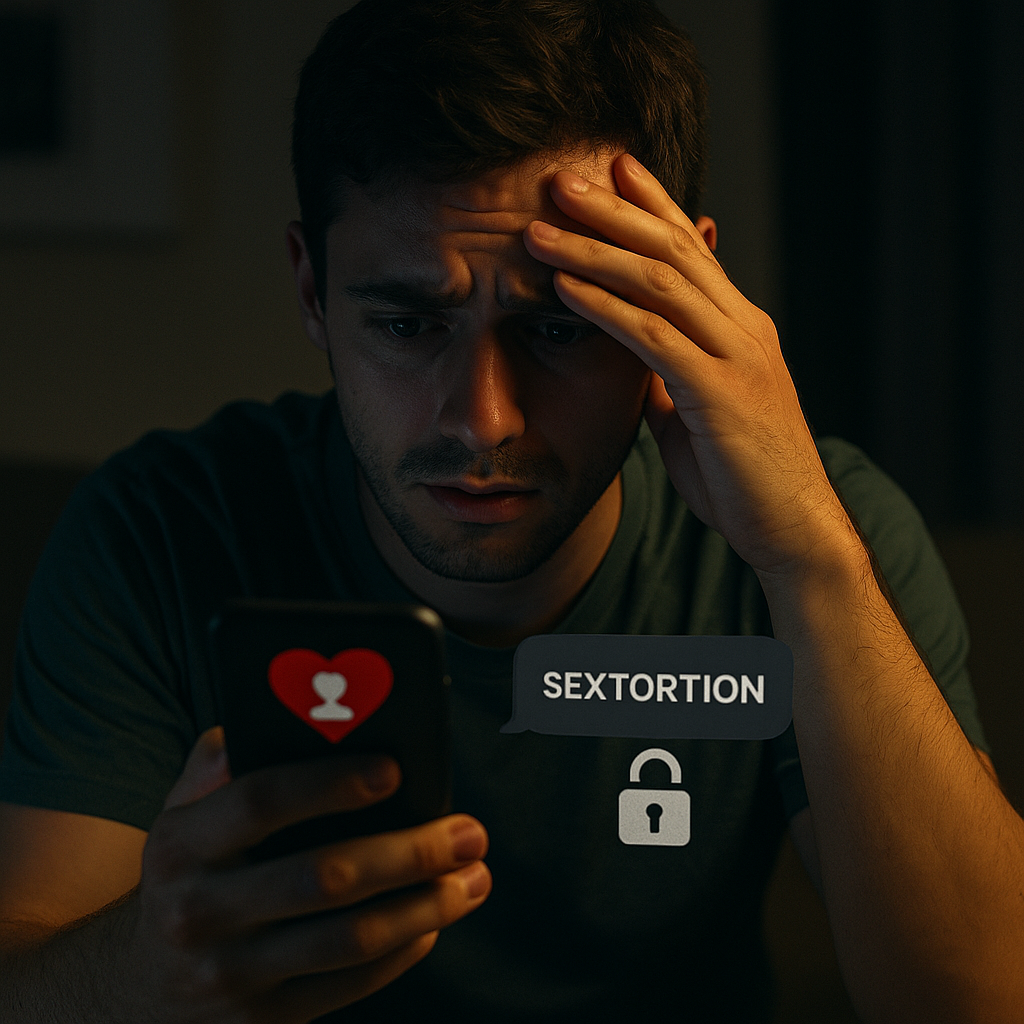
Nationwide, one of the largest building societies in the United Kingdom, has launched a campaign urging students and young adults to speak up if they are being pressured online. The company’s fraud prevention team stresses that victims of this type of exploitation, known as sextortion, often suffer in silence due to fear, shame, or embarrassment.
Sextortion is a form of online blackmail in which criminals pose as potential romantic partners or friends, gain a victim’s trust, and then coerce them into sending intimate images or videos. Once the content is shared, the criminal threatens to publish it online, send it to the victim’s family or employer, or release it through social media unless payment is made.
According to Nationwide’s head of fraud operations, Annya Burksys, the problem has become widespread among students and young people who spend significant time on dating apps and social media. She explained that scammers take advantage of natural curiosity and the desire for connection, especially among people navigating new social environments such as universities.
Law enforcement agencies across several countries are reporting a similar rise in these crimes. The UK’s National Crime Agency and police forces across England, Scotland, and Wales have recorded thousands of sextortion cases each year. Official figures show that in 2023 alone, police logged close to eight thousand blackmail offences connected to sextortion, compared with only a few dozen cases a decade ago.
Authorities believe the real number of incidents is far higher, as many victims never report what happened. Shame, fear of exposure, and the mistaken belief that they are to blame often stop victims from coming forward. This silence allows criminals to continue operating with little risk of detection.
The rise in sextortion parallels the growing use of artificial intelligence and sophisticated impersonation tools. Fraudsters can now generate realistic fake profiles, deepfake images, and videos to make their online identities more convincing. Some criminals even use stolen photographs or AI-generated faces to pose as attractive young people on dating apps and social platforms. These fabricated personas help them build credibility and make emotional manipulation easier.
Experts at the U.S. Federal Bureau of Investigation say that teenage boys between the ages of fourteen and seventeen have become a key target group for sextortionists. However, the threat is not limited to any gender or age. Anyone who uses social media or online dating platforms can be targeted. The goal of the scammers is not always sexual. Often, it is financial.
In many cases, the pattern begins innocently. A victim matches with someone online who appears friendly and interested. The conversation quickly becomes personal or flirtatious. The scammer then suggests moving to a private messaging app, where they ask for explicit photos or initiate video chats. Once the victim shares intimate content, the scammer’s tone changes instantly. Demands for payment follow, often accompanied by screenshots of the victim’s social media contacts or threats to release the material publicly.
Scam specialists note that the financial amounts requested vary widely. Some victims are asked for modest sums, such as a few hundred dollars, while others are pressured to send thousands. The criminals typically demand that money be sent quickly, using payment methods that are difficult to trace, such as cryptocurrency or online vouchers.
Nationwide’s campaign focuses on a simple but powerful message: talk to someone you trust. The organisation emphasises that confiding in a friend, family member, or teacher can prevent further harm. Burksys explained that many victims feel isolated and believe they have no way out once a threat is made. “The best thing a victim can do is to stop responding to the blackmailer and tell someone immediately,” she said.
Cybercrime experts agree that once an image or video is shared, the situation can escalate quickly, but early intervention can limit damage. The moment a threat appears, victims should stop communication, take screenshots of messages, preserve evidence, and report the incident to the authorities. In the United Kingdom, such cases can be reported to local police or through the National Crime Agency’s Cyber Crime Unit.
The Federal Trade Commission in the United States provides similar guidance. It advises individuals never to share explicit material with anyone they have not met in person, no matter how trustworthy they may seem online. The FTC also warns against sending money to anyone who claims to be in danger or urgently needs help. According to the agency, romantic manipulation remains one of the most financially damaging forms of online fraud.
Red flags for online dating scams include rapid escalation of intimacy, requests for private communication channels, reluctance to meet in person, or attempts to isolate the victim from family and friends. Another warning sign is when the person quickly begins asking for financial help or requests that the conversation be kept secret.
Victim support organisations stress that shame should never stop people from seeking help. Sextortion is a crime, and responsibility lies entirely with the perpetrator. In most cases, victims are targeted because criminals see emotional vulnerability, not because of any wrongdoing on the part of the person being blackmailed.
Police forces around the world have established dedicated task forces to track sextortion networks. These groups often operate across borders, making investigation difficult. Some are run by organised criminal gangs that use scripts, templates, and automation to target thousands of people simultaneously. Despite the anonymity of online platforms, investigators are making progress by tracing digital payment flows and uncovering the servers used to host illegal content.
Beyond law enforcement, education remains a critical part of prevention. Schools and universities are increasingly including online safety awareness in their orientation programs, helping students understand how to recognise manipulative tactics and protect themselves.
Experts encourage platforms themselves to take stronger action. Dating apps and social networks are being urged to implement stricter verification systems, remove fake accounts quickly, and share more data with law enforcement when sextortion incidents occur. While some companies have introduced new safety features, such as verified profiles or in-app reporting tools, enforcement is inconsistent across the industry.
For now, the most effective defence is awareness. Individuals must learn how to identify risks, verify profiles, and avoid situations that allow scammers to gain control. This includes avoiding the exchange of private photos or personal details with anyone not verified as genuine.