

Denmark’s Defence Intelligence Service (DDIS) publicly attributed a series of destructive and disruptive cyberattacks to Russian-linked hacking groups, assessing the activity as part of a broader “hybrid war” strategy. The agency said one of the incidents targeted a Danish water utility in 2024, resulting in manipulation of water pressure and burst pipes in the Køge area, while a second campaign involved large-scale denial-of-service attacks against Danish websites ahead of municipal and regional elections in late 2025. Denmark described the attacks as designed to create insecurity and undermine support for Ukraine.
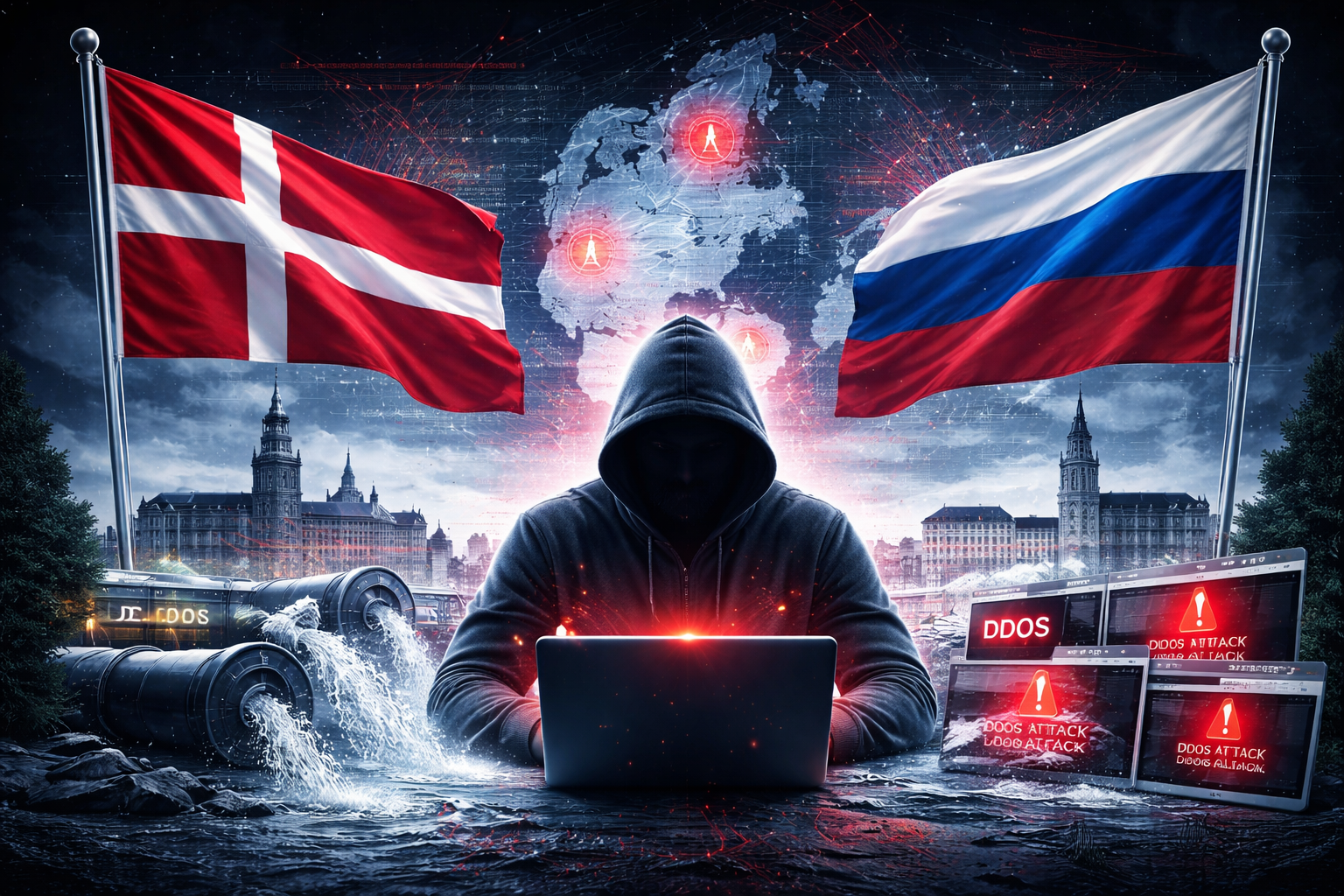
In its public announcement, the DDIS identified the pro-Russian hacking groups Z-Pentest and NoName057(16) as responsible for the two campaigns and said both have links to the Russian state. Danish officials stated that the timing of the attacks, including the use of election-period disruptions, indicated an intent to attract public attention and contribute to political instability. The ministry responsible for resilience and preparedness said the incidents exposed weaknesses in national cyber defences and underscored the need for strengthened protective measures.
Defence Minister Troels Lund Poulsen condemned the operations and described them as unacceptable, while Torsten Schack Pedersen, the minister for resilience and preparedness, said the attacks showed how forces hostile to Denmark could disrupt essential services. Danish authorities also signalled plans to engage diplomatically by summoning the Russian ambassador over Moscow’s alleged involvement.
The DDIS characterisation of these events reflects an expanding European focus on state-linked cyber operations targeting infrastructure and democratic processes. Danish officials said Moscow’s strategy included retaliation against countries that support Ukraine and an effort to exploit technical and procedural vulnerabilities in critical systems, including municipal websites and service utilities.
The incidents described form part of a larger pattern of alleged Russian cyber and hybrid activities in Europe since 2022, with several Western governments reporting similar sabotage and interference campaigns. Despite Moscow’s denials of responsibility in other cases, Denmark’s assessment highlights growing concerns about cyber threats tied to geopolitical conflict and the need for improved national and allied resilience.
Site Disclaimer
2-remove-virus.com is not sponsored, owned, affiliated, or linked to malware developers or distributors that are referenced in this article. The article does not promote or endorse any type of malware. We aim at providing useful information that will help computer users to detect and eliminate the unwanted malicious programs from their computers. This can be done manually by following the instructions presented in the article or automatically by implementing the suggested anti-malware tools.
The article is only meant to be used for educational purposes. If you follow the instructions given in the article, you agree to be contracted by the disclaimer. We do not guarantee that the artcile will present you with a solution that removes the malign threats completely. Malware changes constantly, which is why, in some cases, it may be difficult to clean the computer fully by using only the manual removal instructions.