

Messaging platform Discord Inc. announced that it is postponing the worldwide rollout of its age verification measures, citing the need to refine the system before broader implementation. The company had planned to expand the feature in early 2026 after initial launches in select markets.
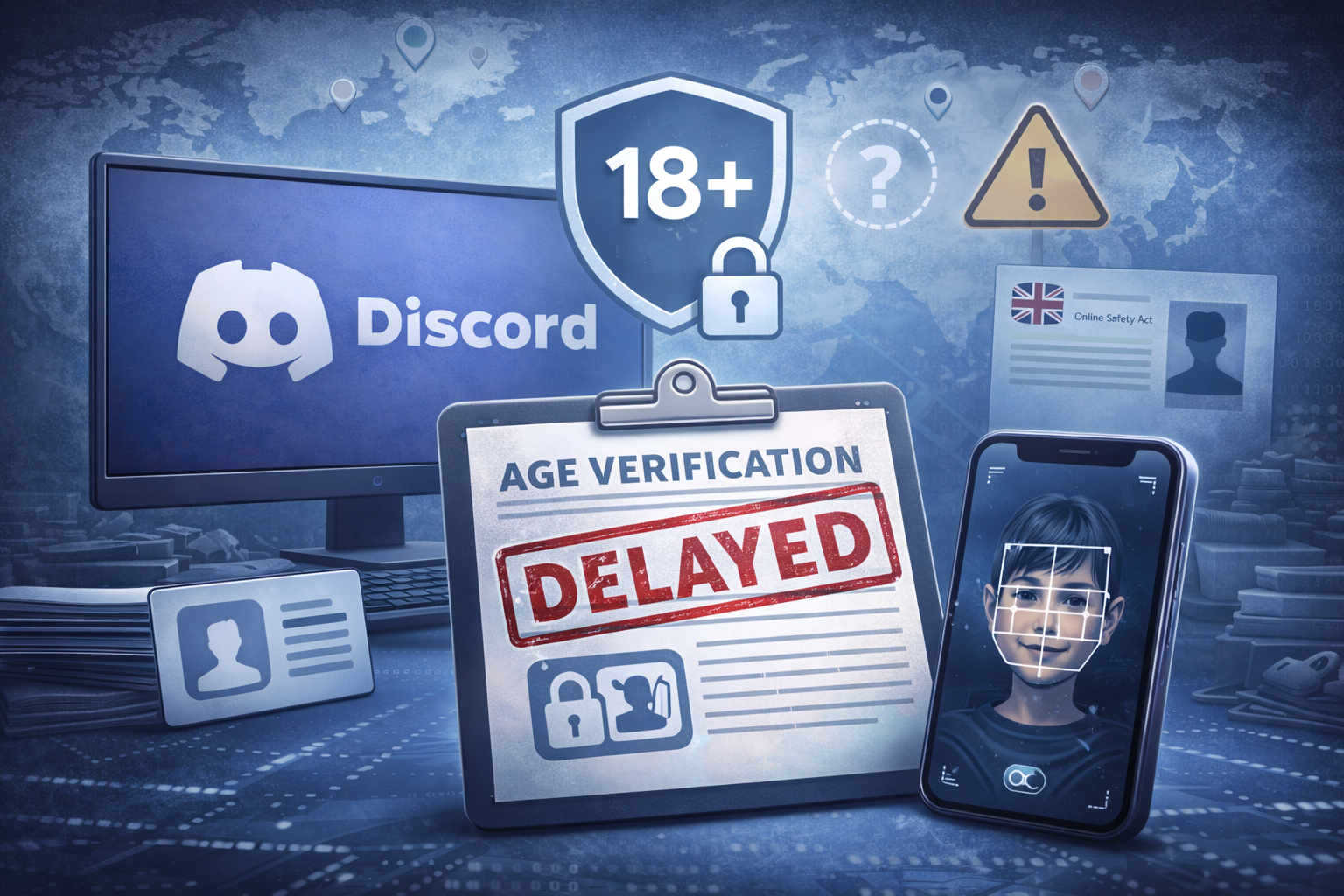
Under the planned age verification framework, Discord would assign users a default status of teen if the platform could not determine their age through existing signals. Accounts with teen status faced additional restrictions on access to age-restricted content and adult-oriented spaces unless users completed a dedicated verification process. Verification methods included the use of Discord’s internal age inference model or submitting a government-issued ID or branded selfie video scanned on a user’s device.
Discord said it would slow the global rollout to address operational issues with the verification process. The company stated that testing in limited regions identified areas where improvements were needed to ensure reliable age determination for users. Discord did not specify a new timeline for the broader release. It said the platform will continue to use its age inference model to confirm ages where confidence is high without requiring additional user input.
Discord’s age verification initiative was intended to align with safety obligations under laws such as the UK Online Safety Act, which requires platforms to take steps to prevent children from accessing harmful or adult content. The plan drew significant attention from privacy advocates and users, in part because of concerns about the collection and handling of sensitive age verification data.
Company representatives said the decision to delay the rollout reflects user feedback and observations from initial deployments. Discord emphasised that most accounts would still be age-verified automatically through its inference model, and only a subset of users would be asked to complete more detailed checks.
Some critics had argued that mandatory age verification could pose privacy risks, especially if users are required to submit government identity documents or biometric scans. Discord said it would continue to engage with regulators and privacy experts to refine its approach and address concerns.
The company reiterated that it remains committed to enhancing user safety and compliance with legal requirements. It said that delaying the global rollout would allow Discord to improve the verification experience and reduce potential friction for users who must prove their age to access certain areas of the platform.