

More and more European governments are advancing proposals to restrict access to social media platforms for children and teenagers. The measures focus on setting minimum age limits or requiring age verification before young users can create accounts or access feeds on services such as Instagram, TikTok, and X. The proposals reflect national debates about online safety and the role of digital platforms in shaping youth experiences.
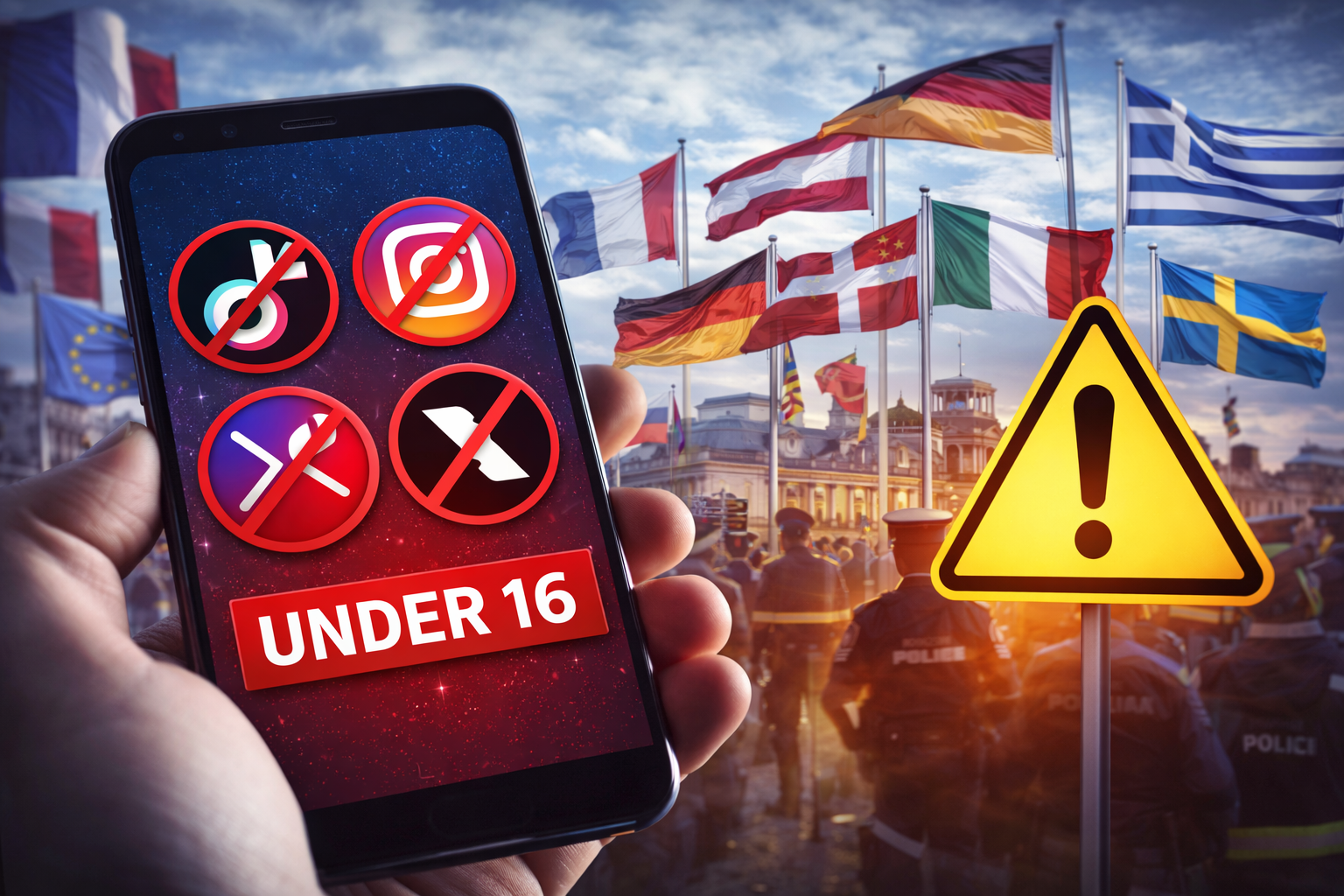
France, Spain, Slovenia, Greece, Denmark, Austria, and Poland are among the countries moving forward with formal plans that would introduce age-based restrictions. In France, members of the national parliament approved legislation that would bar children under 15 from using major social media platforms. The bill was advancing through legislative stages at the time of reporting and includes requirements for companies to check the ages of users. In Spain, government officials proposed a ban on social media use for people under 16. The Spanish plan would require technology companies to implement mandatory age verification systems to prevent underage access.
Slovenia was preparing draft legislation to prohibit social media access for children under 15. The Slovenian proposal was being developed with input from education officials and other stakeholders. Greece was reported to be close to announcing a social media ban for children under 15, with officials preparing rules that would apply to account creation and personalised content feeds. Denmark’s government had agreed on a political plan to ban social media use for children under 15, with some proposals including options for parental consent in specific cases.
Austria and Poland also announced plans to restrict social media use by minors. Austria’s discussions included a proposal to bar children under 14 from accessing social media services. In Poland, authorities were drafting legislation that would set a minimum age of 15 for social media use and consider updates to national digital identity systems to support enforcement and age checks.
Other European countries are examining or considering related restrictions. In Germany, political figures and parliamentary committees were studying how to introduce limits on social media use for minors, including the possibility of banning access for children under 16 and requiring stronger age verification. Italy and Portugal were reported to be working on draft proposals that would impose age limits or require parental consent for minors to use social media platforms. Finland’s leadership publicly expressed support for restricting social media access for children under 15, even though no specific legislative bills were pending at the time of reporting. Sweden and the Netherlands had not adopted formal bans, but were part of wider debates about youth access and online safety, including discussions of technical and policy measures that could be introduced in the future.
The United Kingdom was also reported to be assessing measures that could include age limits and stronger age verification requirements under its wider children’s online safety legislation. Lawmakers in the United Kingdom backed amendments that would bar social media use by those under 16 and impose verification tools, although the proposals still required final legislative approval.
There is no uniform European Union law that bans social media for minors. In late 2025, members of the European Parliament adopted a non-binding resolution recommending a harmonised minimum age of 16 for unrestricted access to social platforms, with exceptions for children aged 13 to 15 who could use services with parental consent. National governments retain authority to set their own age limits and enforcement mechanisms, and differences remain between countries in how age-based restrictions could be implemented and monitored.