

Europol has issued a robust call to action against caller ID spoofing, warning that the technique is increasingly used by fraudsters to facilitate financial crime and social engineering attacks. The agency states that fraudsters manipulate the number shown to call recipients so that the call appears to come from a trusted institution, a government body, or a familiar contact. This misrepresented identity enables criminals to trick victims into revealing personal details, authorising payments, or handing over sensitive data.
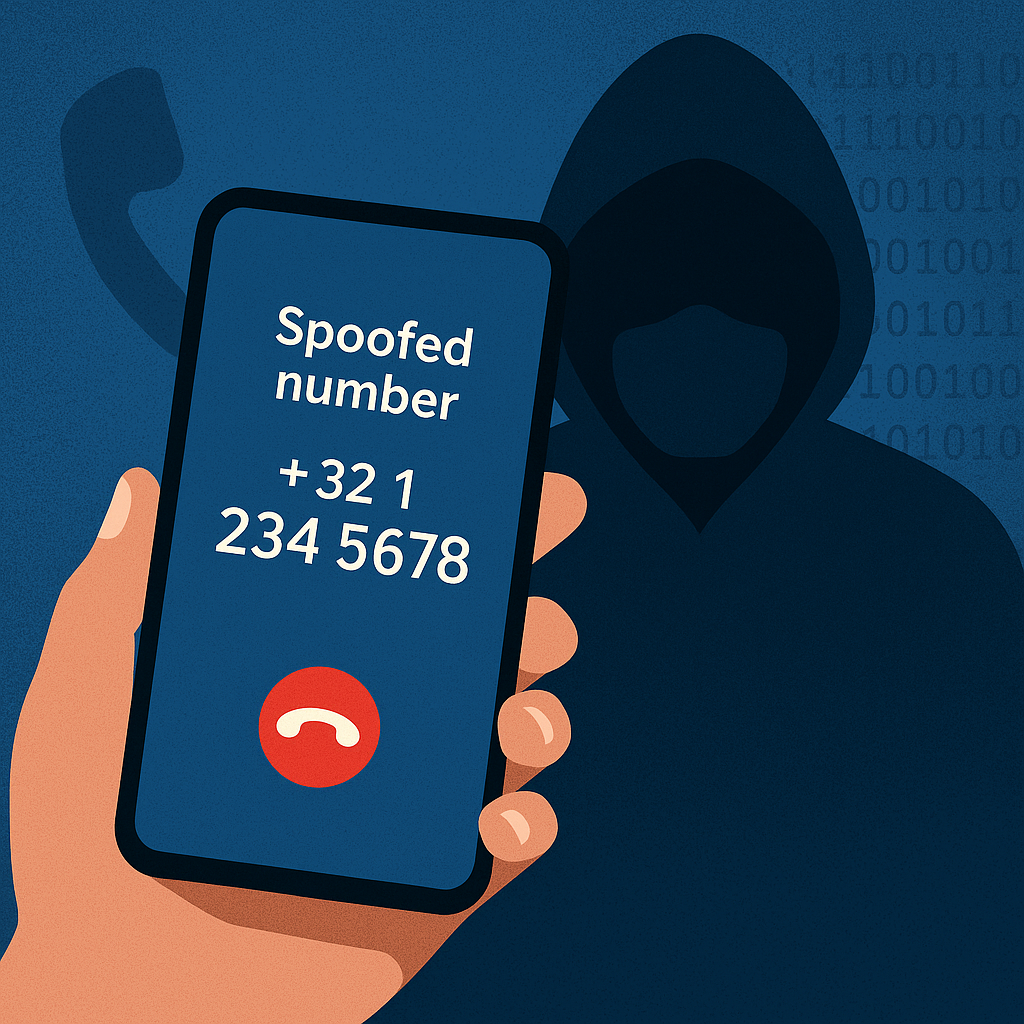
In its report, Europol notes that spoofed calls account for roughly 64 percent of reported cases of fraudulent phone communication worldwide, and that losses from these types of attacks are estimated at around 850 million euros annually.
The threat is not confined to one country or region, as the cross-border nature of these attacks complicates law enforcement investigations, because attackers often originate calls outside the victim’s country, thereby reducing traceability.
Caller ID spoofing is not simply an annoyance or nuisance. It is a key enabler in more serious frauds. Europol’s analysis identifies that spoofed calls help criminals impersonate legitimate organisations, which makes victims far more likely to comply with demands. For example, criminals may pretend to be a bank, a tax authority, or a utility provider and then convince a person to transfer money or reveal credentials.
The technique also supports so-called “tech support” scams in which callers claim to be from a well-known company and ask victims to install remote access software. Once control of the device is granted, criminals may extract data, install malware, or divert funds. In extreme cases, the group highlights “swatting” incidents where a spoofed call triggers an emergency services response to the victim’s home address, creating risk to life and property.
Europol warns that spoofing is often offered as a “service” by criminal groups. They provide tools, infrastructure, or platforms that allow others to conduct spoofed calls without deep technical knowledge. The existence of such services lowers the barrier to entry for fraud, allowing even small actors to use strong deception tactics.
Why does Europe face particular challenges?
European law enforcement agencies recognize several structural challenges in combating spoofing. Many countries’ telecoms networks and regulations were not built with fraud prevention or caller identity verification as a central concern. As a result, spoofed numbers can be routed through a variety of networks, including Voice over Internet Protocol channels, which complicates origin tracing and makes enforcement harder.
A survey by Europol across 23 countries found that law enforcement often lacks collaboration mechanisms with telecom operators, has limited access to technical data on spoofed calls, and faces legislation that is inconsistent across borders. For example, when a spoofed number appears to originate within a country, but the caller is actually outside it, the legal frameworks for investigation and mutual assistance become stretched and slow.
Moreover, many networks do not authenticate the caller line identification (CLI) when establishing calls. Without verification of the displayed number, users can be misled easily, and providers cannot reliably trace back the true source of the call. According to Europol, the fragmented implementation of technical standards across member states is one of the root causes of vulnerability.
Financial impact and human cost of spoofing
While precise global figures are difficult to pin down, Europol’s estimate of losses of around 850 million euros annually gives a clear indication of scale. The fact that 64 percent of fraudulent calls globally involve caller ID spoofing underscores its central role in modern fraud.
Individuals targeted by spoofed calls can suffer not only financial losses but also emotional and psychological harm. Victims often feel violated, embarrassed, or ashamed, which can delay reporting and recovery. Financially, they may lose savings, receive fraudulent loans, or suffer identity theft that has long-term consequences. Organisations can also face reputational damage when their name or number is spoofed in large campaigns.
Because the technique leverages trust, using a familiar or trusted number, victims are more likely to comply with requests. For example, a call impersonating a bank or regulator can lead to immediate compliance under perceived authority, reducing the time a victim has to question or reflect on the request.
What technical and regulatory responses are necessary
Europol outlines a multi-faceted strategy to combat caller ID spoofing. One technical measure is establishing robust traceback systems that allow phone calls to be traced hop-by-hop until the originator is identified. Without such tools, carriers may not identify the true source of spoofed traffic.
Another priority is implementing authentication of origin numbers. For example, networks should verify that a number being used as a caller ID actually belongs to the caller’s subscriber account, and that calls routed into a country from abroad should carry information verifying origin. Setting global standards for CLI authentication is crucial.
In regulatory terms, Europol calls for harmonised frameworks across Europe so that operators and law enforcement agencies work under consistent rules. This includes clear legal mandates for telecom operators to share call detail records, cooperate quickly with investigations, and block databases of known spoofed numbers.
Role of telecom operators and stakeholders
Telecommunications providers play a key role in prevention. They are responsible for implementing number validation, filtering suspicious calls, sharing telemetry with law enforcement, and identifying misuse of legitimate numbers. Europol stresses that many carriers still operate without sufficient internal monitoring of spoofed traffic, or lack integration with law enforcement channels.
Industry bodies and regulators must also step in. For example, telecom regulators can mandate carriers to adopt “Calling Line Identification authentication” or similar frameworks, issue compliance requirements for routing of international calls, and enforce penalties for carriers that enable spoofed traffic. Coordination among national regulators, operators, and law enforcement is essential because spoofing campaigns often jump jurisdictions.
Consumer awareness is another factor. Even the best technical defenses will fail if individuals continue to trust a number blindly. End-users must be trained to question unexpected calls, check official contact channels independently, and avoid providing sensitive information just because a trusted number appears on the screen.
What you can do to protect yourself from spoofing
From a personal or business perspective, several practices can reduce the risk posed by spoofing. First, when receiving calls requesting transfers, two-factor authentication, or login credentials, treat the caller as suspicious unless it is independently verified. Businesses should also train employees to question unexpected calls, even if they display trusted caller IDs.
Second, maintaining a policy of “verify out” helps. Hang up, find the organisation’s official number, and call them back rather than using the inbound number. This ensures you are not interacting with a spoofed number. Businesses should enforce this rule for finance departments, HR teams, or anyone with access to sensitive data or payments.
Third, adopt call filtering, block lists, and suspicious-number monitoring at the organisation level. If your business involves large transactions, requesting call detail records from carriers for suspicious inbound calls can help law enforcement trace spoofed traffic.
Finally, individuals should remain alert. Be especially cautious if a trusted number calls and asks for payment, personal data, or software installation without verifying the request. Reporting suspicious calls to regulators or carriers helps build intelligence that can deny fraudsters the scale they need.