

As autumn settles in and the season of outdoor cleanup begins, homeowners across the country are bombarded by emails. Many look harmless enough, just a notification saying you’ve won something for your yard. One recent example claimed you had won a large garden dump cart, a utility item many people purchase at hardware stores this time of year. It appeared to be from Home Depot, branded with their logo, and the subject was festive: “Your treat is just a click away!” Yet what seemed like a free prize was really a carefully crafted phishing scheme.
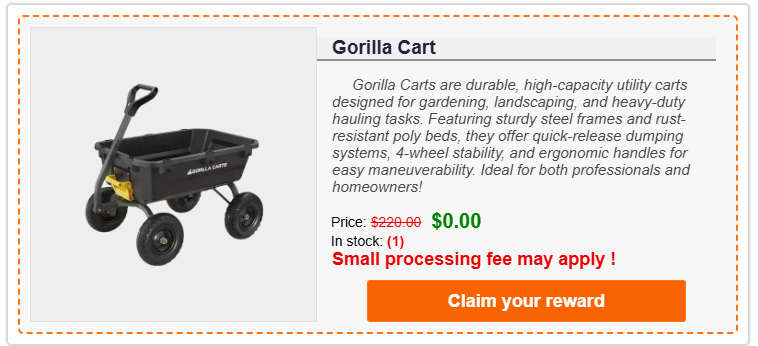
Behind the seasonal appeal, there was urgency, as the email warned that the offer would expire in minutes, and that you had to “Start here” to claim your prize. Once you clicked, the story got deeper. You were redirected to web pages asking you to fill out personal details, take an online survey, then enter your home address, and finally asked for payment information under the guise of a “small processing fee.” By then, your data had likely been handed over to attackers.
How the scam was built to look legitimate
What makes this scam especially dangerous is how realistic it appeared. The email was crafted under a Halloween theme, tapping into the seasonal mindset of yard cleanup and decoration. The promise of a free dump cart was plausible and timely. When people are thinking about hauling leaves or remodeling their yard, the bait makes sense.
Researchers found several giveaways that revealed the fake nature. For example, the sender’s email address ended in a domain apparently belonging to a high school in Los Angeles, and not Home Depot. The message content included hidden control characters and a single pixel tracker image to confirm the email had been opened. The goal was clear, make it look real enough to bypass spam filters and lure recipients into engaging.
Once the email recipient clicked the image or the “Start here” link, they were taken down a multi-step funnel. First, a survey or questionnaire asked basic questions about age or gender. Then a page asked for the delivery address. Finally came the payment request disguised as a processing fee. At that point, victims might have felt they had committed too far to turn back. The true outcome of this is their personal and financial information stolen and/or sold.
On the surface, it seems like a garden cart giveaway gone wrong. But the implications go deeper. When scammers harvest personal info like your name, address, payment card, and email, they gain tools they can reuse. That data might be sold or repurposed to send additional phishing attacks, commit identity theft, or access other accounts you own.
Because the scam is set up as a multi-stage funnel, it’s not always immediately obvious who is behind it, or how the data will be exploited later. Victims may think they’ve merely wasted a few minutes, but the real loss might come months down the line when an account is compromised or fraudulent purchases appear.
For companies, these scams have a brand impact. If you see an offer appearing to come from Home Depot, or any other major retailer, and it turns out to be fake, customer trust erodes. Retailers must work with security firms, and consumers need to remain alert to protect both their data and their confidence in brands.
Warning signs you might have missed
There were several red flags, some subtle, some more visible. The sender’s email domain was a big one, as it didn’t match the company it supposedly represented. The images and links were wholly clickable, set to redirect through compromised websites before reaching the final page. Hidden control characters were used in the message to avoid detection by spam filters. All of this signalled a well-organized phishing campaign.
Another tricky piece was urgency and exclusivity: “No tricks, just clicks,” and “Your treat is just a click away.” These phrases pressed the user to act immediately. When messages say the offer is valid only for a few minutes, they are usually trying to cut off reasonable reflection and make you act before you verify. By the time someone realises the error, the data is often gone.
What to do if you encounter an offer like this
If you receive an email offering a “free prize” from a trusted brand, pause first. Don’t click straight away. Instead, verify the offer with the company directly, visit their official site, or contact support. Check the sender’s email address: if it doesn’t end in the company’s official domain (for example, not finishing in “@homedepot.com”), it’s likely a scam.
If you did click the link, don’t ignore it. Review your accounts for suspicious activity. If you entered any payment or bank details, contact your bank immediately. Consider changing your passwords, enabling two-factor authentication, and scanning your device with security software. These steps can help limit damage and prevent data misuse.
It’s also wise to treat seasonal offers with additional scepticism. Promotions tied to holidays or major shopping periods often attract phishing campaigns. When a deal seems too good to be true, such as a free prize, just one click needed, it usually is.
If you get an email claiming you’ve won a large prize, especially from a retailer you shop with, don’t assume it’s legitimate. Take a breath, check the sender’s details, and ask if the brand is actually running such a contest. Avoid clicking links in unexpected emails. Consider whether you went to the brand’s website or signed up for such a giveaway.
The garden cart giveaway scam is a reminder that phishing attacks are evolving. They borrow the look and feel of real brands, tap into seasonal themes, and build urgency into their language. What looks like a treat can easily turn into trouble.
Stay cautious, keep your software updated, enable added protections like two-factor authentication, and treat any free offer that asks for personal details or payment with scepticism. In the end, your best prize is awareness, and avoiding being tricked by what looks like a shortcut to something for nothing.