

Cybersecurity experts are warning users about a growing Instagram scam involving fake password recovery tools that steal personal information and spread malware. The fraudulent operation, promoted under names such as “Instagram Password Hacker,” has been circulating across multiple websites that claim to help users retrieve or hack Instagram passwords. Instead of providing any real service, these sites redirect victims to phishing pages designed to collect sensitive data or deliver malicious software.
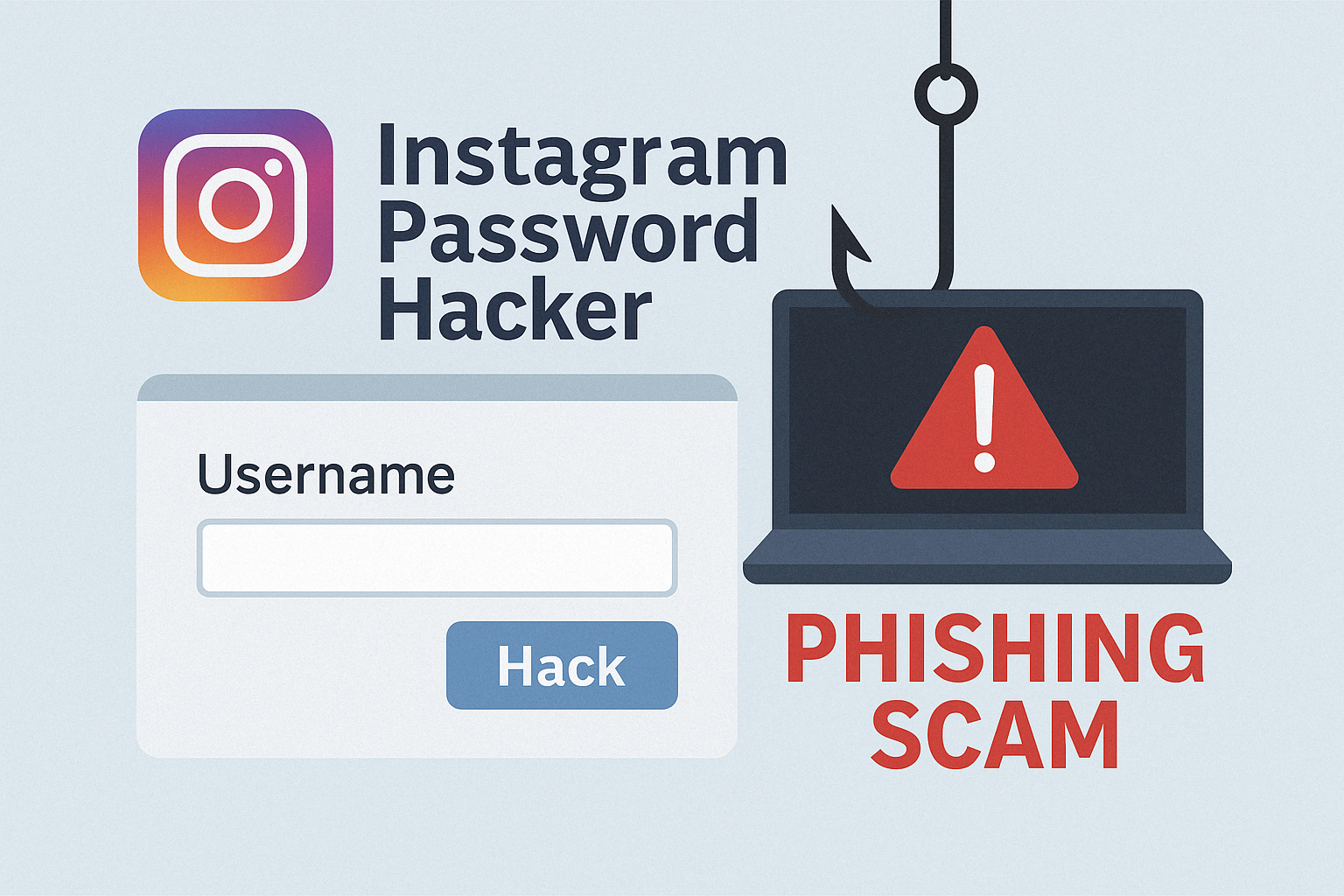
The scam uses convincing social engineering tactics to attract individuals who have lost access to their Instagram accounts or wish to view someone else’s profile. By appearing as legitimate “recovery” tools, the operators exploit curiosity and frustration. The fake interface invites users to enter the username of an Instagram account they want to “hack.” After the entry, the system simulates a password retrieval process and then redirects the visitor to a secondary page. That page requests personal information such as email addresses, phone numbers, or banking details under the pretense of verification.
In many cases, victims are also asked to send an SMS or complete a short survey before gaining supposed access to the recovered credentials. Instead, their data is harvested and stored for further misuse. Some versions of the scam prompt users to download a file claimed to contain the hacked password, which instead installs malware. Cybersecurity researchers have identified infections ranging from trojans and adware to ransomware and cryptocurrency miners. These threats can enable attackers to steal more data, monitor online activity, or damage files.
How the phishing site operates
The Instagram Password Hacker tool relies heavily on deception and automation to appear authentic. The page design often mimics legitimate Instagram branding, complete with similar colors, logos, and progress indicators. Once the user engages with the tool, it performs fake loading animations that reinforce the illusion of a working recovery system. Meanwhile, embedded scripts record the visitor’s data and send it to command-and-control servers operated by the scammers.
According to cybersecurity analysts, the scheme is distributed through advertising networks, compromised websites, and unwanted browser extensions. Victims may also encounter the pages through social media links, online forums, or spam messages promoting “free Instagram hacks.” These channels increase exposure and make the scam appear more credible.
The phishing sites are frequently linked to broader malware distribution networks. Once installed, the malicious software can alter browser settings, collect login credentials, display intrusive ads, or redirect users to additional fraudulent content. Some infections also download secondary payloads, expanding the attacker’s control over the device.
Researchers note that the scam’s operators regularly change website domains to avoid detection. Many of these domains are hosted on servers known for distributing other scams or pirated content. This rotation strategy makes it difficult for authorities to block every instance of the Instagram Password Hacker scam.
Detection and removal
Users who have interacted with such a site should take immediate action to reduce potential damage. Security specialists recommend running a full system scan using trusted antivirus or anti-malware software. This scan helps detect and remove any hidden threats, including adware components or residual scripts left behind by the phishing site.
It is also important to review recently installed applications and browser extensions. Removing unfamiliar or suspicious items can stop repeated redirects or unwanted pop-ups. If problems persist, resetting the browser to default settings may eliminate remaining traces of infection.
Victims should also change their passwords on all accounts that share similar credentials. Since phishing operators often test stolen data across multiple platforms, reusing passwords increases the likelihood of further compromise. Enabling two-factor authentication (2FA) adds another layer of protection, making it harder for attackers to gain access even if they obtain login information.
Preventing future Instagram scams
The Instagram password hacker scam highlights the ongoing risks associated with online credential recovery tools. It should be emphasized that no legitimate service can hack or unlock another person’s Instagram account. These claims are always fraudulent and often serve as gateways for identity theft or malware infection.
To stay protected, users should avoid downloading from unverified file-sharing sites or clicking on advertisements that promise free account access or social media followers. When password recovery is necessary, it should be done only through official Instagram channels, which include secure verification and password reset links.
Security awareness remains one of the most effective defenses against such scams. By learning how phishing sites operate, users can recognize warning signs like poor website design, missing HTTPS encryption, and unrealistic promises. Keeping antivirus software up to date, enabling real-time protection, and backing up important files can further reduce risks from malware infections or ransomware attacks.
Site Disclaimer
2-remove-virus.com is not sponsored, owned, affiliated, or linked to malware developers or distributors that are referenced in this article. The article does not promote or endorse any type of malware. We aim at providing useful information that will help computer users to detect and eliminate the unwanted malicious programs from their computers. This can be done manually by following the instructions presented in the article or automatically by implementing the suggested anti-malware tools.
The article is only meant to be used for educational purposes. If you follow the instructions given in the article, you agree to be contracted by the disclaimer. We do not guarantee that the artcile will present you with a solution that removes the malign threats completely. Malware changes constantly, which is why, in some cases, it may be difficult to clean the computer fully by using only the manual removal instructions.