The Federal Bureau of Investigation’s Internet Crime Complaint Center has issued an alert about a surge in account takeover fraud in which attackers pose as employees of banks or other financial institutions. IC3 records indicate that since January 2025, more than 5,100 complaints have been logged, with total reported losses exceeding USD 262 million. The alert identifies a pattern of scam attempts targeting both individuals and businesses.
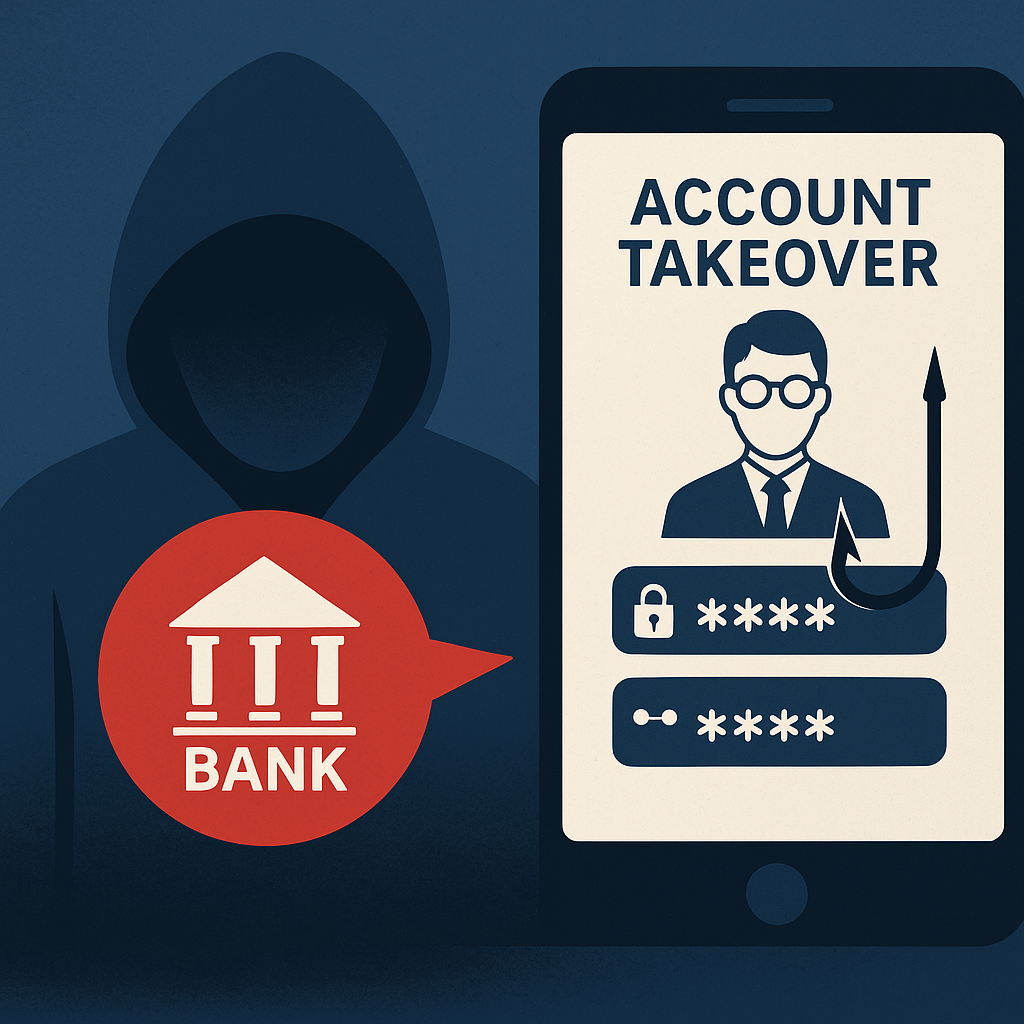
In many cases, perpetrators contact potential victims by phone, text, or email while disguising their identity through caller-ID spoofing or fraudulent display names. They present themselves as customer support or technical staff from banks, pensions, or payroll services. Using social engineering, they trick targets into revealing login credentials, one-time authentication codes, or multi-factor authentication tokens. Once attackers gain control over an account, they often reset the password, lock out the legitimate owner, and proceed to transfer funds out. Transfers commonly use cryptocurrency wallets or obscure payment pathways, making tracing difficult.
The alert warns that banks and legitimate financial institutions rarely initiate contact requesting credentials or authentication codes out of the blue. Consumers who receive unsolicited contact asking for such sensitive information should hang up immediately, then verify by calling the financial institution using a number from an official statement or website rather than any contact information provided in the suspicious message.
IC3 advises all account holders to enable the strongest available authentication, to use unique and complex passwords, and to avoid logging in through links provided in messages or emails. Instead, users should bookmark official login portals or use saved browser favourites. When possible, account owners should enable phishing-resistant authentication methods beyond SMS-based codes.
If a user suspects compromise or fraudulent activity, the alert recommends immediate action: contact the financial institution directly, revoke compromised credentials, monitor account activity, and file a report with IC3, including any evidence such as call logs, suspicious messages, or transaction records.
The recent rise in attacks coincides with increased reliance on online banking, digital payment platforms, and remote payroll services. Analysts say that many of these fraud attempts exploit vulnerable authentication methods and credentials exposed in past data breaches. Firms and individuals with relaxed security settings or repeated credentials across multiple services are particularly at risk.
Financial service providers and clients are encouraged to treat any unexpected request for authentication or payment information with caution. Instituting rigorous verification protocols and using hardened security controls can significantly lower exposure to account takeover threats.
Incoming search terms:
Site Disclaimer
2-remove-virus.com is not sponsored, owned, affiliated, or linked to malware developers or distributors that are referenced in this article. The article does not promote or endorse any type of malware. We aim at providing useful information that will help computer users to detect and eliminate the unwanted malicious programs from their computers. This can be done manually by following the instructions presented in the article or automatically by implementing the suggested anti-malware tools.
The article is only meant to be used for educational purposes. If you follow the instructions given in the article, you agree to be contracted by the disclaimer. We do not guarantee that the artcile will present you with a solution that removes the malign threats completely. Malware changes constantly, which is why, in some cases, it may be difficult to clean the computer fully by using only the manual removal instructions.