

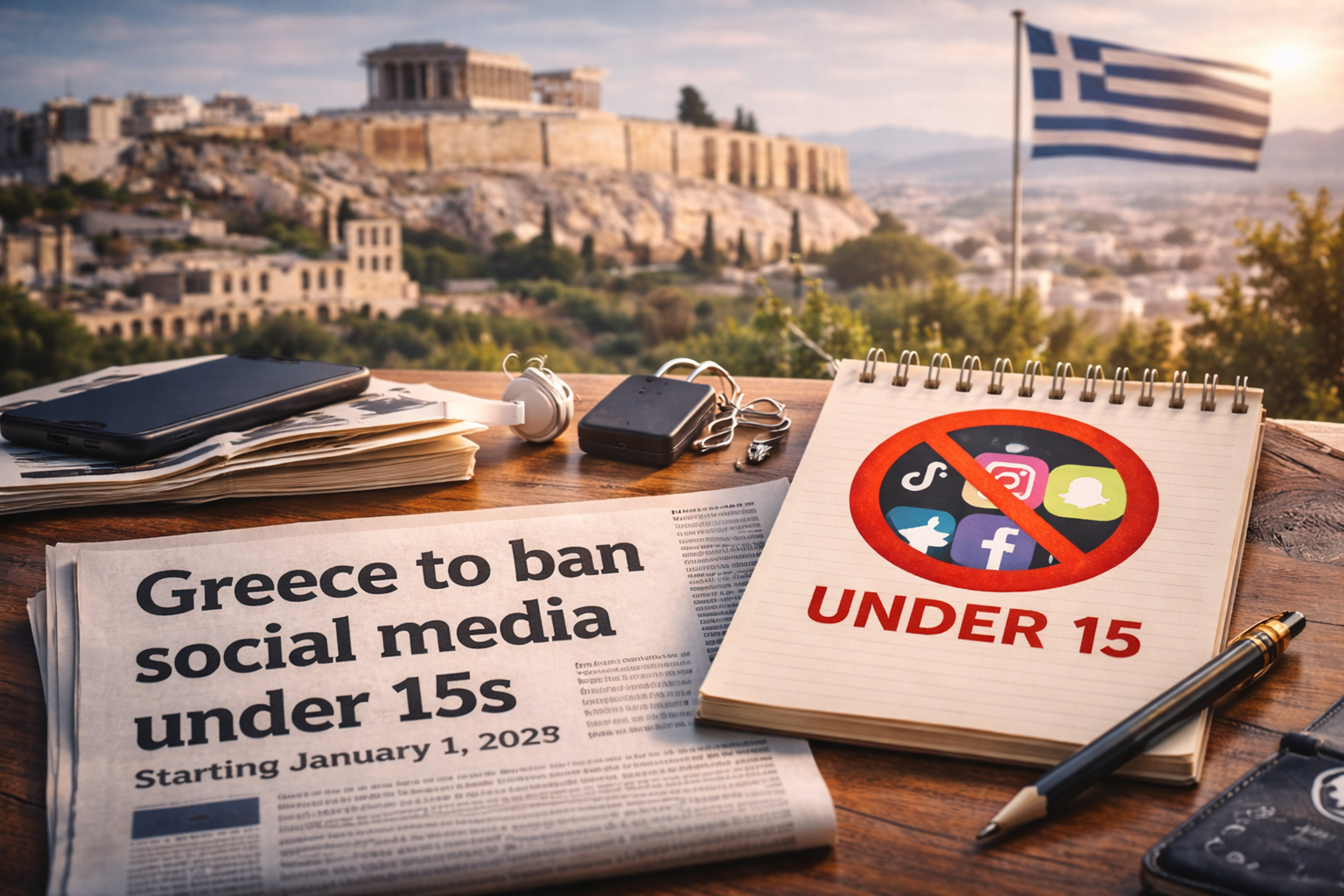
Greece is moving forward with plans to prohibit children under the age of 15 from using social media platforms, with the measure expected to take effect on January 1, 2027, according to government announcements and reporting.
Prime Minister Kyriakos Mitsotakis revealed the plan in a video shared on TikTok, directly addressing younger audiences. He described the policy as a necessary step in response to growing concerns about the effects of social media on children’s well-being.
According to the announcement, the ban would apply to major platforms including Facebook, Instagram, TikTok, and Snapchat. The legislation is expected to be introduced later in 2026, with enforcement beginning the following year.
The government has linked the decision to concerns raised by parents and young people themselves. Officials pointed to issues such as anxiety, poor sleep, and the addictive design of social media platforms. Mitsotakis said these factors have contributed to increased pressure on children, including constant comparison and the need to remain active online.
The proposal is part of a broader effort to regulate digital exposure among minors in Greece. The country has already implemented restrictions such as banning mobile phones in schools and introducing parental control tools aimed at limiting screen time.
Greek officials have also emphasized that the measure is not intended to remove children from technology entirely, but rather to reduce harmful patterns of use. The Prime Minister stated that digital tools can still offer educational and creative benefits when used appropriately.
The initiative reflects a wider trend across Europe and beyond, where governments are increasingly considering stricter rules for youth access to social media. Greece has indicated that it hopes to push for coordinated action at the European Union level, including the development of standardized age verification systems.
Despite support for such measures, experts have noted that enforcement may be challenging. Age verification systems can be bypassed, and critics argue that bans alone may not fully address the underlying issues related to online behavior and digital literacy.
The proposal remains subject to legislative approval, and further details on enforcement mechanisms and platform responsibilities are expected as the law moves forward.