

A new cybersecurity scare has hit the retail and sportswear industry after hackers claimed to have stolen and are now threatening to release more than 47GB of sensitive data from Summit Golf Brands. The company manages several well-known golf apparel labels, including Zero Restriction, Fairway & Greene, B. Draddy, and EP New York.
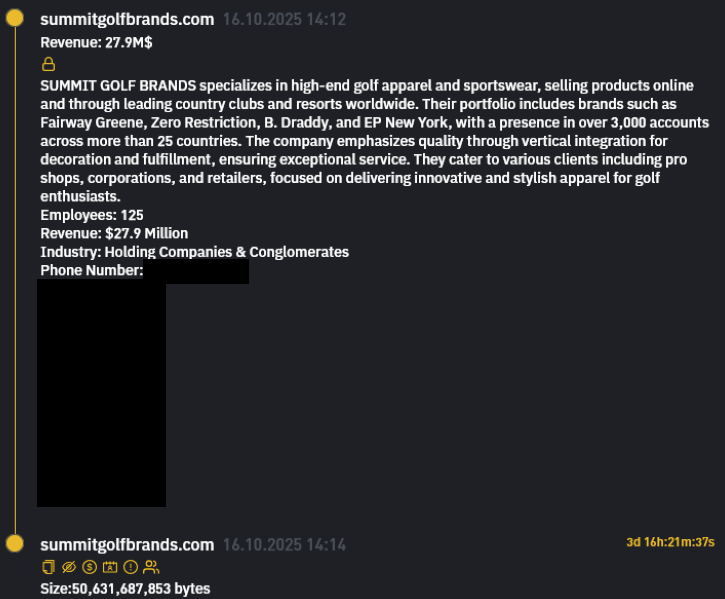
The group behind the attack is a notorious ransomware operation known as INC Ransom. The hackers posted a message on their leak site on the dark web claiming responsibility for the breach and threatening to publish the stolen data unless their demands are met. While they have not yet released proof of the stolen files, the group’s history suggests that the threat is serious.
INC Ransom is known for targeting organizations across a wide range of industries, from healthcare and education to manufacturing and government services. Their attacks typically involve stealing data before encrypting systems, a technique often called “double extortion.” It allows them to demand payment twice, once for restoring access and again to prevent the public release of confidential information.
At the time of writing, Summit Golf Brands has not confirmed details of the attack or commented on whether it has received ransom demands. However, the threat alone has already raised concerns about the security of corporate data and the growing frequency of these sophisticated breaches.
How the attack likely happened
Most ransomware operations follow a predictable pattern. The attackers first gain access to a company’s internal network, often through phishing emails, weak passwords, or unpatched vulnerabilities in outdated software. Once inside, they quietly explore the system, identifying valuable files and exfiltrating them before deploying malware to lock employees out.
This combination of encryption and data theft creates enormous pressure on victims. Losing access to systems is damaging, but the risk of having customer records, internal communications, and business strategies posted online can be even worse.
Groups like INC Ransom use this leverage to force companies into paying large sums in cryptocurrency. They usually set deadlines and issue public warnings on leak sites to intimidate victims. In some cases, even after companies pay, the stolen data still appears online weeks later — proving that trusting criminals rarely guarantees safety.
Why the breach matters
At first glance, a cyberattack against a golf apparel company may seem like a niche problem. But the implications extend far beyond one business. If customer databases or employee files are part of the stolen data, individuals could face increased risks of identity theft, phishing scams, or credit card fraud.
In today’s connected retail environment, even companies that don’t seem “digital” rely heavily on data. Everything from online orders and marketing analytics to supplier coordination depends on stored information. If that data falls into the wrong hands, it can be misused in countless ways — from impersonating customers to exploiting financial systems.
The attack also highlights how industries that once considered themselves low-risk targets have become increasingly vulnerable. Cybercriminals are opportunists. They know that companies with less mature cybersecurity practices are often easier to compromise and still hold valuable customer or payment data.
Summit Golf Brands’ next steps are crucial
For Summit Golf Brands, the next steps are crucial. The company’s immediate focus should be on containing the breach, identifying which systems were accessed, what information was stolen, and how the attackers gained entry. Cybersecurity experts typically begin by isolating affected systems to prevent further spread, then comb through logs to trace the attackers’ movements.
The company will also need to contact law enforcement and possibly regulatory bodies, depending on where the affected data was stored and who it belongs to. Many regions have strict notification laws requiring companies to alert customers and partners when personal data is exposed.
Equally important is communication. Silence can cause even more damage to a company’s reputation than the breach itself. Clear, transparent updates can help reassure customers and partners that the situation is being taken seriously and handled responsibly.
For customers, the incident is another reminder to stay cautious about how and where their data is stored. If you’ve purchased from or registered with any of the affected brands, monitor your accounts and financial statements closely. Watch for unusual charges, and be suspicious of emails asking you to confirm your information or reset your password.
Phishing attempts often follow major data breaches, as scammers take advantage of the confusion to trick victims into handing over more information. Always verify the sender before clicking on links or responding to messages claiming to be from the company.
For other businesses, this case should be a wake-up call if previous ones have not been. Cyberattacks can strike any organization, no matter how established or seemingly low-risk. Companies should regularly review their security posture, ensure employees are trained to recognize phishing, and invest in reliable backup and recovery systems.
It’s also wise for organizations to assume that, at some point, they will be targeted. Having an incident response plan in place, including communication strategies and technical procedures, can make the difference between a temporary disruption and a major catastrophe.
A look at the bigger picture
What makes this breach particularly concerning is that it reflects a larger trend in the cybercrime world. Ransomware gangs have evolved from simply encrypting files to operating like full-fledged businesses. They run public leak sites, post press releases, and even “negotiate” with victims through customer service-style chat portals.
The data itself may not sound massive compared to the terabytes stolen from larger corporations, but the content matters more than the size. If it includes contracts, financial records, supplier details, or internal communications, it could expose strategies and relationships that competitors or criminals could exploit.
It also exposes the fragile nature of trust in the digital economy. Consumers are expected to share personal information when shopping online, signing up for loyalty programs, or registering warranties. Every breach like this one chips away at that trust, reminding people how vulnerable their data truly is once it leaves their hands.