

As of September 30, 2025, a new law in Ohio officially requires adult content websites to verify the age of visitors before granting access. The legislation, passed earlier this year, targets online platforms where at least one-third of the material is considered adult-only. These websites must now confirm that users are at least 18 years old before allowing them to view content.
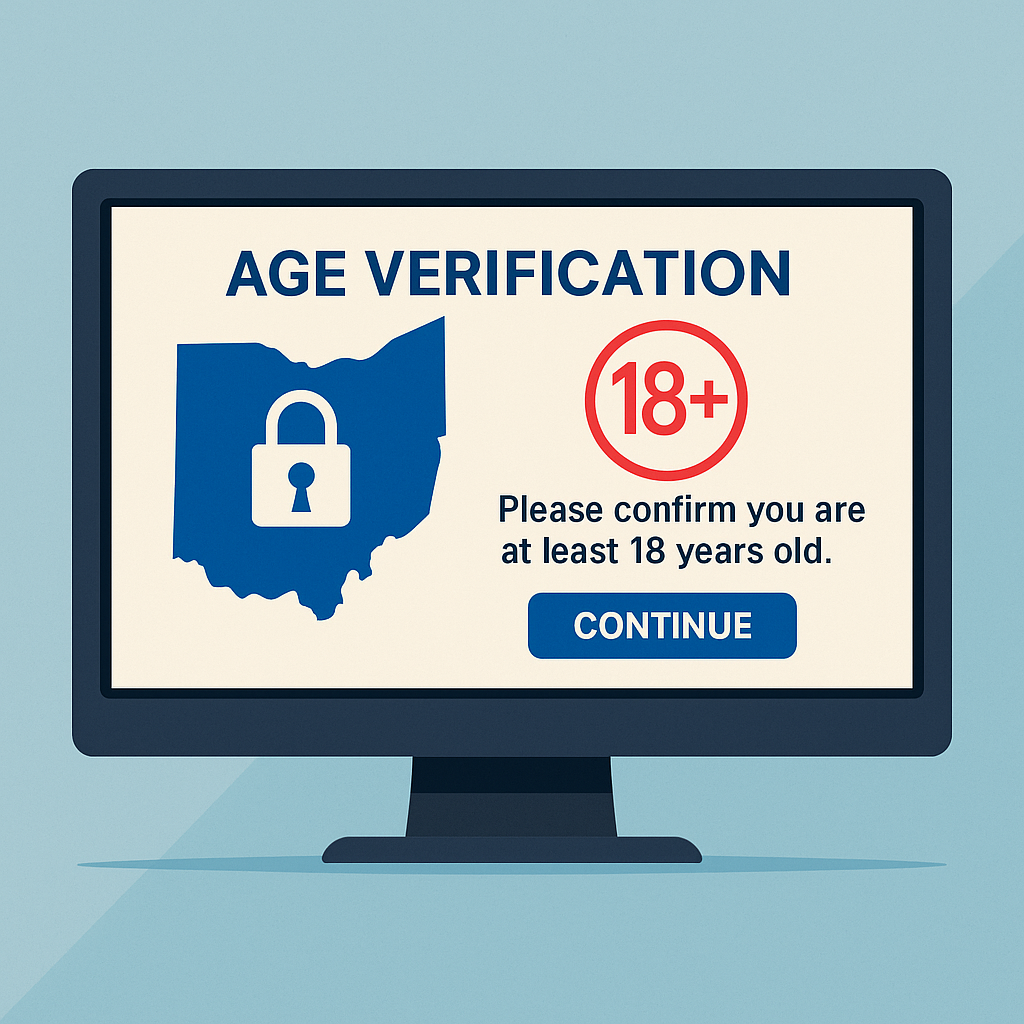
The law positions Ohio as the 24th state in the United States to implement an age verification mandate for adult content. It was included in the state’s 2025 budget and approved in June after several previous attempts failed to gain momentum.
How websites must verify user age
Websites that meet the criteria of the law must use a third-party verification system to confirm the age of anyone visiting from within Ohio. These verification systems can check government-issued identification, such as a driver’s license or passport, or validate age through transactional data, which can include employment, banking, or educational records.
In addition to confirming user age, websites must also use geolocation tools to identify when a visitor is physically located in Ohio. Only users verified as adults are permitted to access restricted material. Those who fail verification or who refuse to provide proof of age are automatically blocked.
The intent behind the legislation
The new law is part of a broader effort by Ohio lawmakers to limit minors’ exposure to what the state defines as “obscene or harmful” online content. Supporters of the measure say it aims to protect children and teenagers from inappropriate material that is easy to access on popular adult sites.
State officials have argued that requiring age verification mirrors long-standing offline standards, where access to adult material is restricted by law. The legislation’s backers claim that applying similar rules online helps balance child protection with freedom of choice for adults.
While the law intends to protect minors, privacy advocates and civil rights groups have expressed concern about its broader implications. Critics argue that requiring adults to upload sensitive identification data to third-party systems introduces new privacy risks. These systems could potentially expose personal information to security breaches or misuse if not properly managed.
Free speech organizations have also raised alarms about how broadly the law defines material “harmful to juveniles.” Some experts fear that the regulation could extend beyond explicit adult content to include sexual health information or educational resources, restricting legitimate content in the process.
The effect on websites and users
For Ohio residents, the law means that accessing adult content sites now involves additional verification steps. When a user from within the state visits an affected website, the site must first confirm their location, then request proof of age.
Websites that fail to implement compliant verification systems face potential fines and legal enforcement. In some cases, platform operators may choose to block access entirely for users in Ohio rather than redesign their systems to meet the state’s technical requirements.
Some adult content platforms have already begun implementing third-party verification tools, while others are assessing whether compliance is feasible given the added cost and privacy concerns.
Ohio joins a growing list of U.S. states that have adopted similar laws in recent years, including Louisiana, Utah, Texas, and Virginia. Each state’s legislation varies slightly in how it defines adult content and what verification methods are acceptable, but all share the goal of limiting minors’ access to explicit material online.
Tech companies and privacy groups have called for a more consistent national framework to avoid a patchwork of state-level regulations. They argue that varying requirements could confuse both users and online platforms, creating inconsistencies in privacy protection and access rights.
What comes next for enforcement
With the law now active, the Ohio Attorney General’s office is responsible for ensuring compliance. Authorities are expected to monitor whether websites are implementing proper verification systems and to investigate reported violations.
The next several months will reveal how effectively the law can be enforced and how the online adult industry adapts to the new legal environment. Privacy and technology experts say that while the goal of protecting minors is widely supported, the challenge lies in doing so without undermining adults’ right to privacy or free access to lawful content.