

The ” We detected a new login attempt to your wallet from an unrecognized device ” scam is a phishing email that pretends to warn the recipient about suspicious access to a digital wallet. The email claims that a sign-in attempt was made from a device the system does not recognize. It presents this as a security event and implies that the account could be at risk if the activity is not reviewed. This alert is not real and is not sent by a legitimate wallet provider.
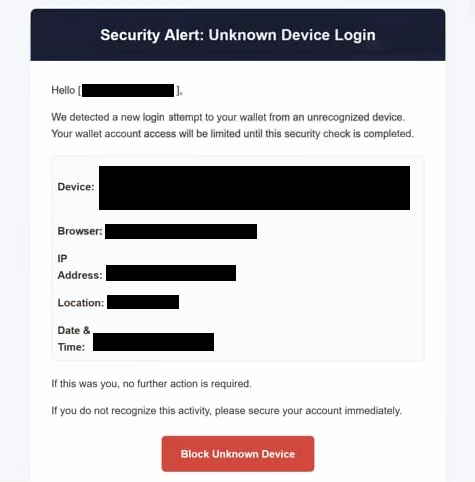
The message is written to feel reassuring rather than threatening at first. It often states that the login attempt was blocked or flagged, suggesting that security systems are working as intended. The email then shifts responsibility to the user by saying that confirmation is required to complete the protection process. A single action button is included, usually labeled with wording about reviewing the login or securing the wallet.
That button leads away from the email and opens a fraudulent web page. The page is made to resemble a real wallet sign-in screen. It may use a familiar color scheme, a simple logo, and a clean layout that looks like a standard login form. The page does not contain full account navigation, transaction history, or help sections. It is limited to input fields and a short security message.
The form on this page asks for login details such as an email address or username and a password. In some versions of the scam, the page also asks for additional security information. This can include one-time passcodes, backup codes, or other verification data. The page claims this information is needed to confirm the login attempt. In reality, every detail entered is collected by the scammers.
Once the information is submitted, the page may behave in different ways. It can show a loading screen, display a generic error, or redirect the user to the real wallet website. This redirection is intentional and is used to make the interaction feel legitimate. By the time the user reaches a real page, the credentials have already been captured.
The information targeted by the ” We detected a new login attempt to your wallet from an unrecognized device ” scam can give attackers full control over a digital wallet account. A wallet account may store cryptocurrency balances, transaction records, linked payment methods, and personal identity information. With valid credentials, attackers can attempt to sign in from their own device and bypass normal protections.
If access is gained, funds can be transferred out of the wallet. Security settings can be changed to prevent recovery by the original owner. Contact information and recovery options can be modified so that account alerts no longer reach the victim. In some cases, attackers monitor the account instead of acting immediately, waiting for additional deposits before initiating transfers.
The login alert itself is fabricated. The scammers do not see real login attempts and do not receive security data from wallet providers. The message is designed to feel plausible because many users are familiar with device-based security warnings. That familiarity is what makes the scam effective. The alert sounds like something that could happen, which lowers suspicion and encourages quick action.
The full ” We detected a new login attempt to your wallet from an unrecognized device ” phishing email is below:
Security Alert: Unknown Device Login
Hello [ – ],
We detected a new login attempt to your wallet from an unrecognized device. Your wallet account access will be limited until this security check is completed.
Device: –
Browser: –
IP Address: –
Location: –
Date & Time: –If this was you, no further action is required.
If you do not recognize this activity, please secure your account immediately.
Block Unknown DeviceFor security reasons, this link will expire in 30 minutes.
© 2026. All rights reserved.
If you have questions, contact our support team.
Signs of a phishing email
The ” We detected a new login attempt to your wallet from an unrecognized device ” scam can be identified by looking at how the email is structured and what it leaves out. One of the first indicators is the sender address. The display name may look correct, but the actual sending domain does not match the official domain used by the wallet service. Legitimate providers send security alerts only from their own verified domains.
Another sign is the lack of meaningful account context. The email usually does not include a user name, wallet ID, or partial account reference. It relies on a general warning rather than specific details. Real wallet alerts often include information such as the device type, location, or approximate time of the login attempt. The scam email keeps the description vague to avoid mistakes.
The link in the email is also a strong indicator. The destination does not match the official wallet website. It may use a long address with unrelated words or a domain that has no clear connection to the service. This difference becomes visible when the page loads and the browser address bar is checked. A real wallet provider does not ask users to submit credentials on unrelated domains.
The behavior of the linked page is another clue. The page focuses entirely on collecting information and offers no real account interaction. There is no access to balances, no transaction list, and no account settings beyond the login form. Legitimate wallet platforms provide a full dashboard after authentication, not a single static page.
Urgency is used carefully in this scam. The email does not always threaten immediate account suspension. Instead, it suggests that funds could be at risk if the login is not reviewed. This softer pressure can feel more believable and is meant to prompt action without triggering alarm. Real wallet services allow users to review security events through their official app or website without following links in emails.
Another defining trait is the request for sensitive security data. Authentic wallet providers do not ask for full passwords, backup phrases, or one-time codes through email links. Any request for this information outside the official platform is a clear warning sign.
The ” We detected a new login attempt to your wallet from an unrecognized device ” scam stands out because it imitates modern security notifications rather than traditional account warnings. By understanding how the alert is framed, where the links lead, and what information is requested, users can recognize the scam and avoid handing over control of their wallet.
Site Disclaimer
2-remove-virus.com is not sponsored, owned, affiliated, or linked to malware developers or distributors that are referenced in this article. The article does not promote or endorse any type of malware. We aim at providing useful information that will help computer users to detect and eliminate the unwanted malicious programs from their computers. This can be done manually by following the instructions presented in the article or automatically by implementing the suggested anti-malware tools.
The article is only meant to be used for educational purposes. If you follow the instructions given in the article, you agree to be contracted by the disclaimer. We do not guarantee that the artcile will present you with a solution that removes the malign threats completely. Malware changes constantly, which is why, in some cases, it may be difficult to clean the computer fully by using only the manual removal instructions.