

Thailand introduced a ban on hyperlinks in government SMS and email messages as part of a national effort to curb fraud. The Ministry of Digital Economy and Society said the measure was approved by the cabinet and applies to all state agencies. Officials said the rule is intended to prevent scammers from imitating government communications and directing victims to fraudulent websites.
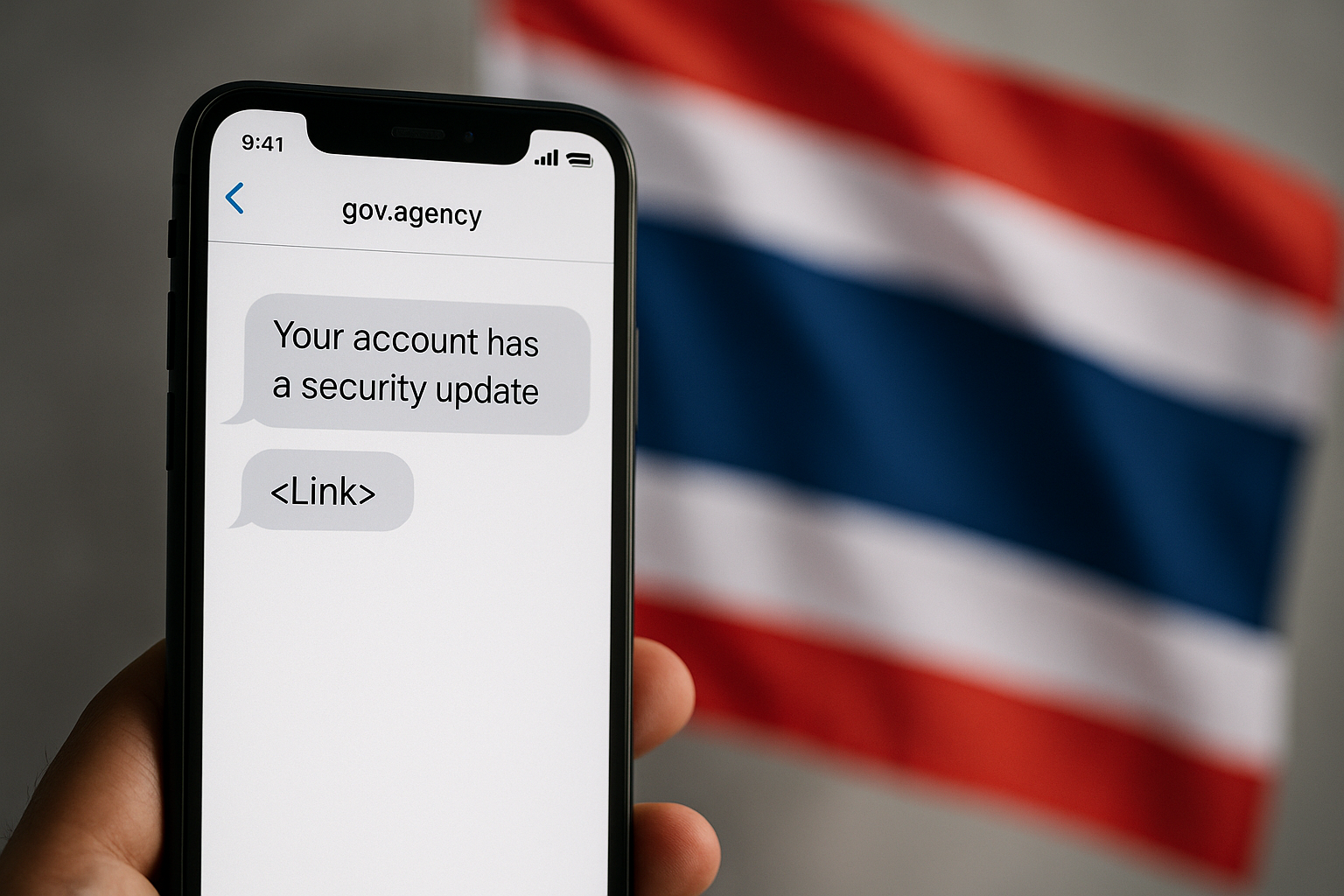
The ministry stated that any SMS or email claiming to come from a government body and containing a link should now be considered suspicious. Citizens have been advised to avoid clicking on such messages and to report them to the authorities. The government said the policy is designed to establish a clear and consistent standard so that official communications cannot be confused with impersonation attempts.
The decision follows earlier measures introduced in the financial sector. The Bank of Thailand banned links in SMS messages from financial institutions in July 2025. Regulators said the restriction was necessary after a rise in fraud schemes using fake bank messages. The National Broadcasting and Telecommunications Commission later introduced stricter requirements for bulk messaging, including sender registration and verification obligations for organizations using mass distribution systems.
Officials said that technology-enabled crime continues to pose a risk and that fraudulent messages remain a common tool for social engineering. The committee responsible for coordinating the national response to such crime said the link ban forms part of a wider program that includes data sharing between agencies, public awareness campaigns, and cooperation with telecom providers.
Authorities said they expect the ban to reduce the effectiveness of impersonation scams that rely on official-looking messages to target mobile users. The ministry said agencies will continue to communicate through SMS and email, but without embedded links. It added that alternative channels, such as verified applications and government portals, will be used when citizens must access online services.