

TikTok said it will begin rolling out AI-powered age checks across Europe in the coming weeks as regulators push platforms to do more to identify underage users. The company said the system is intended to improve detection of accounts that may belong to children under 13, which is the platform’s minimum age requirement.
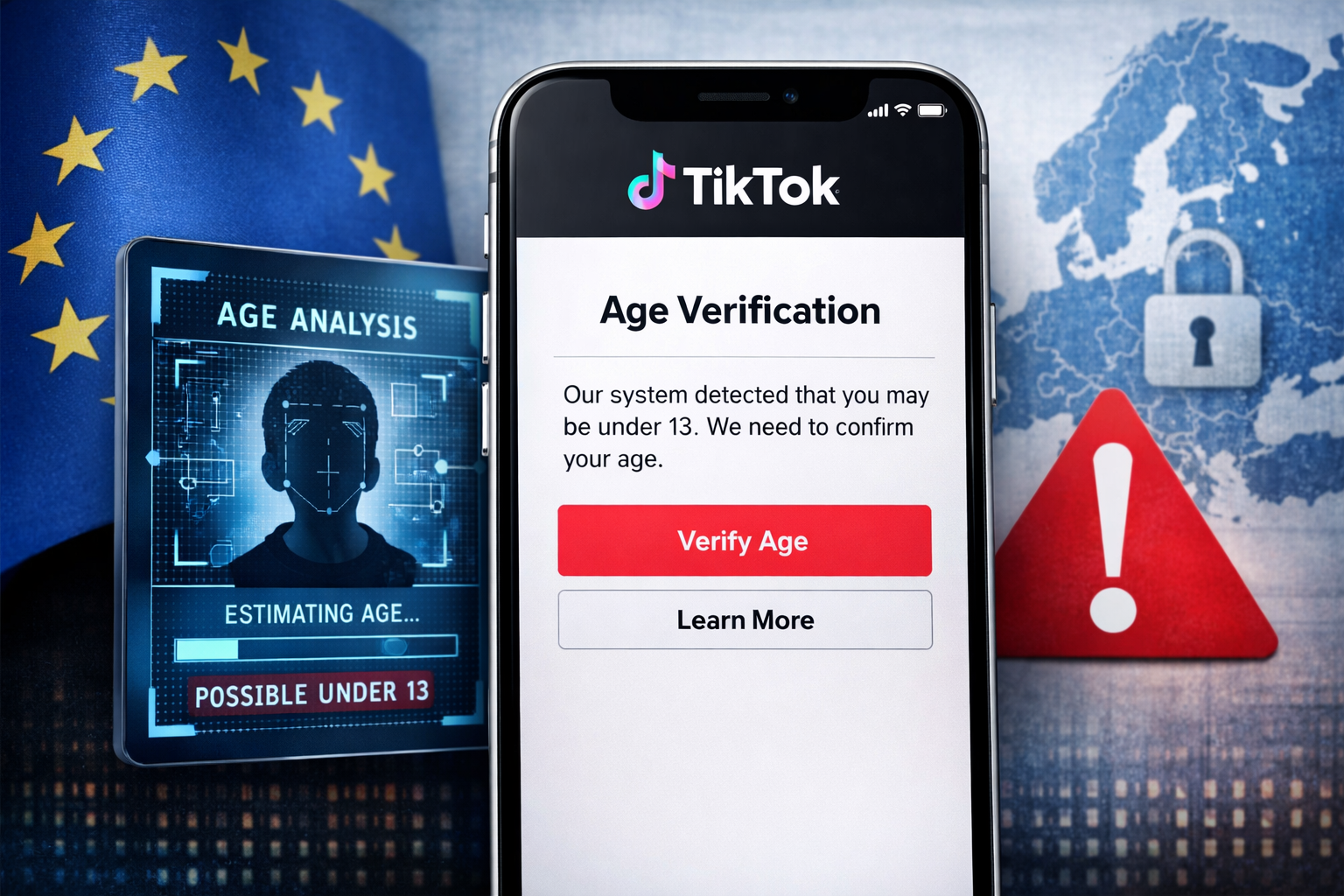
TikTok said the technology has been tested through a pilot program in Europe over the past year. The company said the system uses automated signals to estimate whether an account may belong to someone under the minimum age. These signals can include profile information, user behaviour, and content posted on the account. TikTok said the approach is designed to identify accounts that may have entered an incorrect age during sign-up.
Under the rollout plan, accounts flagged by the AI system will not be removed automatically. TikTok said the cases will be reviewed by specialist moderators, adding a human step intended to reduce mistakes and avoid taking action based only on automated assessment. The company did not specify how long reviews may take or what thresholds trigger a referral for moderation.
TikTok said it developed the age detection system in consultation with the Irish Data Protection Commission, which is the company’s main supervisory authority under European Union data protection rules. TikTok said users in Europe will be notified as the feature is introduced and expanded.
European regulators have increased scrutiny of age checks on social media platforms, arguing that self-declared birth dates are easy to bypass and do not provide reliable protection for children. Officials have raised concerns about whether current methods are sufficient to prevent younger children from accessing services and content not intended for them.
TikTok’s announcement comes as European authorities continue to examine how platforms handle children’s data and safety. The company has faced regulatory attention in the region over privacy and youth protections, and it has been under pressure to show stronger controls that go beyond user self-reporting.
TikTok did not provide a country-by-country timeline for the rollout, but said it would begin in the coming weeks. The company also did not detail whether the system would be used across all account types equally or how it would handle borderline cases where age estimates are uncertain.
The move reflects a wider shift among large platforms toward automated age estimation and enforcement tools, as regulators demand clearer safeguards for younger users. TikTok said its approach combines automated detection with human review, and it framed the rollout as part of its broader work to meet European expectations on child protection and data handling.