

The popular dating app Tinder is now asking new users in the United States to undergo a facial verification process called “Face Check.” Launched by its parent company, Match Group, this feature requires new members to record a short video selfie. The app then creates an encrypted facial “map” to confirm that the person is real and that their face matches their profile photo.
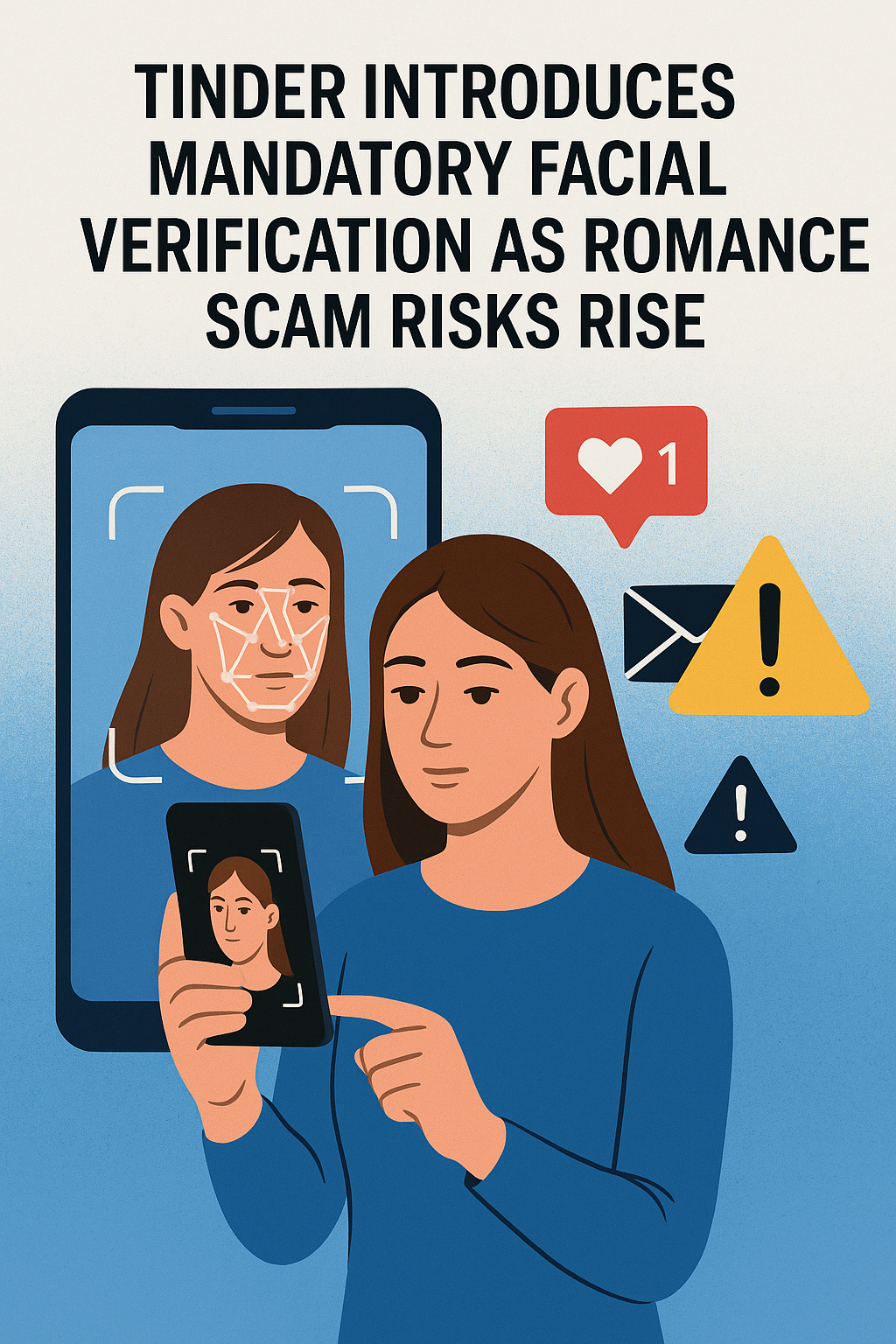
Tinder says these video selfies are immediately deleted after verification, but the encrypted facial data remains as a “hash” to detect duplicate accounts. The company argues that faces cannot be easily changed like email addresses or phone numbers, making this check a meaningful step toward reducing bots, impersonations, and fake profiles.
How Face Check works and where it is rolling out
Under Face Check, new users must complete a quick liveness check during the account creation process. That means recording a video that demonstrates the person is present and not using a static photo or a manipulated recording. Tinder then compares that video against the profile image and checks whether the same face appears in other accounts.
The feature is already mandatory for new users in certain U.S. states, like California, and Match Group says the rollout will continue to other states soon. In earlier tests in countries such as Canada, Colombia, Australia, and India, Tinder reported reductions in reports of impersonation and fake accounts.
Tinder says Face Check is part of a broader push to build “identity assurance” across its apps rather than relying solely on email or phone verification. The aim is to make it harder for scammers and bots to exploit the platform.
Dating apps have long been vulnerable to fake accounts, bots, and impersonation by scammers. These fake profiles can serve as entry points for romance scams, catfishing, and other forms of exploitation. By requiring biometric identity verification, Tinder hopes to raise the bar for authenticity and give users greater confidence in who they are interacting with.
But introducing facial verification also raises privacy concerns. While Tinder says it does not retain the video recording, the underlying biometric data is stored in encrypted form. Some users may be wary of how that data could be used or whether it could be compromised in the future.
For the app’s safety systems, the move signals recognition that traditional methods of identity validation, such as email confirmation or phone number checks, are no longer sufficient in high-risk environments where financial or emotional harm can result from fake profiles.
Linking facial verification with the threat of romance scams
Romance scams remain one of the costliest types of online fraud, especially when they begin through dating apps or social media platforms. According to the Federal Trade Commission (FTC), in 2023, more than 64,000 romance-scam reports were filed in the United States, and total losses reached approximately $1.14 billion. That works out to a median loss of about $2,000 per victim, the highest median among all types of imposter scams. In 2022, nearly 70,000 people reported romance fraud, and those losses hit roughly $1.3 billion, with a median loss of around $4,400.
Many of these scams originate on dating apps or social networks, where the scammer develops a relationship with the victim and then requests money under false pretenses. Requiring better verification for user identities may reduce the pool of fake profiles that initiate such scams.
While facial verification does not eliminate the threat of romance scams entirely, it can raise the cost of creating fake identities and reduce the number of bots that serve as support accounts for more complex fraud operations.
What should users do to stay safe?
Even with stronger verification systems, users of dating apps must remain vigilant. Here are some recommended practices:
- Do not send money, gift cards, or cryptocurrency to someone you have not met in person. Romance scammers often ask for financial support after building emotional trust.
- Use apps’ safety features, such as in-app video calls, location sharing with trusted friends, and verification badges.
- Report any suspicious accounts or messages that seem too good to be true or make urgent financial requests.
- Protect your personal information and avoid sharing your address, financial details, or intimate photos until you are confident the person is who they claim to be.
Tinder’s new verification policy shows that the dating industry is beginning to take identity fraud seriously. As romance scams continue to rise, companies are under pressure to protect users and improve safety systems.
Facial verification may feel intrusive to some, but for others, it adds an extra layer of reassurance that the people they meet online are real. The challenge will be balancing security and privacy in a way that users find trustworthy.
If Tinder succeeds, other dating platforms will likely follow, creating a new standard for online safety in the dating world.