

Cyber insurance claims in the United Kingdom rose sharply in 2024, with insurers paying nearly £197 million to affected businesses. The data, published by the Association of British Insurers (ABI), shows a 230 percent increase in payouts compared with the previous year. The sharp rise highlights the growing cost of ransomware and malware attacks across UK organisations.
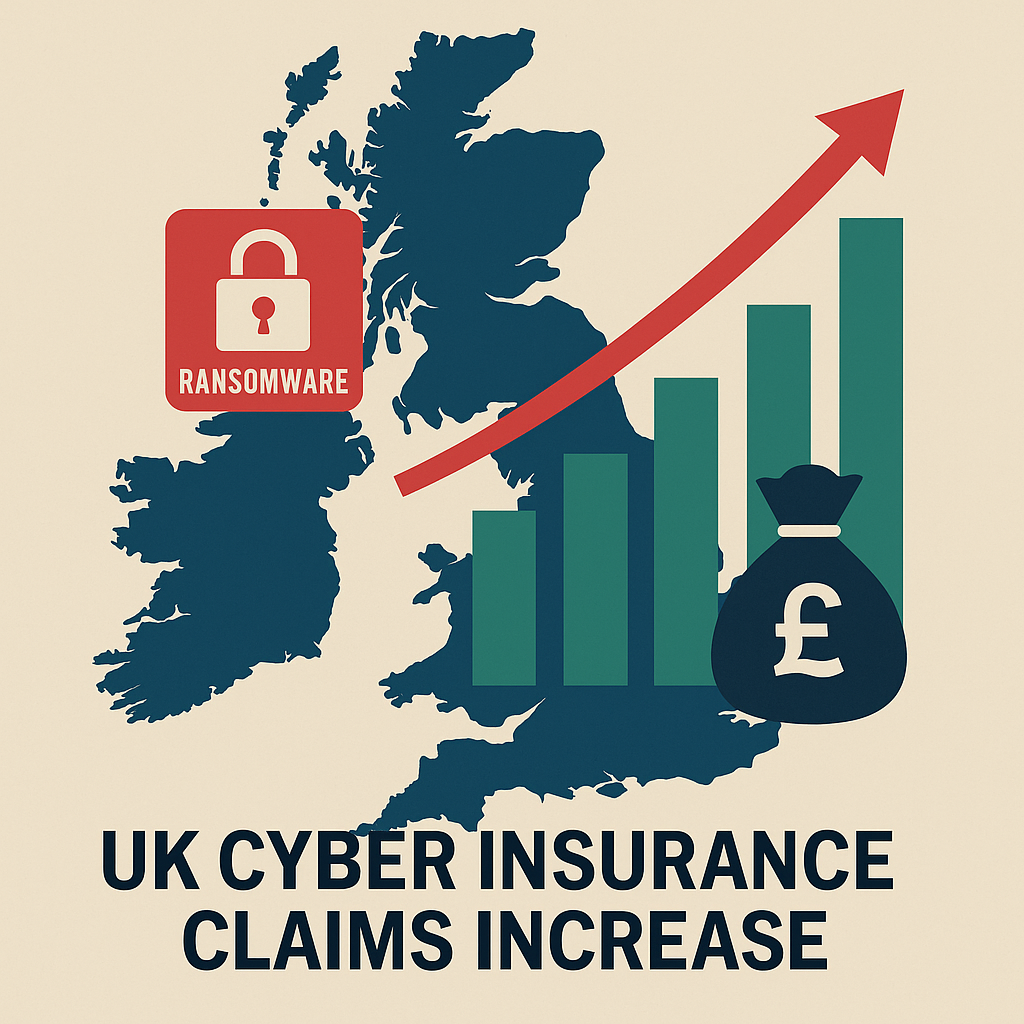
According to the ABI, more than half of the total claims were linked to ransomware and malware incidents. These categories accounted for 51 percent of all cases, up from 32 percent in 2023. The number of businesses purchasing cyber insurance also rose by about 17 percent during the same period. The ABI said the increase reflects a growing recognition among businesses that cyber coverage is now essential rather than optional.
While the report only includes companies that participated in the ABI’s data collection, it covers most major UK insurers. The organisation said the figures are not intended to represent the entire market but offer an indicator of the wider trend. Industry experts say the increase in payouts shows how digital threats have become more disruptive and financially damaging, with attacks often resulting in downtime, data loss, and costly recovery operations.
Cybersecurity analysts note that the surge in ransomware claims mirrors the rise in double extortion tactics, where attackers both encrypt systems and threaten to publish stolen data. They also warn that smaller businesses remain particularly vulnerable, often lacking the resources to meet ransom demands or manage prolonged system outages. For many firms, the cost of recovery now exceeds what traditional insurance models were designed to cover.
Market pressures and changing risk landscape
The spike in claims is expected to drive higher premiums and tighter underwriting requirements. Insurers are reviewing how policies are structured, adding stricter conditions for coverage, and evaluating each applicant’s security maturity before issuing or renewing a policy. Companies without multi-factor authentication, regular backups, or incident response plans may struggle to qualify for affordable coverage.
Brokers report that some insurers are introducing exclusions for incidents linked to state-sponsored attacks or social engineering fraud. Retail and manufacturing sectors, which have faced a series of ransomware incidents in recent months, are likely to experience the most significant price increases. Analysts say these adjustments mark a shift in the cyber insurance market toward risk prevention rather than simple reimbursement.
Despite the rapid growth in the market, many organisations in the United Kingdom and Ireland still operate without cyber insurance. Surveys suggest that around half of small and medium-sized businesses have no formal protection in place, leaving them exposed to financial and operational losses. Experts stress that insurance alone is not a substitute for cybersecurity investment but a complement to it.
Industry groups advise businesses to combine insurance with robust security measures and response capabilities. The ABI said a strong policy should include access to forensic support, legal guidance, and communication assistance in the aftermath of an incident. Cyber insurers increasingly provide threat intelligence and monitoring tools to help clients reduce their risk profile over time.
The sharp rise in 2024 payouts demonstrates that cyber incidents are no longer isolated events but part of a broader operational challenge. As the financial impact of attacks continues to grow, insurers and businesses alike must adapt to an environment where resilience, prevention, and rapid recovery are essential components of digital risk management.