

Use of virtual private networks in Brazil has increased following the introduction of new age verification requirements for online services under the country’s Digital ECA law, which came into force on March 17, 2026.
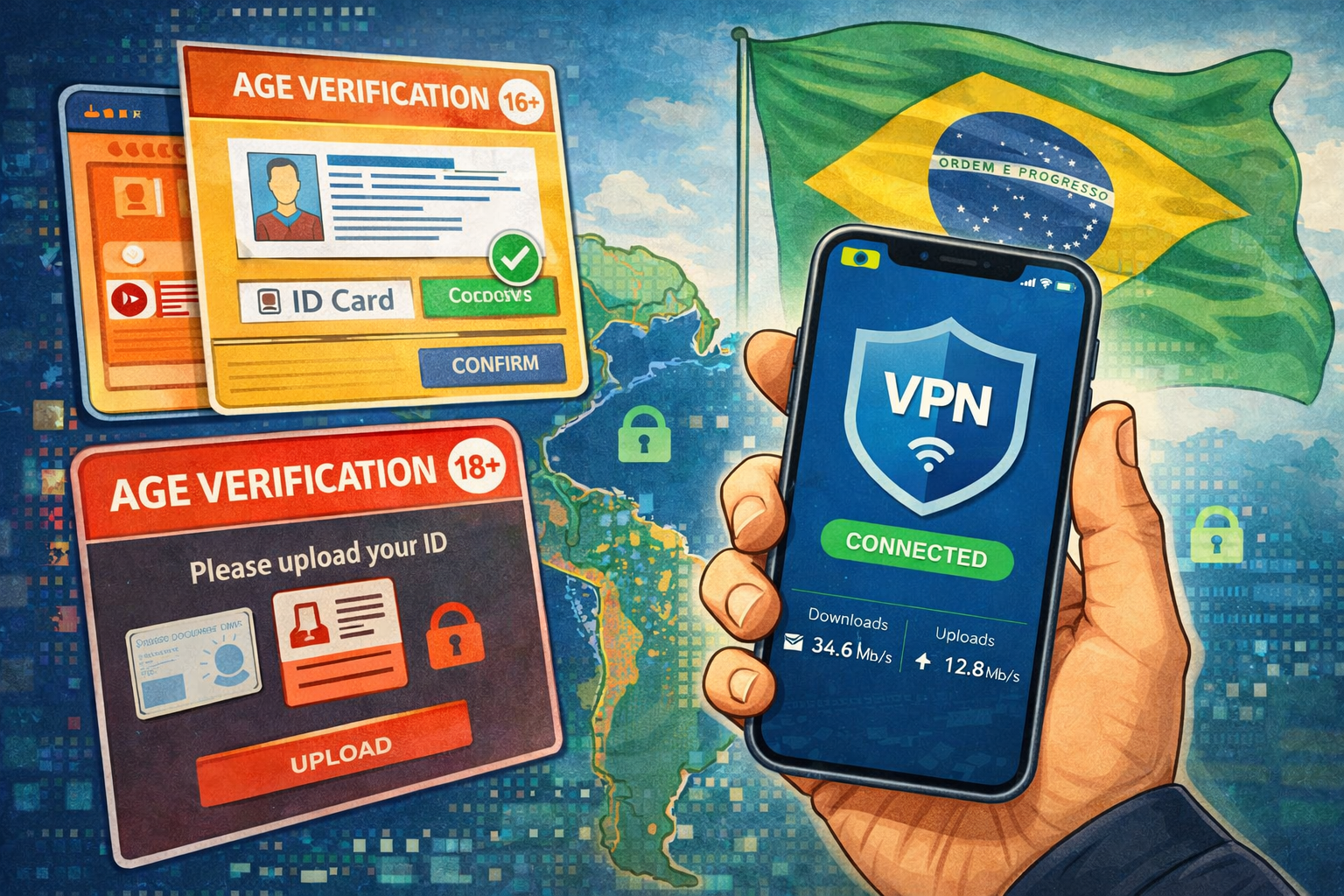
The law requires digital platforms, including social media, gaming services, and adult content websites, to verify users’ ages to ensure access is restricted based on legal thresholds. Typical minimum ages include 16 for social media and 18 for adult content.
Under the legislation, companies that fail to comply with verification requirements may face penalties, including fines of up to 10% of their Brazilian revenue or 50 million Brazilian reais per violation, as well as potential restrictions or suspensions on services.
Data from Google Trends shows that searches for “VPN” in Brazil began increasing shortly before the law took effect. A privacy service provider reported a 250% rise in new users in the country over a one-day period following implementation.
The increase in VPN usage is linked to how age verification is carried out. In many cases, users are required to submit personal information such as identity documents or biometric data to confirm their age.
VPN services encrypt internet traffic and can obscure a user’s location and activity, which some users view as a way to limit the exposure of personal data when accessing online platforms.
The law is part of a broader regulatory approach aimed at restricting access to age-inappropriate content online. Similar measures have been introduced or discussed in other countries, focusing on limiting minors’ access to certain digital services.
Concerns have also been raised about how verification systems are implemented, particularly in relation to the handling of personal data submitted by users. At the same time, the requirements place responsibility on platforms to introduce systems that meet legal standards for verifying age while continuing to operate in the country.