

WhatsApp is introducing parent-managed accounts that allow children under the age of 13 to use the messaging service under supervision from a parent or guardian. The feature was announced by WhatsApp, the messaging platform owned by Meta Platforms, and will roll out gradually over the coming months. The new accounts are designed specifically for younger users and must be created and managed by an adult.
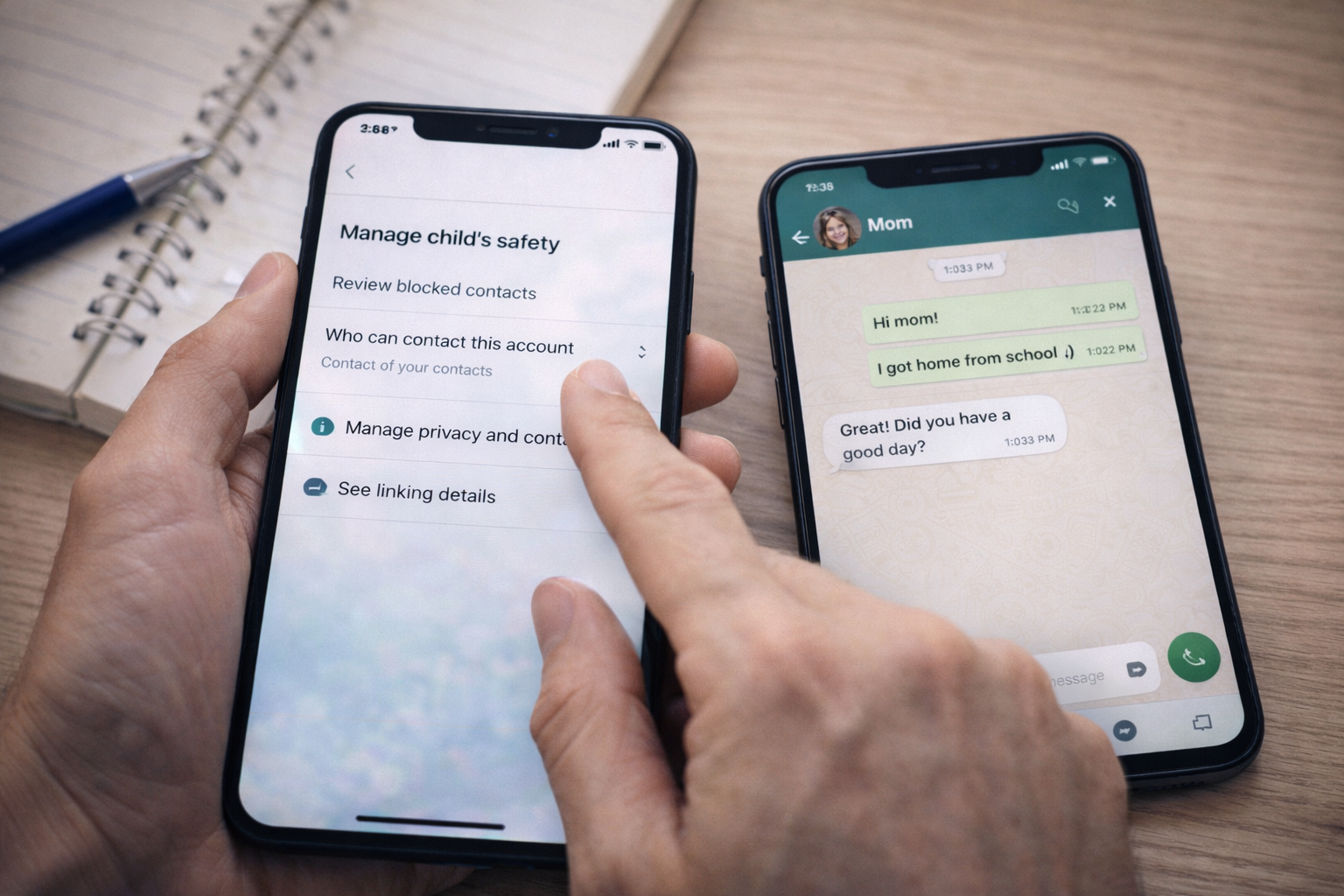
Under the system, parents or guardians set up the account for the child and link it to their own device. The process requires both the parent’s phone and the child’s phone so that the accounts can be connected. Once the account is created, the adult can manage key privacy and safety settings.
According to the company, the accounts will include stricter default privacy settings and tools that allow parents to guide how children use the messaging service. The experience for younger users will be limited to messaging and voice calls.
Parents will be able to control who can contact the child and decide which group chats the account can join. They can also review requests from unknown contacts and manage other privacy settings tied to the account.
Access to certain WhatsApp features will be restricted for these accounts. Functions such as Status updates, Channels, and Meta’s artificial intelligence features will not be available for users under 13. The company said the changes are intended to focus the experience on basic communication tools.
Parental controls are protected by a dedicated PIN. The settings linked to the child’s account cannot be changed without that code, giving parents the ability to maintain control over privacy options and contact permissions.
WhatsApp said the development of the new system followed feedback from families who wanted a messaging option designed for younger users. The company stated that the accounts are intended to help parents guide their children’s early experiences with online communication.
The introduction of the feature comes as technology companies face increasing scrutiny from governments and advocacy groups over how digital platforms handle child safety online. Several countries and regulators have proposed or adopted rules that limit children’s access to social media services or require stronger parental oversight.
WhatsApp said conversations on these accounts will still use the platform’s existing end-to-end encryption system, which keeps messages private between participants.
The company has not specified a precise timeline for the full rollout but said the feature will be introduced gradually across regions in the coming months.