

Hamburg is moving toward tighter restrictions on camera-equipped smart glasses, with lawmakers seeking to prevent their use in public transport and places where people have a heightened expectation of privacy.
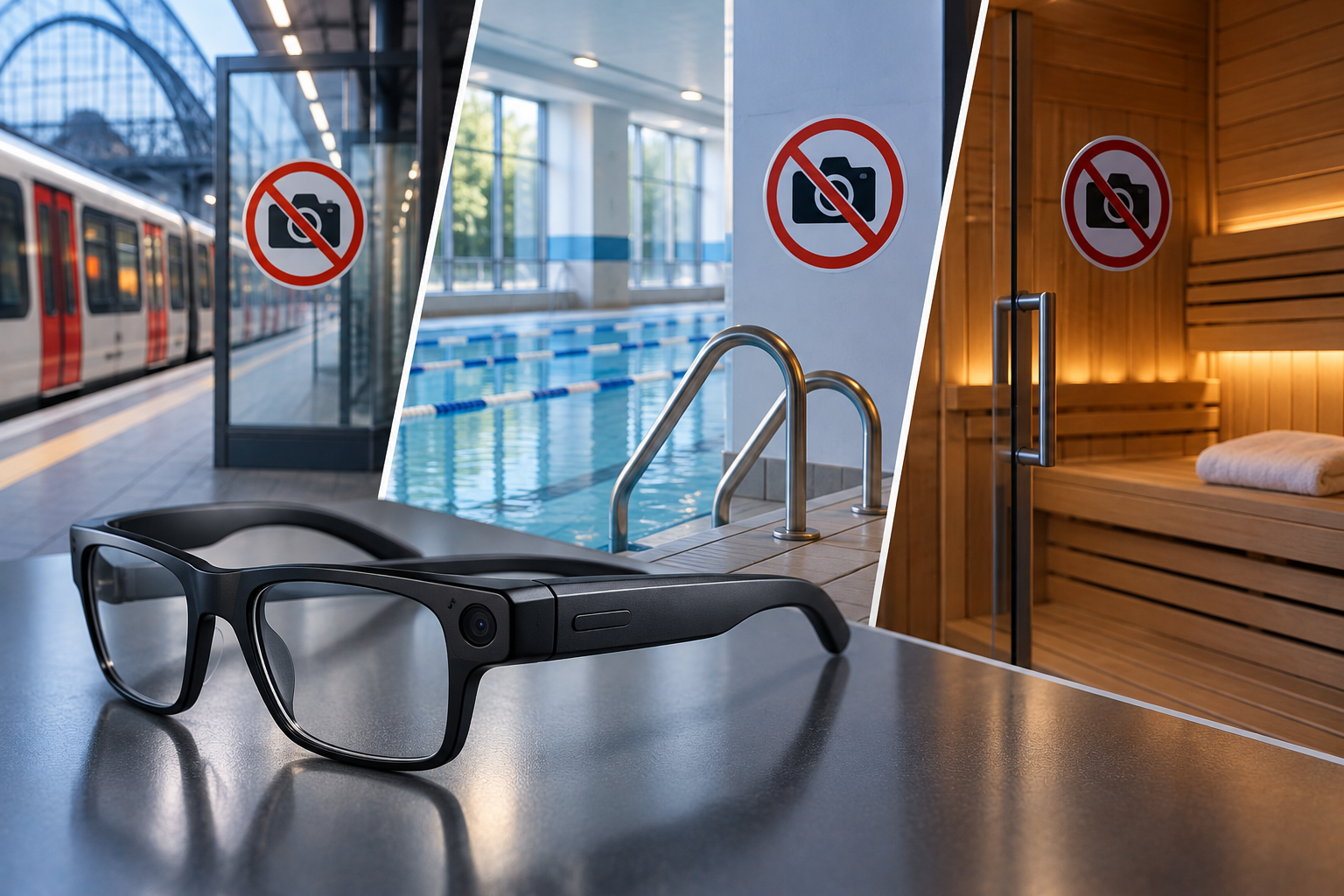
The proposal targets smart glasses with cameras or other recording capabilities. It would cover buses and trains within Hamburg’s public transport system, as well as access-controlled station areas. Municipal swimming pools and saunas operated by Bäderland would also introduce explicit restrictions.
The initiative was backed by Hamburg’s governing Social Democratic Party (SPD) and Greens, building on an earlier proposal from the Left Party that focused on swimming pools. Lawmakers argue that smart glasses create privacy problems because recording can be much less obvious than when someone holds up a smartphone or conventional camera.
Swimming facilities already restrict unauthorized photography and filming. Sauna areas prohibit photography and video recording, while electronic devices capable of taking pictures are permitted only in designated areas. The proposed changes would specifically address smart glasses, removing uncertainty over how existing rules apply to increasingly discreet wearable cameras.
Public transportation was added because passengers frequently have little choice about using buses and trains. Supporters of the measure argue that people should be able to travel without wondering whether another passenger is secretly recording them.
Hamburg lawmakers have pointed to incidents in which people were filmed without realizing it. In one case highlighted during the debate, a woman in Hamburg was secretly recorded with smart glasses during a conversation near the Alster. The resulting footage was later published on TikTok and viewed thousands of times.
Exceptions are expected for people who require compatible glasses as a medical visual aid or because of a disability.
The Hamburg proposal extends beyond rules for individual venues. The SPD and Greens also want the city to push for nationwide German regulations covering smart glasses. One objective is to require devices to provide an unmistakable indication whenever recording begins so that nearby people can recognize what is happening.
Some existing smart glasses use small lights to indicate that their cameras are active. Critics argue that these indicators may be difficult for bystanders to notice and can potentially be obscured.
Lawmakers are also calling for restrictions on private individuals combining smart glasses with facial recognition technology in public places. They argue that automatically identifying strangers through wearable cameras would create substantially greater privacy concerns.
Hamburg is not alone in examining the consequences of increasingly capable wearable cameras. Norway is considering possible restrictions involving smart glasses and other camera-equipped wearable devices, while courts and private venues in several countries have already introduced their own rules.