If you’ve opened your Google Chrome browser only to find that your search queries are being redirected to Yahoo! Search, even though you never set it as your default engine, then you may have fallen victim to a browser hijacker. This type of unwanted software quietly changes browser settings without your permission, altering your default search engine, homepage, and new tab page. In many cases, the search engine is switched to Yahoo (or appears as such) even though you never chose it. This article walks you through what’s going on, why it happens, and how to restore your preferred browser settings in Chrome.
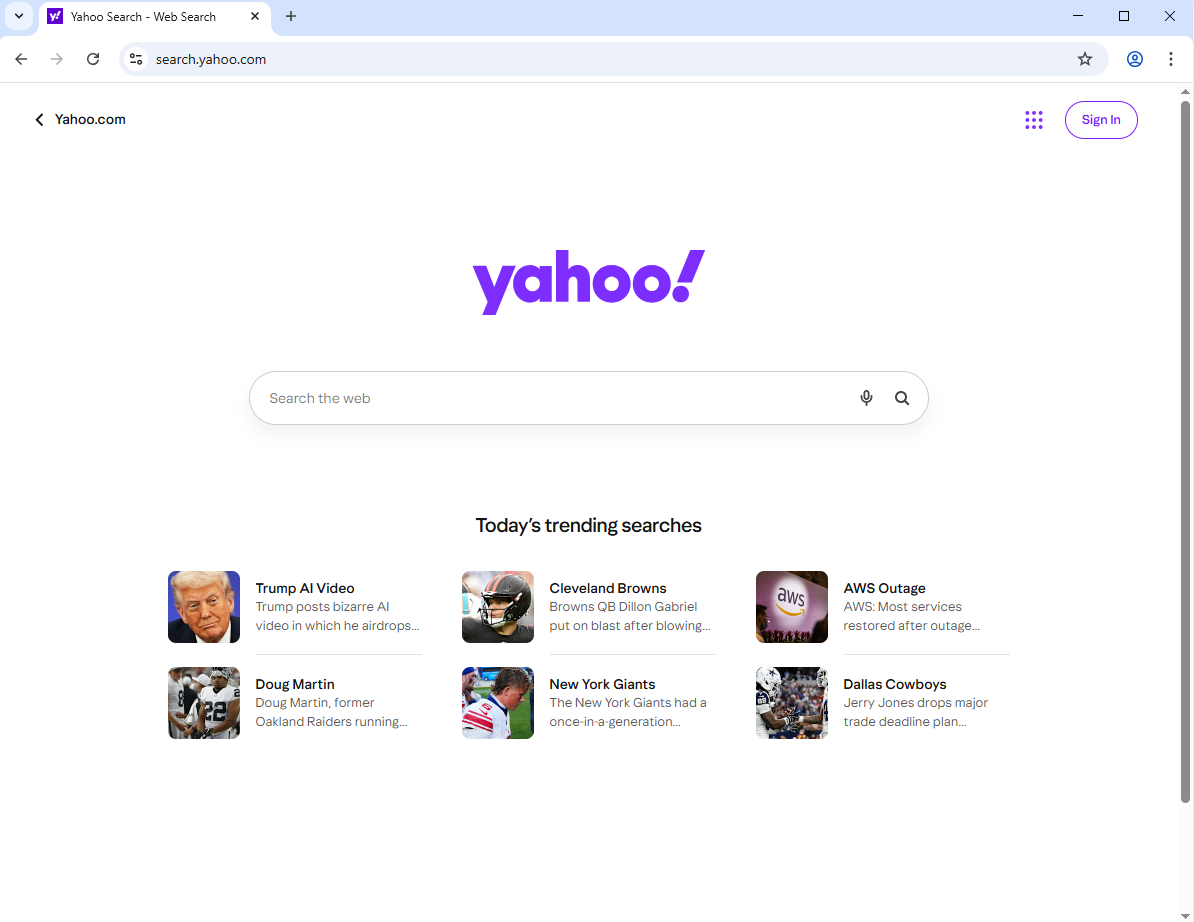
Why is your Google Chrome suddenly using Yahoo Search?
Under ordinary circumstances, when you install Chrome, it sets the search engine to Google by default (unless you change it during setup). If your search engine has never been manually switched, yet you’re seeing Yahoo Search results when you expected Google (or another preferred engine), it indicates something has modified your browser settings.
This kind of behavior is typically caused by a browser hijacker (also called a redirect virus), a type of malware (or PUP, also known as a potentially unwanted application) designed to take over browser settings and redirect you to particular search engines or advertising-heavy sites. This is done to generate revenue.
What is the Yahoo Search redirect virus?
When your default search engine is replaced by Yahoo, or another unexpected engine, without your permission, that’s often a sign of a redirect virus or browser hijacker. What happens is that a piece of software (either bundled with something you downloaded or via ma alicious extension/link) has inserted itself and forced changes onto your browser.
While some hijackers simply redirect you to ad-driven pages to generate revenue for the attacker, others are capable of more serious damage. They can redirect you to malicious websites designed for phishing or malware installation, for example. They may also install extensions or scripts that track your browsing history, IP address, location, or other personal data. What’s more, by modifying your browser settings, they may bypass or disable certain security features, increasing your exposure to further threats.
In short, even though Yahoo itself is legitimate, when your browser is being forced to use it despite your preference by a browser hijacker, that could cause serious problems.
How did a browser hijacker install on your system?
Browser hijackers like the Yahoo Search redirect can end up on a system due to several reasons.
- Bundled downloads: Free software downloaded from third-party sites may include hidden “offers” that install PUPs or hijackers if you click “Next” through the installer without reviewing.
- Malicious links or deceptive ads: A look-alike “Update your browser” or “Click here to watch free video” may actually install redirect viruses.
- Extensions installed unknowingly: Sometimes a legitimate extension’s developer sells it or inserts malicious code later, or the installation screen misleads you into accepting more than you thought.
- Drive-by downloads / compromised websites: Simply visiting a site with embedded malicious code may trigger a hijacker exploit.
How to prevent browser hijacker installations in the future
There are things you can do to avoid installing browser hijackers and protect your computer in the future:
- Always download software from official publisher sites or verified stores, and read each screen of the installer carefully. Make sure to use Advanced settings during installation and uncheck extra offers.
- Be cautious with email attachments and links from unknown senders.
- Review browser extensions periodically and remove any unused ones.
- Enable your browser’s pop-up blocking and ad-blocking features.
- Keep your operating system, browser, and software up to date so vulnerabilities are patched.
- Run periodic scans with trusted security software.
- Back up your important files so if something malicious does happen, you’re not going to lose your files.
Remove Yahoo Search redirect
Discovering that your Chrome browser is defaulting to Yahoo Search against your wishes is a strong signal that your browser or system has been hijacked by a browser hijacker. While the visible change to the search engine may appear minor, the hidden implications can be more serious.
Scan your device with anti-virus software, as that would be the easiest way to remove Yahoo Search redirect. Manual Yahoo Search redirect removal is possible, but it may take more time.
Quick Menu
Step 1. Uninstall Yahoo Search and related programs.
Remove Yahoo Search from Windows 8
Right-click in the lower left corner of the screen. Once Quick Access Menu shows up, select Control Panel choose Programs and Features and select to Uninstall a software.
Uninstall Yahoo Search from Windows 7
Click Start → Control Panel → Programs and Features → Uninstall a program.
Delete Yahoo Search from Windows XP
Click Start → Settings → Control Panel. Locate and click → Add or Remove Programs.
Remove Yahoo Search from Mac OS X
Click Go button at the top left of the screen and select Applications. Select applications folder and look for Yahoo Search or any other suspicious software. Now right click on every of such entries and select Move to Trash, then right click the Trash icon and select Empty Trash.
Step 2. Delete Yahoo Search from your browsers
Terminate the unwanted extensions from Internet Explorer
- Tap the Gear icon and go to Manage Add-ons.
- Pick Toolbars and Extensions and eliminate all suspicious entries (other than Microsoft, Yahoo, Google, Oracle or Adobe)
- Leave the window.
Change Internet Explorer homepage if it was changed by virus:
- Tap the gear icon (menu) on the top right corner of your browser and click Internet Options.
- In General Tab remove malicious URL and enter preferable domain name. Press Apply to save changes.
Reset your browser
- Click the Gear icon and move to Internet Options.
- Open the Advanced tab and press Reset.
- Choose Delete personal settings and pick Reset one more time.
- Tap Close and leave your browser.
- If you were unable to reset your browsers, employ a reputable anti-malware and scan your entire computer with it.
Erase Yahoo Search from Google Chrome
- Access menu (top right corner of the window) and pick Settings.
- Choose Extensions.
- Eliminate the suspicious extensions from the list by clicking the Trash bin next to them.
- If you are unsure which extensions to remove, you can disable them temporarily.
Reset Google Chrome homepage and default search engine if it was hijacker by virus
- Press on menu icon and click Settings.
- Look for the “Open a specific page” or “Set Pages” under “On start up” option and click on Set pages.
- In another window remove malicious search sites and enter the one that you want to use as your homepage.
- Under the Search section choose Manage Search engines. When in Search Engines..., remove malicious search websites. You should leave only Google or your preferred search name.
Reset your browser
- If the browser still does not work the way you prefer, you can reset its settings.
- Open menu and navigate to Settings.
- Press Reset button at the end of the page.
- Tap Reset button one more time in the confirmation box.
- If you cannot reset the settings, purchase a legitimate anti-malware and scan your PC.
Remove Yahoo Search from Mozilla Firefox
- In the top right corner of the screen, press menu and choose Add-ons (or tap Ctrl+Shift+A simultaneously).
- Move to Extensions and Add-ons list and uninstall all suspicious and unknown entries.
Change Mozilla Firefox homepage if it was changed by virus:
- Tap on the menu (top right corner), choose Options.
- On General tab delete malicious URL and enter preferable website or click Restore to default.
- Press OK to save these changes.
Reset your browser
- Open the menu and tap Help button.
- Select Troubleshooting Information.
- Press Refresh Firefox.
- In the confirmation box, click Refresh Firefox once more.
- If you are unable to reset Mozilla Firefox, scan your entire computer with a trustworthy anti-malware.
Uninstall Yahoo Search from Safari (Mac OS X)
- Access the menu.
- Pick Preferences.
- Go to the Extensions Tab.
- Tap the Uninstall button next to the undesirable Yahoo Search and get rid of all the other unknown entries as well. If you are unsure whether the extension is reliable or not, simply uncheck the Enable box in order to disable it temporarily.
- Restart Safari.
Reset your browser
- Tap the menu icon and choose Reset Safari.
- Pick the options which you want to reset (often all of them are preselected) and press Reset.
- If you cannot reset the browser, scan your whole PC with an authentic malware removal software.
Offers
Download Removal Toolto scan for Yahoo SearchUse our recommended removal tool to scan for Yahoo Search. Trial version of provides detection of computer threats like Yahoo Search and assists in its removal for FREE. You can delete detected registry entries, files and processes yourself or purchase a full version.
More information about SpyWarrior and Uninstall Instructions. Please review SpyWarrior EULA and Privacy Policy. SpyWarrior scanner is free. If it detects a malware, purchase its full version to remove it.
WiperSoft Review Details WiperSoft (www.wipersoft.com) is a security tool that provides real-time security from potential threats. Nowadays, many users tend to download free software from the Intern ...
Download|moreIs MacKeeper a virus? MacKeeper is not a virus, nor is it a scam. While there are various opinions about the program on the Internet, a lot of the people who so notoriously hate the program have neve ...
Download|moreWhile the creators of MalwareBytes anti-malware have not been in this business for long time, they make up for it with their enthusiastic approach. Statistic from such websites like CNET shows that th ...
Download|more
Site Disclaimer
2-remove-virus.com is not sponsored, owned, affiliated, or linked to malware developers or distributors that are referenced in this article. The article does not promote or endorse any type of malware. We aim at providing useful information that will help computer users to detect and eliminate the unwanted malicious programs from their computers. This can be done manually by following the instructions presented in the article or automatically by implementing the suggested anti-malware tools.
The article is only meant to be used for educational purposes. If you follow the instructions given in the article, you agree to be contracted by the disclaimer. We do not guarantee that the artcile will present you with a solution that removes the malign threats completely. Malware changes constantly, which is why, in some cases, it may be difficult to clean the computer fully by using only the manual removal instructions.