

Australia is considering banning camera-equipped smart glasses from government workplaces amid concerns about privacy and the security of sensitive information. Public Service Minister Katy Gallagher has asked the Australian Public Service Commission to examine whether the devices should be prohibited across Commonwealth workplaces and whether certain exemptions would be necessary.
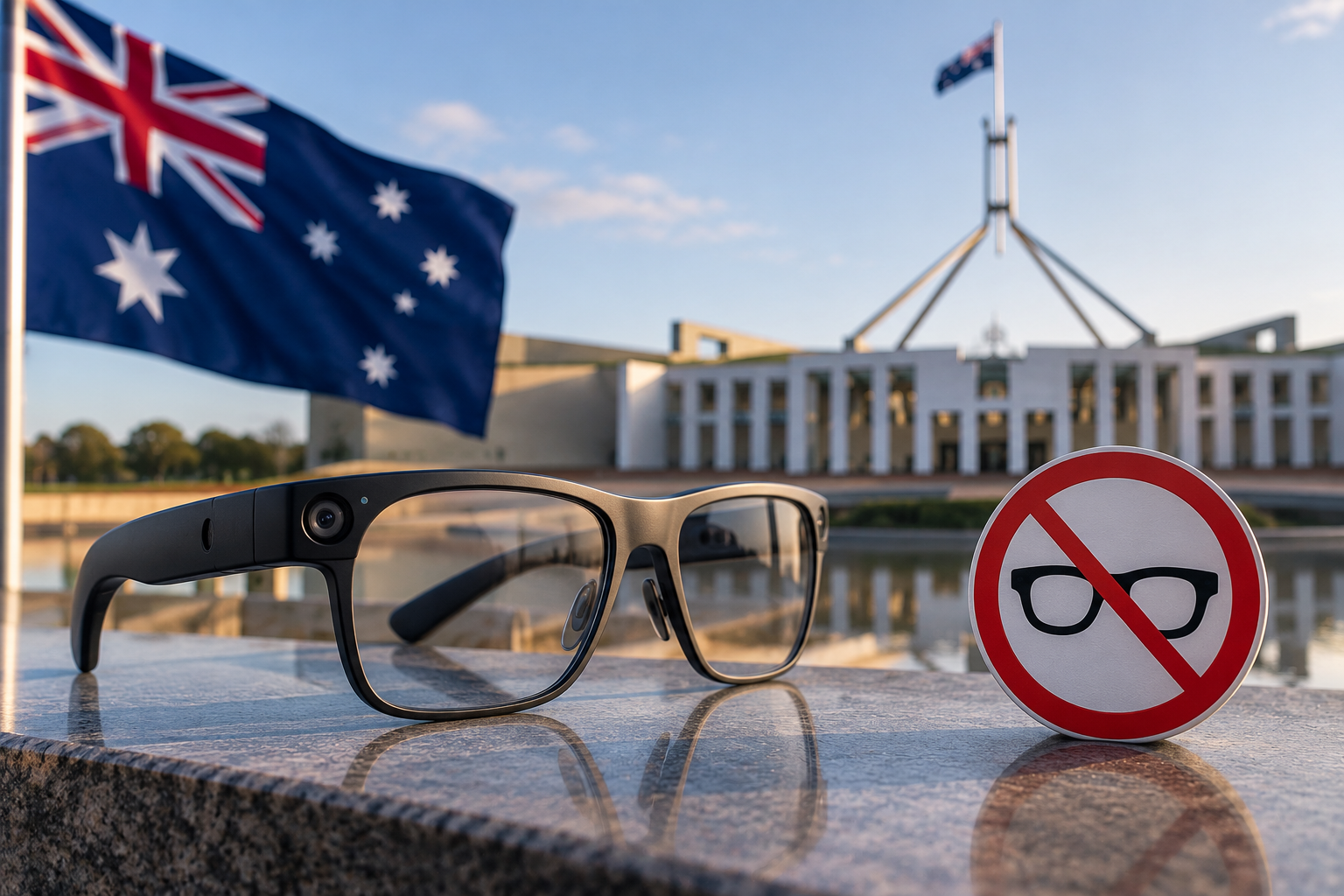
The proposal is still under consideration, meaning no government-wide ban has been introduced. The review comes as increasingly sophisticated smart glasses make it possible to capture video, photographs and audio using devices that can look similar to ordinary eyewear.
Smart glasses have become more capable as companies integrate cameras, microphones, speakers and artificial intelligence features into wearable devices. Some models allow users to record their surroundings, make calls or interact with AI assistants without taking out a phone, but their discreet design can make it difficult for other people to immediately recognize when recording is taking place.
That creates particular concerns in government offices, where employees may have access to confidential conversations, documents, computer screens and other sensitive material. A wearable camera could potentially capture this information unintentionally or deliberately, making conventional rules covering phones and recording equipment more difficult to enforce.
Gallagher has said the technology raises legitimate privacy and security questions and has asked the Australian Public Service Commission to determine whether a consistent policy is needed. The review is also expected to consider circumstances where smart glasses have a genuine workplace purpose and should therefore remain permitted.
The debate extends beyond government offices. Australian authorities are examining the wider privacy implications of smart glasses as the devices become more common, with Attorney-General Michelle Rowland asking the Privacy Commissioner to give the technology priority consideration.
Australia has not announced plans for a general ban on the sale or import of smart glasses. Instead, the immediate question is whether their recording capabilities require tighter rules in sensitive environments where confidential or personal information could be exposed.
Similar concerns have already emerged internationally. Courts in England and Wales have prohibited the use of Meta smart glasses, while schools and other organizations in different countries have introduced restrictions on recording-capable eyewear because of privacy and security risks.
Any Australian policy would also need to account for legitimate uses of the technology. Smart glasses can provide accessibility features for people with impaired vision, including assistance with identifying objects, interpreting surroundings and accessing information, making carefully defined exemptions an important part of the discussion.
The review is taking place alongside Australia’s broader examination of emerging technology in the workplace. The government is also consulting major employers about the use of artificial intelligence and how organizations should manage the opportunities and risks associated with rapidly developing digital tools.