

A data breach affecting Booking.com has led to the exposure of customer reservation information, with users reporting an increase in targeted phishing attempts following the incident.
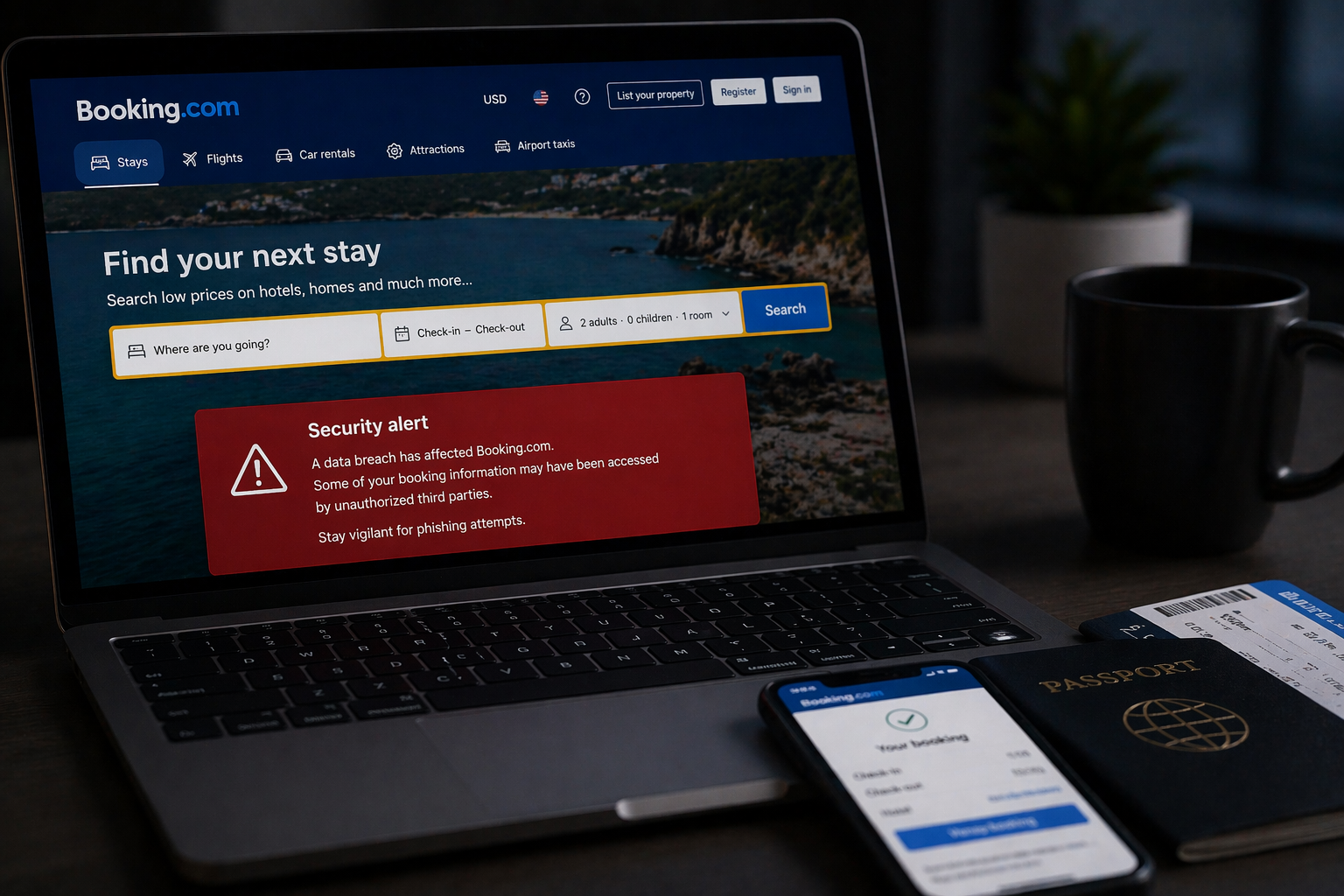
The company confirmed that unauthorised parties accessed customer data linked to travel bookings. The exposed information includes names, email addresses, phone numbers, and reservation details shared with accommodation providers.
According to reports, the breach did not involve direct access to user accounts or payment systems. Financial data was not reported as compromised, but the accessed information relates to active or upcoming bookings, which can be used to create convincing fraudulent messages.
Users have reported receiving phishing emails, phone calls, and messages through platforms such as WhatsApp that reference specific booking details. These communications are designed to appear legitimate by including accurate reservation information.
Security reporting indicates that the use of real booking data increases the likelihood that recipients may trust and respond to fraudulent requests. Messages may include payment instructions or links intended to capture additional personal or financial information.
Booking.com stated that it identified suspicious activity and took steps to contain the incident. These measures included resetting reservation-related PINs and notifying affected customers. The company has not disclosed how many users were impacted.
Authorities and reporting also note that customers have been advised to verify communications and avoid sharing sensitive information through unsolicited messages. The incident follows previous cases in which booking-related data has been used in phishing campaigns targeting travellers.
The method used to gain access has not been publicly detailed. The company has stated that the breach was contained, and monitoring for further misuse of the data is ongoing.
Site Disclaimer
2-remove-virus.com is not sponsored, owned, affiliated, or linked to malware developers or distributors that are referenced in this article. The article does not promote or endorse any type of malware. We aim at providing useful information that will help computer users to detect and eliminate the unwanted malicious programs from their computers. This can be done manually by following the instructions presented in the article or automatically by implementing the suggested anti-malware tools.
The article is only meant to be used for educational purposes. If you follow the instructions given in the article, you agree to be contracted by the disclaimer. We do not guarantee that the artcile will present you with a solution that removes the malign threats completely. Malware changes constantly, which is why, in some cases, it may be difficult to clean the computer fully by using only the manual removal instructions.