

Australia’s ban on social media access for children under the age of 16 has reduced the number of young users with accounts, but an early assessment suggests the vast majority of teenagers continue to use social media platforms despite the new restrictions.
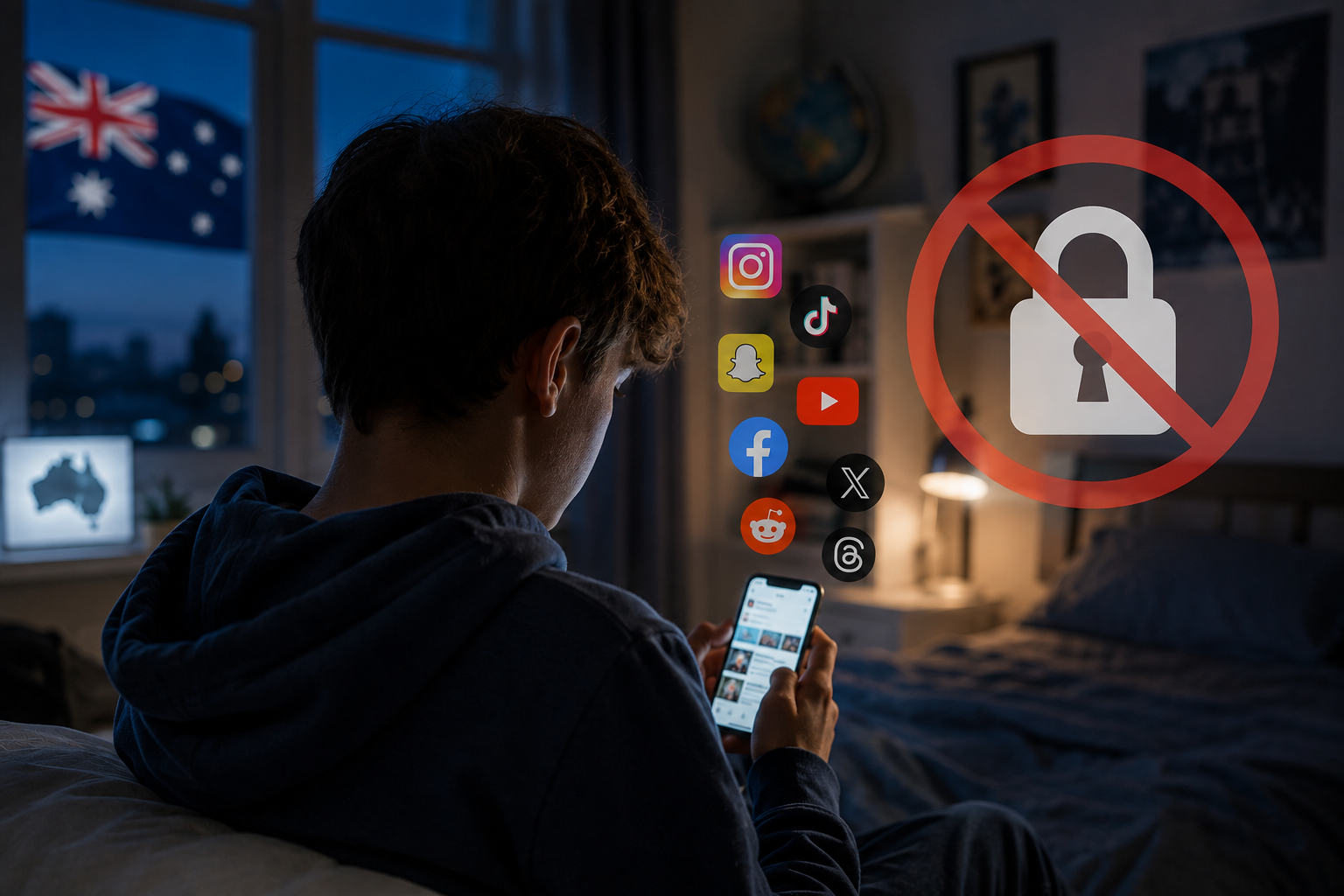
The legislation, which took effect in December 2025, requires major social media companies to prevent users under 16 from accessing their services. Platforms covered by the law include Facebook, Instagram, TikTok, Snapchat, X, Reddit, Threads, YouTube and Kick. Companies that fail to comply can face penalties of up to AUD$49.5 million (approximately US$35.6 million).
The law was introduced to address concerns about the effects of social media on young people, including excessive screen time, sleep disruption, social isolation, addictive behaviour and declining mental well-being.
According to new findings published by Australia’s eSafety Commissioner, the policy has produced measurable but limited changes during its first three months. The proportion of Australians under 16 with a social media account fell from 52.4% before the legislation to 42.1% afterward, representing a statistically significant decline.
However, overall use of social media changed far less. The report found that 85.9% of children under 16 had used at least one social media platform before the restrictions were introduced. Three months later, that figure had fallen to 81.5%, indicating that more than four out of five teenagers continued using social media despite the new legal requirements.
The regulator also found that many young users who already had accounts before the law came into force either retained access to those accounts or created new ones afterward. While the report does not identify the precise reasons, it notes that age-assurance measures implemented by some platforms may not yet be preventing underage users from accessing their services effectively.
Despite those findings, the eSafety Commissioner cautioned against drawing firm conclusions at this stage. Because the research covers only the first three months after the legislation took effect, the regulator said it is too early to determine whether the law will achieve its longer-term objectives. The report nevertheless identifies early signs that the policy may be beginning to influence online behaviour.
The findings are broadly consistent with separate research published earlier this year by the Molly Rose Foundation, a UK charity focused on preventing youth suicide. That study also reported that many Australian children under 16 continued to maintain access to one or more social media platforms after the restrictions were introduced.
Australia’s legislation is being closely watched by governments considering similar measures. Several European countries are exploring age-verification requirements and other restrictions for young social media users, although approaches differ from one country to another and no single model has emerged across the region.