

Members of the European Parliament are taking part in a pilot project that offers the French search engine Qwant as an alternative to Google, reflecting growing European efforts to promote digital sovereignty and reduce dependence on major U.S. technology companies.
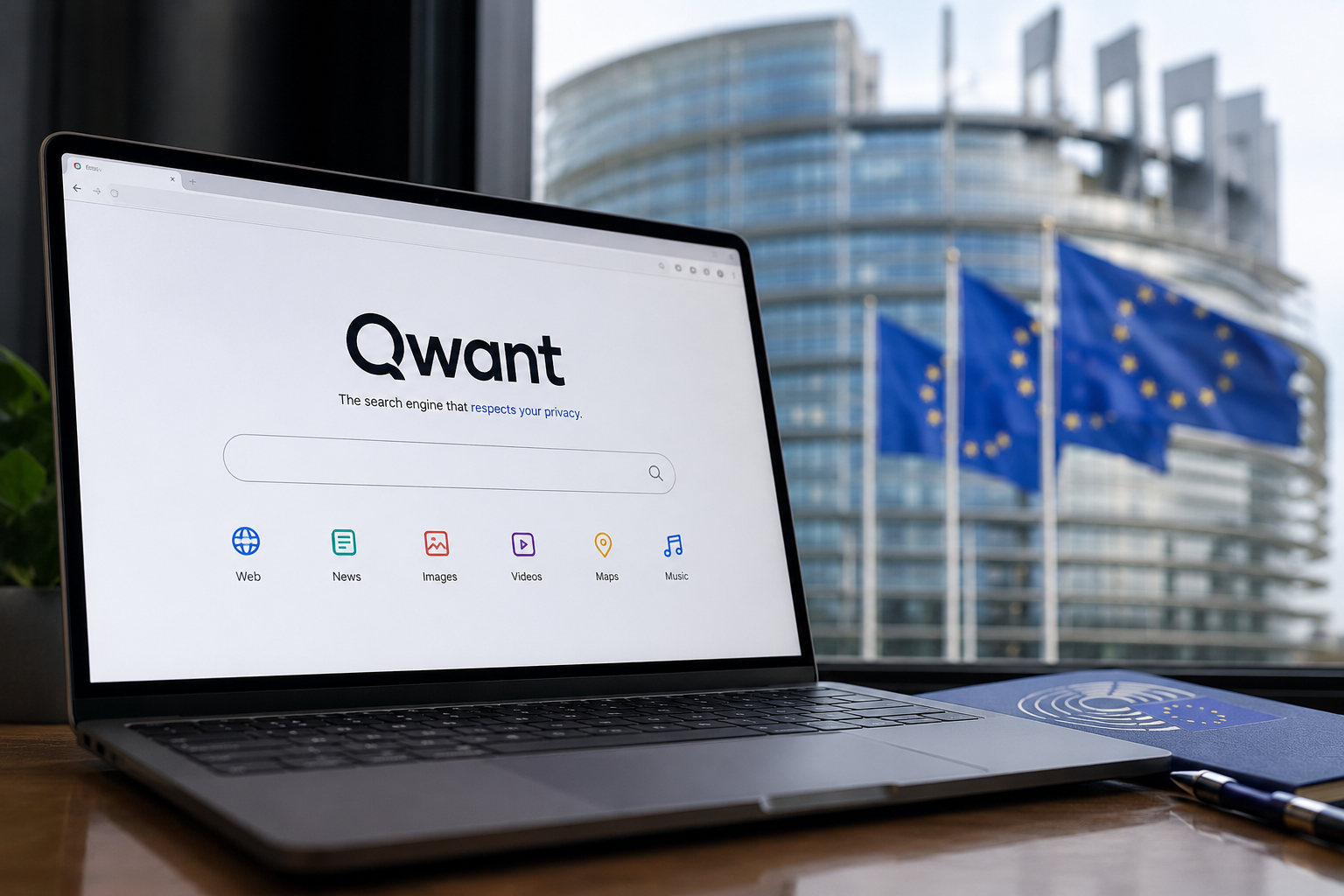
The initiative allows participating lawmakers and staff to use Qwant as their default search engine on parliamentary devices. The pilot forms part of broader discussions within European institutions about the role of homegrown technology providers and the concentration of power among a small number of dominant digital platforms.
Qwant, founded in France in 2013, markets itself as a privacy-focused search engine that does not build advertising profiles based on users’ search histories. The company has long positioned itself as a European alternative to Google, emphasizing data protection and compliance with European privacy standards.
The trial comes as European policymakers continue debating how to strengthen the region’s technological independence. Concerns over digital sovereignty have intensified in recent years as governments and institutions become increasingly reliant on services provided by a handful of large technology firms headquartered outside Europe.
Supporters of the pilot argue that public institutions should evaluate European alternatives where practical, particularly for services involving large-scale data processing. They contend that greater competition could help diversify the digital ecosystem and reduce reliance on a single provider for critical online services.
However, the project does not represent a permanent replacement of Google within the European Parliament. Instead, the initiative is intended to assess how well alternative search services perform in a real-world institutional environment and whether they can meet users’ needs for accuracy, relevance, and functionality.
Google remains the dominant search engine across Europe, accounting for the vast majority of web searches. Competing providers such as Qwant, Ecosia, and DuckDuckGo have sought to differentiate themselves through privacy features, environmental commitments, or alternative approaches to data collection.
The pilot also coincides with wider European regulatory efforts aimed at increasing competition in digital markets. Through measures such as the Digital Markets Act (DMA), the European Union has sought to limit the influence of dominant technology platforms and create more opportunities for smaller competitors.
European institutions have increasingly examined alternatives across multiple technology sectors, including cloud services, communications platforms, artificial intelligence, and search engines. The Qwant trial represents one example of how policymakers are exploring whether European-developed technologies can play a larger role within public-sector infrastructure.