

Privacy regulators across several European countries are taking a closer look at smart glasses as concerns grow over their ability to capture photos, videos and audio without people realizing they are being recorded. Authorities in Germany, France and the Netherlands are assessing whether existing privacy laws adequately address devices that combine wearable technology with discreet cameras and artificial intelligence.
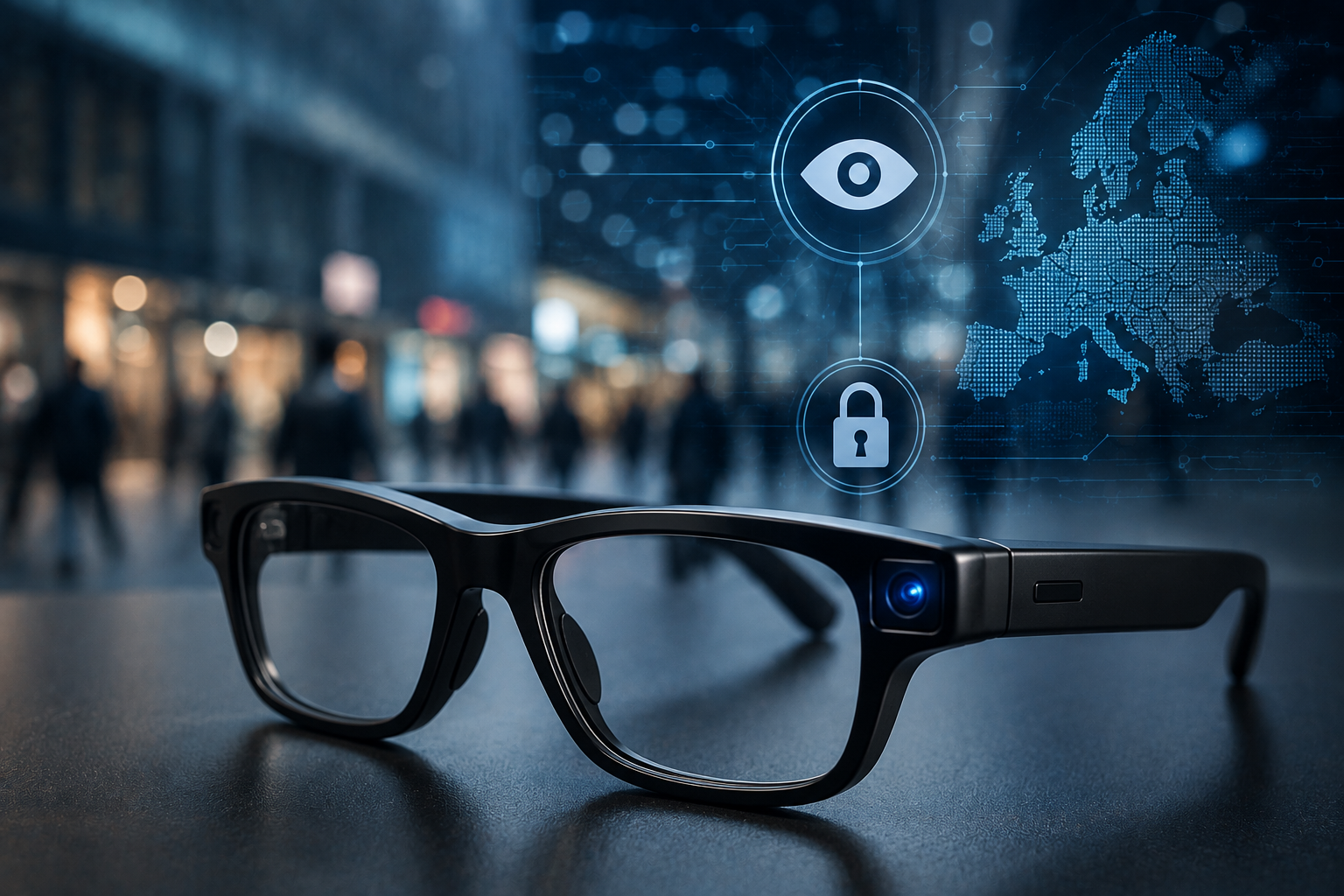
One of the strongest warnings has come from Thomas Fuchs, Hamburg’s Commissioner for Data Protection and Freedom of Information. In comments to German broadcaster ARD, Fuchs argued that smart glasses function as concealed recording devices because their cameras are far less noticeable than those on smartphones. He suggested that certain products could potentially conflict with German legislation governing disguised surveillance equipment.
Germany’s telecommunications laws prohibit the manufacture, sale and possession of devices intentionally designed to conceal recording capabilities by disguising them as ordinary everyday objects. Regulators are therefore examining whether some smart glasses fall within the scope of those restrictions or whether existing rules need to be interpreted differently as wearable technology evolves.
The issue is also attracting attention at the European level. According to Euractiv, the European Data Protection Board (EDPB) is evaluating the privacy implications of smart glasses and is expected to publish its findings later this summer. The review is expected to consider how existing European data protection rules apply to wearable devices equipped with cameras, microphones and AI-powered features.
Privacy authorities in other countries have raised similar concerns. France’s data protection regulator has noted that people can usually recognize when someone is recording with a smartphone, whereas smart glasses make it much harder to determine whether a camera is active. Dutch privacy organisations have likewise warned that nearly invisible cameras could enable individuals to record others without their knowledge or consent.
Much of the public debate has focused on products developed by Meta, whose smart glasses have become one of the most widely adopted devices in the category. As sales have increased, critics have questioned whether current privacy safeguards are sufficient to prevent misuse in public places. Some users have reported avoiding the devices because they fear being perceived as secretly recording people, while privacy advocates argue that the technology could be exploited for harassment, stalking, or other forms of intrusive surveillance.
Concerns extend beyond recording in public. Previous reporting has indicated that footage captured by Meta’s AI-enabled smart glasses was reviewed by contractors as part of the company’s efforts to improve its artificial intelligence systems. According to reports, reviewers encountered a wide range of highly sensitive material, including private conversations, financial information and intimate moments that had been inadvertently recorded by users.
The growing scrutiny reflects a broader challenge facing regulators as wearable devices become increasingly capable of continuously collecting visual and audio data. While smartphones clearly signal when someone is filming, smart glasses can make that distinction far less obvious, prompting questions about transparency, informed consent and compliance with existing privacy laws.
The outcome of the European regulatory reviews could influence how manufacturers design future wearable devices and whether additional safeguards or legal requirements are introduced for products that incorporate discreet recording technology.