

Three of the world’s largest technology companies are taking California to court over legislation that would restrict how social media platforms engage users younger than 16. Google, Meta, and TikTok argue that the state’s attempt to regulate potentially addictive features violates constitutional protections for free expression.
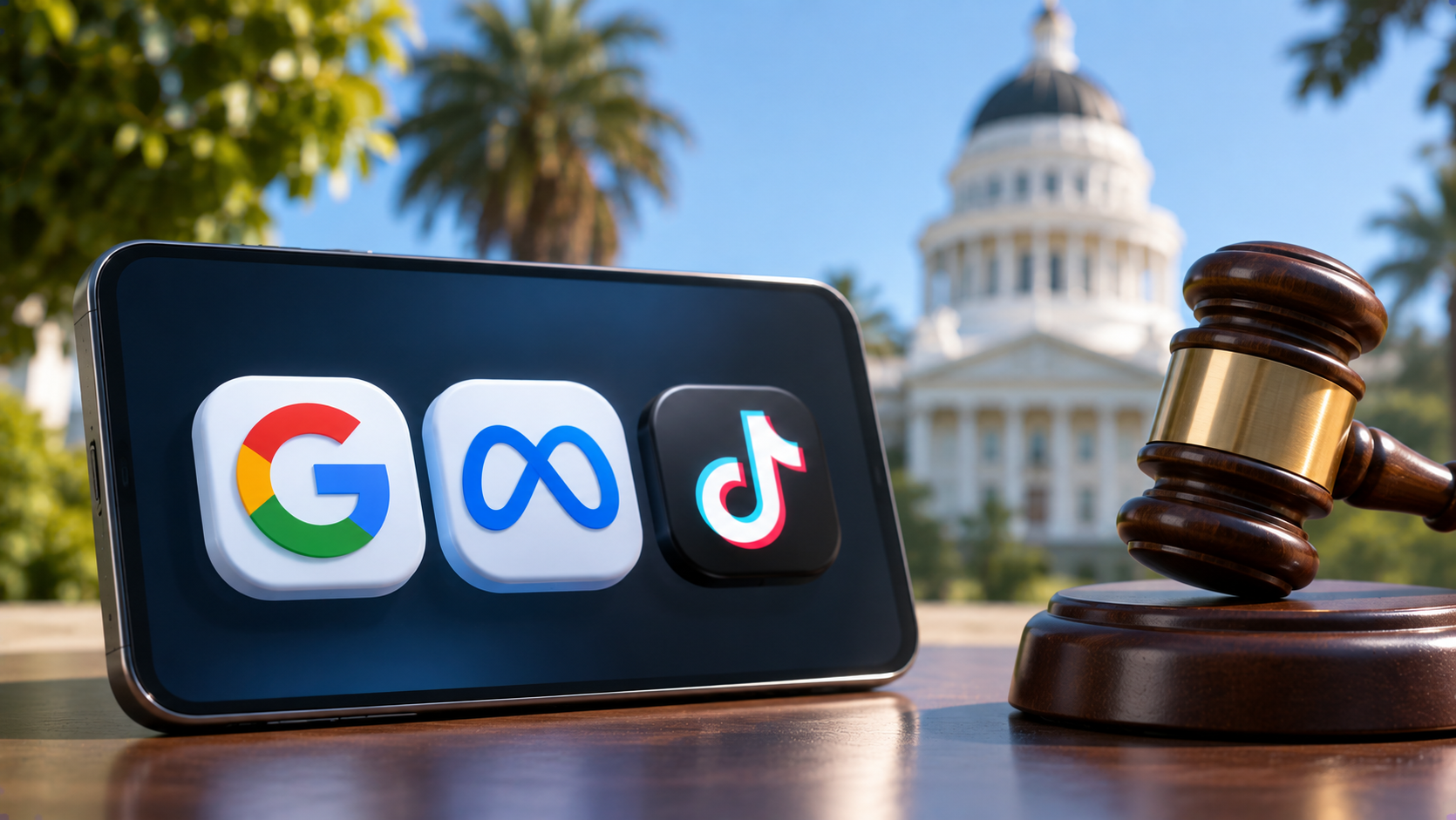
The companies filed separate lawsuits in federal courts in San Francisco, Los Angeles, and San Jose. Their legal challenges target Assembly Bill 1709, which California Governor Gavin Newsom signed in September 2026 and which is scheduled to take effect on January 1, 2027.
The legislation prohibits platforms from offering certain engagement features to children under 16, including personalized content feeds, endless scrolling, and automatically playing videos. Companies must also take reasonable steps to verify users’ ages and prevent younger users from accessing restricted features.
Platforms that fail to comply could face penalties of up to $50,000 per affected underage user. The law also requires companies to remove accounts belonging to children who continue using prohibited features.
The lawsuits focus on whether California can regulate the presentation and recommendation of online content without violating the First Amendment. The companies argue that decisions about organizing, displaying, and recommending material are protected forms of expression.
Meta contends that the legislation interferes with its ability to determine how content appears on Facebook and Instagram. The company argues that compliance could require removing existing features or preventing some teenagers from accessing services they use to communicate with friends and family.
TikTok similarly maintains that personalized recommendations are an established method of presenting information, comparable to how television networks and streaming services select content for their audiences. It argues that the state cannot restrict these practices simply because lawmakers consider them unsuitable for younger users.
Google, which operates YouTube, says the legislation could undermine existing systems designed to provide age-appropriate content. The company also maintains that parents should have primary responsibility for deciding how their children use online services.
Beyond their constitutional arguments, all three companies contend that the law conflicts with Section 230 of the Communications Decency Act, which provides certain legal protections to online platforms regarding third-party content.
California Attorney General Rob Bonta is named as a defendant in the lawsuits. His office said it was reviewing the filings and remained committed to defending legislation intended to protect children online.
The law has also drawn criticism from digital rights advocates. The Electronic Frontier Foundation warned that age-verification requirements could encourage platforms to collect additional personal information, potentially affecting the privacy of both teenagers and adults.
The dispute comes amid wider legal scrutiny of social media companies over allegations that their platforms contribute to compulsive use and mental health problems among young people.
The lawsuits seek to prevent AB 1709 from taking effect. Courts have not yet determined whether the restrictions violate federal law, leaving the legislation’s implementation uncertain ahead of its January deadline.