

US-based utility technology provider Itron has confirmed a cybersecurity breach after detecting unauthorized access to parts of its internal network, raising concerns over potential risks to critical infrastructure systems used worldwide.
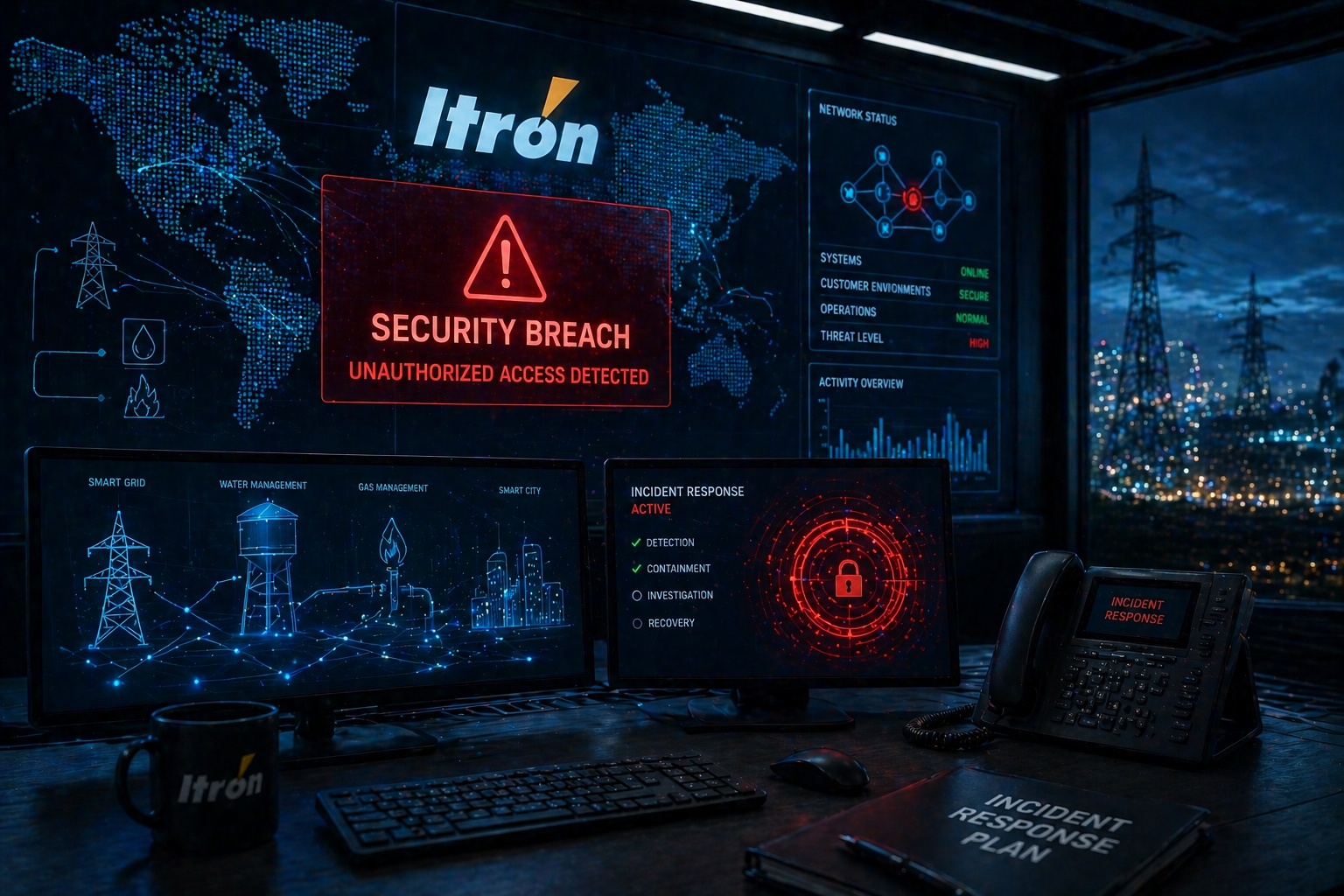
The company revealed that the intrusion was identified on April 13, prompting the immediate activation of its incident response plan. Itron stated it took steps to contain and remove the unauthorized activity while launching an internal investigation supported by external cybersecurity experts.
Itron, which develops technology used in electricity, gas, and water management systems, serves thousands of utility providers across more than 100 countries. Its products are embedded in critical infrastructure, including smart meters and smart city networks, making any security incident particularly sensitive.
According to company disclosures, the breach was limited to certain internal IT systems. Itron said it has not observed further unauthorized activity following containment efforts and did not detect any compromise affecting customer-hosted environments.
The company emphasized that operations continued without disruption throughout the incident and that there is no indication of a material impact on business performance. Itron also expects that a significant portion of incident-related costs will be covered by its cybersecurity insurance policies.
At this stage, it remains unclear how the attackers gained access or whether any sensitive corporate or operational data was exfiltrated. No ransomware group or threat actor has publicly claimed responsibility for the intrusion, adding to uncertainty around the nature and intent of the attack.
Itron has notified law enforcement and is continuing to evaluate whether regulatory disclosures or customer notifications will be required as the investigation progresses.
The incident highlights ongoing cybersecurity challenges facing companies operating within critical infrastructure sectors. Organizations managing energy and water systems are increasingly targeted due to their strategic importance, even when attacks are confined to corporate networks rather than operational environments.