

DotStealer 2.0 is a type of malware designed to steal sensitive information from an infected computer. It belongs to a family of threats known as information stealers, which are built specifically to collect credentials and other private data and send that data to attackers. DotStealer 2.0 does not perform beneficial functions for the user, nor does it improve system performance. Its sole purpose is to gather information and transmit it to malicious actors.
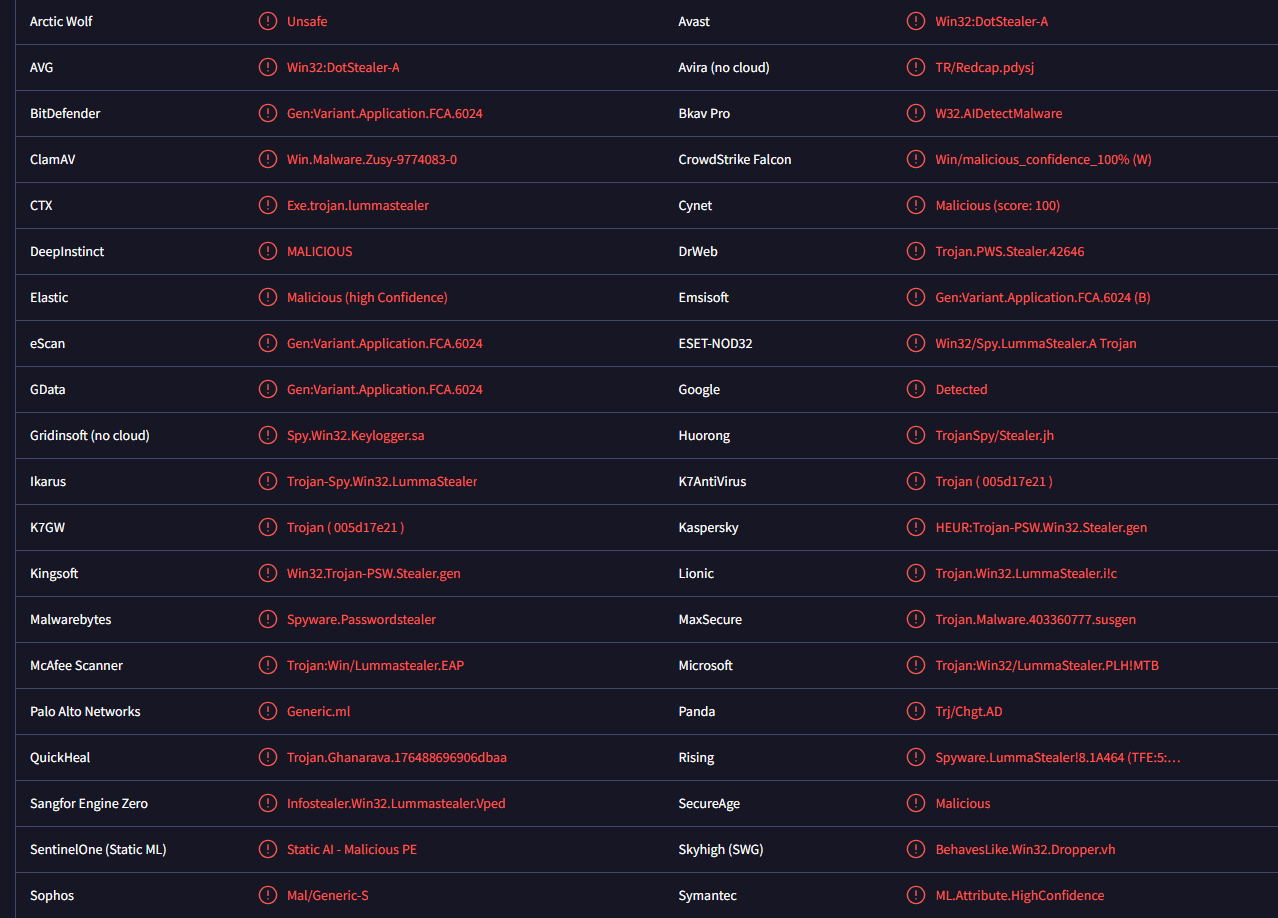
Once DotStealer 2.0 is present on a system, it begins executing its data collection routines without any legitimate notification to the user. The malware is capable of scanning the system for stored credentials that belong to web browsers, email clients, and other applications. This includes user names, passwords, tokens, session identifiers, and saved login details that are kept in various applications for convenience. Because many people save passwords in browsers and apps to avoid typing them repeatedly, DotStealer 2.0 can harvest a significant amount of private data with little resistance.
In addition to credentials, DotStealer 2.0 can collect other types of information that reside on the infected machine. This may include form autofill data such as addresses and phone numbers, payment card information that is stored in web browsers, and instant messaging contact lists. Any data that can be extracted from locally stored files or applications and transmitted to the attacker can be compromised.
After gathering data, DotStealer 2.0 establishes communication with a remote server controlled by attackers. The harvested information is packaged and sent to that server. The operator behind DotStealer 2.0 can then view, download, or sell the stolen data. Because all of this happens silently, the user remains unaware that their credentials and private information are being transmitted out of their system.
Another dangerous aspect of DotStealer 2.0 is that the stolen credentials can be reused for unauthorized access to online accounts. Attackers may use harvested email and password combinations to attempt logins on banking, shopping, workplace, or social media accounts. Because many people reuse passwords across multiple sites, one stolen credential set can lead to access to several accounts. Attackers can then carry out additional fraud, financial theft, or identity theft based on the information obtained.
DotStealer 2.0 also captures system and environment details. This includes operating system version, installed software, hardware identifiers, and network configuration. These technical details help attackers tailor subsequent actions or identify other vulnerabilities on the infected machine.
Once DotStealer 2.0 has executed its data capture routines, it may attempt to remain hidden. It can use techniques to evade detection by security software, such as modifying its code slightly each time it runs, disguising itself with names similar to legitimate files, or injecting its functions into processes that appear legitimate. These evasion methods make DotStealer 2.0 difficult to detect and remove manually without specialized tools.
How DotStealer 2.0 gets installed
DotStealer 2.0 is distributed through deceptive delivery methods that rely on user interaction and social engineering. One of the most common methods is through phishing emails. In these attacks, the attacker sends an email that appears to contain a legitimate attachment or link, such as an invoice, document, or media file. The content is crafted to encourage the recipient to open the attachment or follow the link. Once the file or link is opened, DotStealer 2.0 is executed on the machine, often without any clear indication to the user that anything harmful has occurred.
Another method by which DotStealer 2.0 is installed is through fake software downloads. Users searching for popular applications, games, or tools may encounter unofficial download pages that host installers bundled with DotStealer 2.0. The primary software appears to be legitimate, but the installer also includes malware. Users who proceed with the installation, especially using default settings, inadvertently install the stealer.
Malicious websites or compromised legitimate websites can also deliver DotStealer 2.0. These sites may use scripts that automatically prompt downloads or redirect visitors to deceptive pages. A user visiting a compromised page may be presented with a pop-up or prompt that claims a download is required to view content. Clicking such a prompt can start the download and execution of DotStealer 2.0.
Drive-by downloads are another delivery mechanism. In a drive-by scenario, merely visiting a website with no further interaction can be enough to initiate a download if the user’s system is not fully updated or if they lack effective security protections. Exploit kits on malicious or compromised sites take advantage of software vulnerabilities to deliver DotStealer 2.0 without explicit consent.
Additionally, DotStealer 2.0 may be distributed through torrent files and file-sharing networks. Files that appear to be pirated software, cracked applications, or media content often contain bundled malware. Users who download these files bypass official distribution channels and expose their systems to risk. Once the downloaded file is opened, DotStealer 2.0 is installed alongside the expected content.
Because DotStealer 2.0 operates silently and focuses on data theft, its presence can go unnoticed for an extended period. Users may not realize their information has been compromised until unauthorized access or fraud appears on accounts. Preventing infection involves avoiding suspicious email attachments, downloading software only from official sources, keeping systems and applications updated, and using robust security tools capable of detecting stealthy malware like DotStealer 2.0. If infection is suspected, specialized removal tools or professional assistance are often needed to ensure all malicious components are eradicated, and the system’s security is restored.
Remove DotStealer 2.0 malware
Trojans are sophisticated malware infections, and manual removal should not be attempted as it could cause further issues. Thus, an anti-malware program should be used to remove DotStealer 2.0 malware.
Offers
Download Removal Toolto scan for DotStealer 2.0 malwareUse our recommended removal tool to scan for DotStealer 2.0 malware. Trial version of provides detection of computer threats like DotStealer 2.0 malware and assists in its removal for FREE. You can delete detected registry entries, files and processes yourself or purchase a full version.
More information about SpyWarrior and Uninstall Instructions. Please review SpyWarrior EULA and Privacy Policy. SpyWarrior scanner is free. If it detects a malware, purchase its full version to remove it.

WiperSoft Review Details WiperSoft (www.wipersoft.com) is a security tool that provides real-time security from potential threats. Nowadays, many users tend to download free software from the Intern ...
Download|moreIs MacKeeper a virus? MacKeeper is not a virus, nor is it a scam. While there are various opinions about the program on the Internet, a lot of the people who so notoriously hate the program have neve ...
Download|moreWhile the creators of MalwareBytes anti-malware have not been in this business for long time, they make up for it with their enthusiastic approach. Statistic from such websites like CNET shows that th ...
Download|more



Site Disclaimer
2-remove-virus.com is not sponsored, owned, affiliated, or linked to malware developers or distributors that are referenced in this article. The article does not promote or endorse any type of malware. We aim at providing useful information that will help computer users to detect and eliminate the unwanted malicious programs from their computers. This can be done manually by following the instructions presented in the article or automatically by implementing the suggested anti-malware tools.
The article is only meant to be used for educational purposes. If you follow the instructions given in the article, you agree to be contracted by the disclaimer. We do not guarantee that the artcile will present you with a solution that removes the malign threats completely. Malware changes constantly, which is why, in some cases, it may be difficult to clean the computer fully by using only the manual removal instructions.