

If you open your browser, type a search query expecting results from Google, but instead find that everything routes through Bing, your browser may be hijacked by a browser hijacker. On the surface, Bing is a legitimate search engine, but if you explicitly set Google as your default and the browser still redirects you, this is a strong indication that something deeper is going on. What you’re likely dealing with is a browser hijacker. Such infections change the browser’s settings behind the scenes, changing default search engines, redirecting queries, injecting adverts, or even monitoring your online behaviour.

This is more than just a nuisance. When browser settings have been tampered with, your security, privacy, and browsing stability are all at risk. Redirects to Bing or other engines may route you via tracking servers, may expose your searches to unknown parties, or serve as a pivot point for further malware. The good news is that the problem is identifiable and fixable, but you have to approach it methodically.
Why are your searches suddenly redirected to Bing?
When your browser is redirected from Google to Bing without your consent, a hijacker or potentially unwanted program (PUP) is behind it. It may look innocuous, a changed search engine, maybe more ads, maybe an unfamiliar homepage, but in reality, the hijacker is taking control.
Such software can intervene in your browser’s configuration, it might enforce policy settings that prevent you from changing search providers, it might install hidden extensions or scripts that intercept search queries, or it might even modify system-level browser policies (particularly on Windows). What results is a browser experience that you no longer control, as your searches may go through domains you don’t recognize, the results may display sponsored links preferentially, and your homepage or new tab settings may have been changed without explicit permission.
In short, the hijacker can degrade browsing performance, expose you to additional unwanted ads or sites, impact your privacy, and open a door for further threats.
There are some key indicators that your browser has been hijacked:
- Your default search engine is set to Google, yet when you perform a search, you end up on Bing or a Bing-powered result page.
- You see more advertisements or pop-ups than usual, often of the “unexpected” variety.
- Your homepage or new tab page has been modified to a site you did not choose.
- You notice that when you open a new tab or start a search, a suspicious domain redirects before landing on Bing.
- Your browser behaves slowly, tabs open unexpectedly, or you find unfamiliar browser extensions in your list.
- Attempting to change the default search engine or remove certain extensions is blocked or undone.
When you encounter one or more of these symptoms, it’s time to examine your browser and system settings thoroughly.
There are generally two scenarios. One is an honest misconfiguration, and you might have inadvertently changed your search engine or installed an app that changed it. The other, more concerning scenario, is that a browser hijacker installed itself, often via bundled software or deceptive websites.
One common vector is free software downloads from third-party websites that include optional installs or “additional offers” during setup. These extra offers may install browser tools that redirect your searches or change your homepage. Another vector is malicious adverts or pop-ups on websites that deploy drive-by downloads, scripts that silently install browser changes when you visit or click something innocuous. Further, some hijackers rely on installing browser extensions or even system policies that reinforce the redirect behaviour and prevent removal.
Because the browser is the primary gateway to the internet, hijacking it is a powerful tool for attackers. It can reroute your traffic through tracking domains, inflate advertising revenue, promote affiliate websites, and lead you to more serious malware. That’s why when your searches go from Google to Bing without your consent, you should treat it as a red-flag incident.
How to prevent browser hijacker infections
Always install software from official sources or trusted publisher websites, and reject any “additional offers” during installations. Choose Advanced settings when installing free programs so you can uncheck hidden extra offers. Be cautious with links and adverts, especially on free software sites, torrent pages, or unfamiliar download portals.
Maintain your operating system and browser up-to-date. Many hijackers exploit outdated software or vulnerabilities, so keeping each component patched is a strong defence. Make browser extensions a habit to review monthly: ask yourself what each one does, whether you need it, and whether you recognise the developer.
Be careful when connecting to public WiFi networks. Untrusted networks can facilitate hijacker installs or certificate injections. If you must use public WiFi, consider using a trusted VPN. Check your data and browsing behaviour—if you notice increased adverts, new tabs opening, or data usage spiking, investigate.
Consider maintaining backups of your important data, and periodically monitor browser behaviour (new tabs, search engine changes, unknown extensions). If abnormalities appear, act quickly before the redirect becomes entrenched.
Remove Google redirects to Bing
When your search engine unexpectedly changes from Google to Bing without your consent, don’t chalk it up to a quirky setting, and treat it as a potential intrusion. Scan for malware, change your search engine, remove suspicious extensions, reset browser settings, and clean your system.
Offers
Download Removal Toolto scan for Remove Google redirects to BingUse our recommended removal tool to scan for Remove Google redirects to Bing. Trial version of provides detection of computer threats like Remove Google redirects to Bing and assists in its removal for FREE. You can delete detected registry entries, files and processes yourself or purchase a full version.
More information about SpyWarrior and Uninstall Instructions. Please review SpyWarrior EULA and Privacy Policy. SpyWarrior scanner is free. If it detects a malware, purchase its full version to remove it.

WiperSoft Review Details WiperSoft (www.wipersoft.com) is a security tool that provides real-time security from potential threats. Nowadays, many users tend to download free software from the Intern ...
Download|moreIs MacKeeper a virus? MacKeeper is not a virus, nor is it a scam. While there are various opinions about the program on the Internet, a lot of the people who so notoriously hate the program have neve ...
Download|moreWhile the creators of MalwareBytes anti-malware have not been in this business for long time, they make up for it with their enthusiastic approach. Statistic from such websites like CNET shows that th ...
Download|more



Quick Menu
Step 1. Uninstall Remove Google redirects to Bing and related programs.
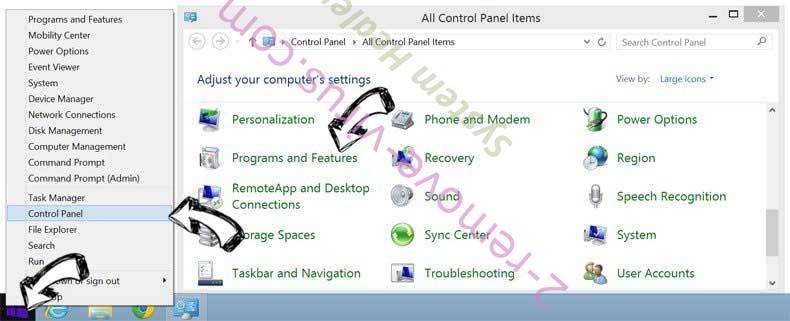
Remove Remove Google redirects to Bing from Windows 8
Right-click in the lower left corner of the screen. Once Quick Access Menu shows up, select Control Panel choose Programs and Features and select to Uninstall a software.
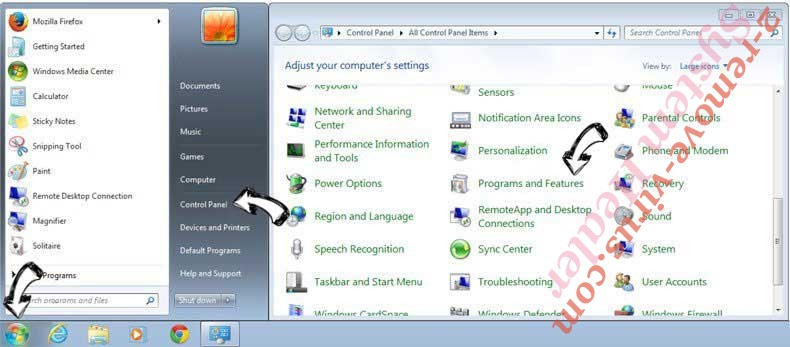
Uninstall Remove Google redirects to Bing from Windows 7
Click Start → Control Panel → Programs and Features → Uninstall a program.
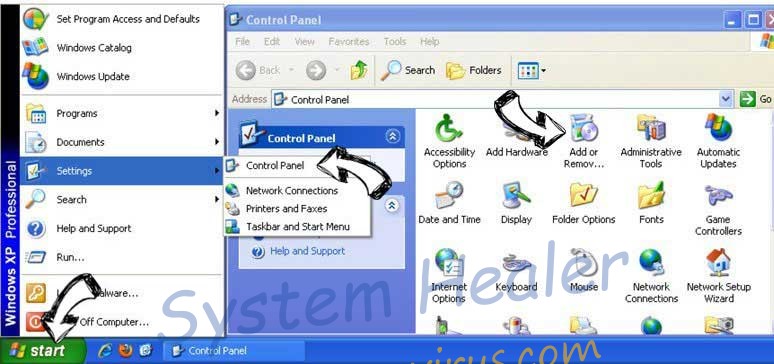
Delete Remove Google redirects to Bing from Windows XP
Click Start → Settings → Control Panel. Locate and click → Add or Remove Programs.
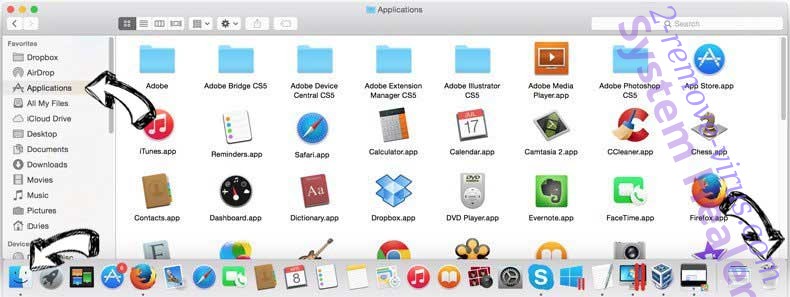
Remove Remove Google redirects to Bing from Mac OS X
Click Go button at the top left of the screen and select Applications. Select applications folder and look for Remove Google redirects to Bing or any other suspicious software. Now right click on every of such entries and select Move to Trash, then right click the Trash icon and select Empty Trash.
Step 2. Delete Remove Google redirects to Bing from your browsers
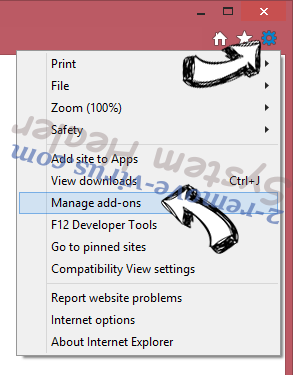
Terminate the unwanted extensions from Internet Explorer
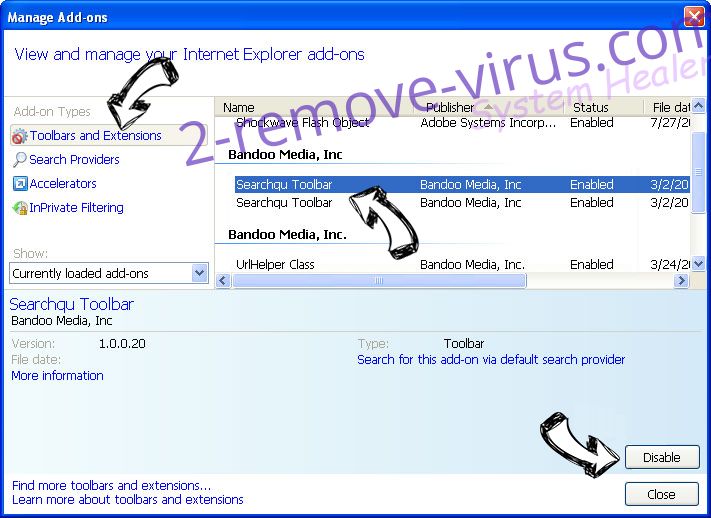
- Tap the Gear icon and go to Manage Add-ons.
- Pick Toolbars and Extensions and eliminate all suspicious entries (other than Microsoft, Yahoo, Google, Oracle or Adobe)
- Leave the window.
Change Internet Explorer homepage if it was changed by virus:
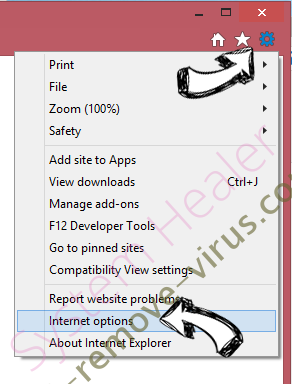
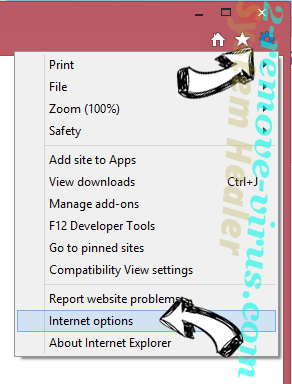
- Tap the gear icon (menu) on the top right corner of your browser and click Internet Options.
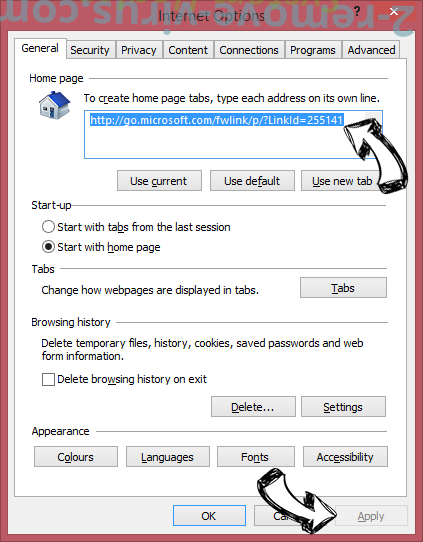
- In General Tab remove malicious URL and enter preferable domain name. Press Apply to save changes.
Reset your browser
- Click the Gear icon and move to Internet Options.
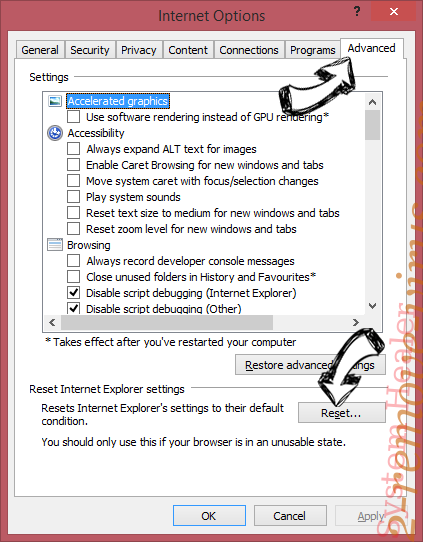
- Open the Advanced tab and press Reset.
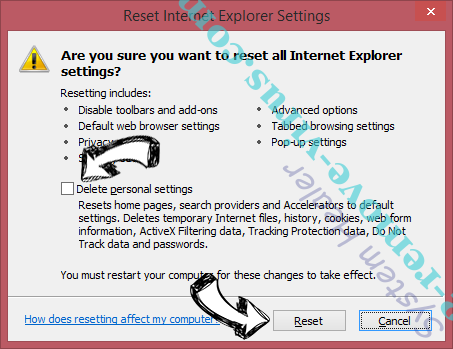
- Choose Delete personal settings and pick Reset one more time.
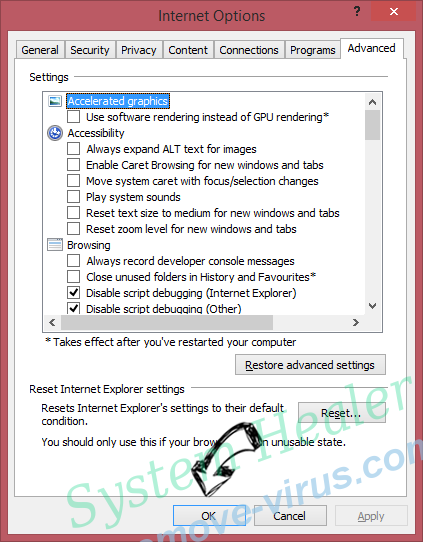
- Tap Close and leave your browser.
- If you were unable to reset your browsers, employ a reputable anti-malware and scan your entire computer with it.
Erase Remove Google redirects to Bing from Google Chrome
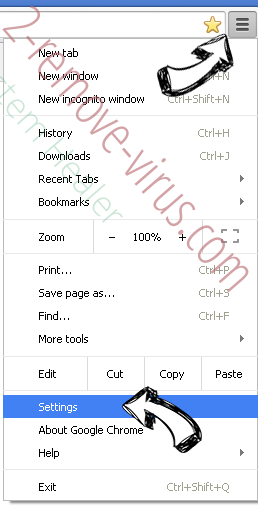
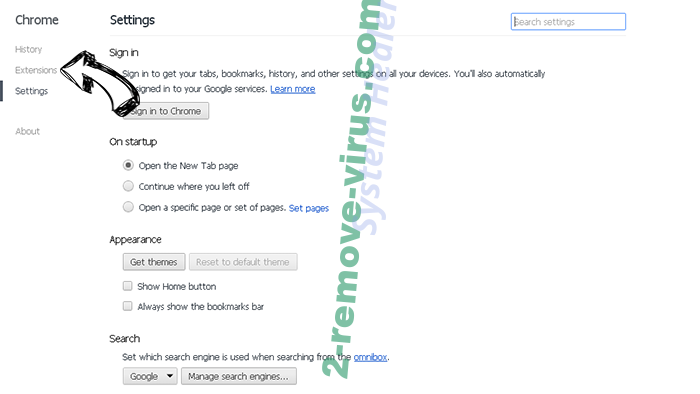
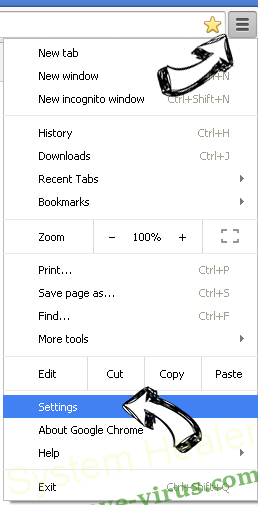
- Access menu (top right corner of the window) and pick Settings.
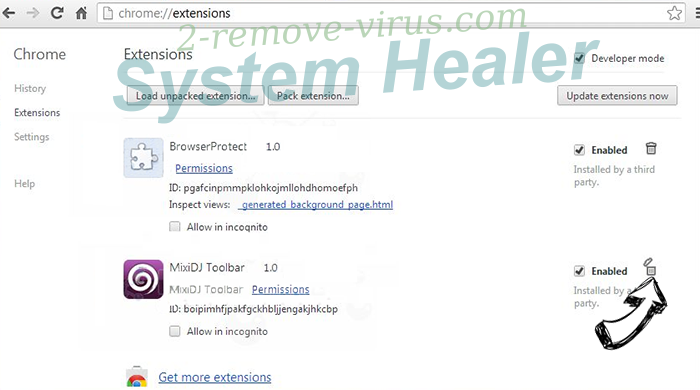
- Choose Extensions.
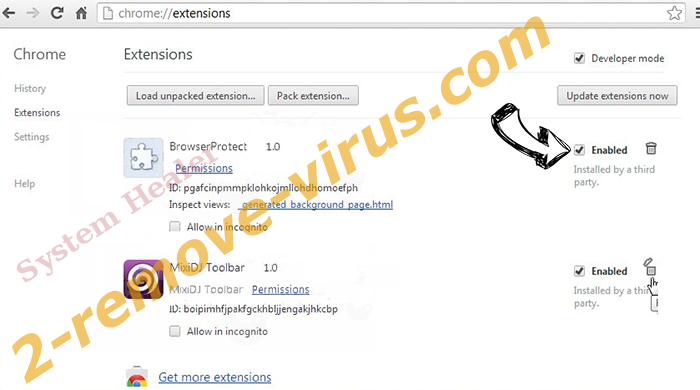
- Eliminate the suspicious extensions from the list by clicking the Trash bin next to them.
- If you are unsure which extensions to remove, you can disable them temporarily.
Reset Google Chrome homepage and default search engine if it was hijacker by virus
- Press on menu icon and click Settings.
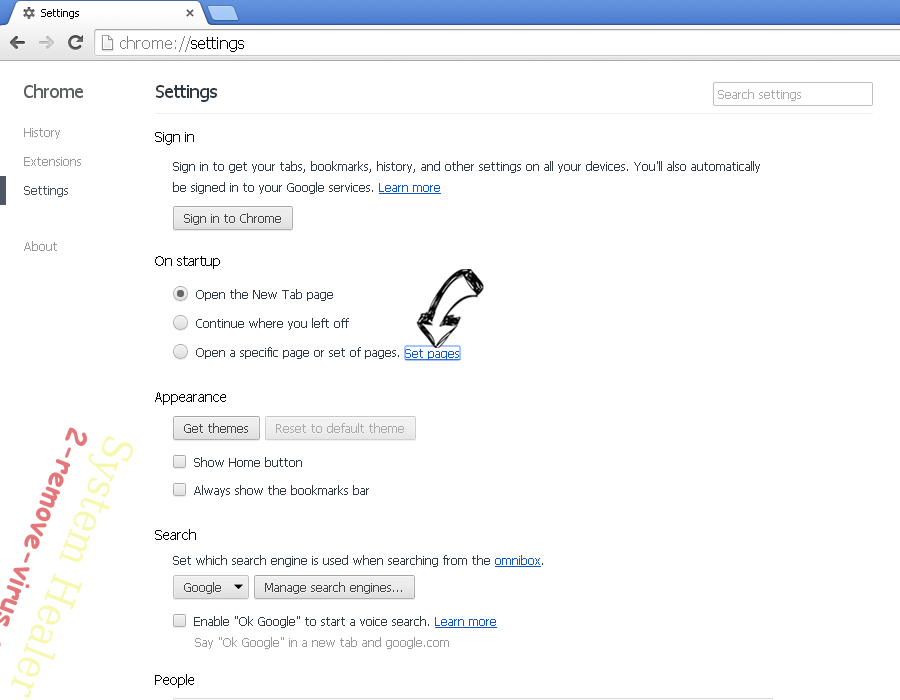
- Look for the “Open a specific page” or “Set Pages” under “On start up” option and click on Set pages.
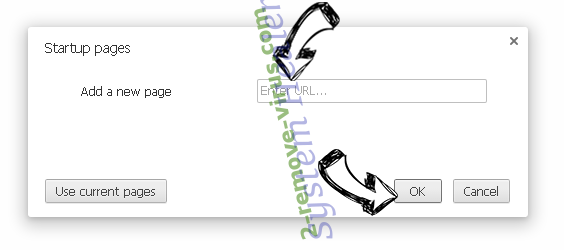
- In another window remove malicious search sites and enter the one that you want to use as your homepage.
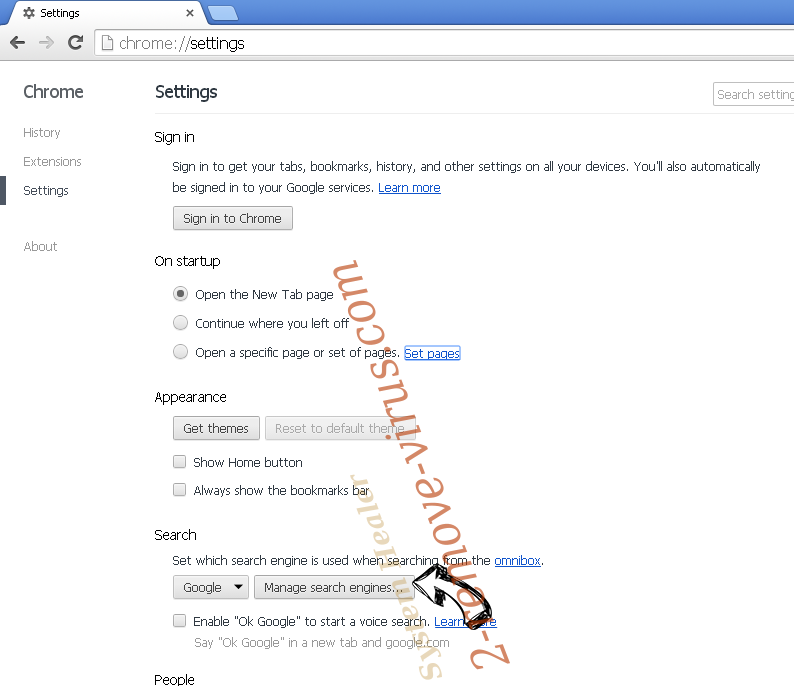
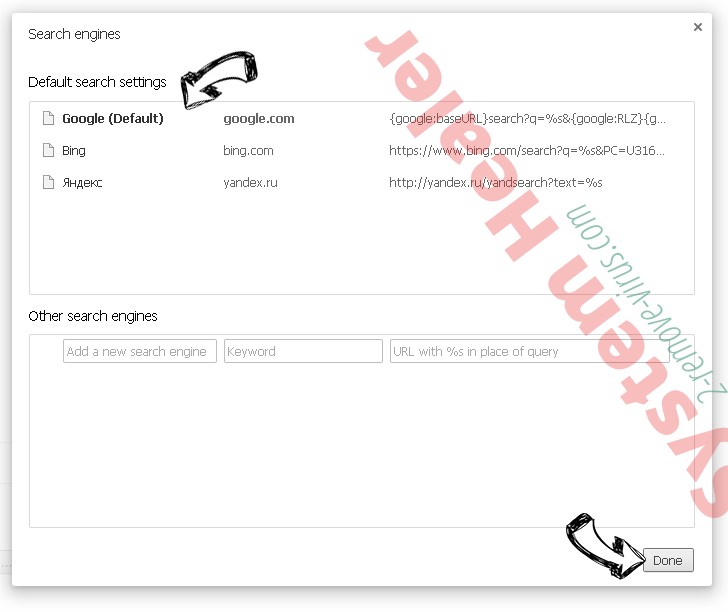
- Under the Search section choose Manage Search engines. When in Search Engines..., remove malicious search websites. You should leave only Google or your preferred search name.
Reset your browser
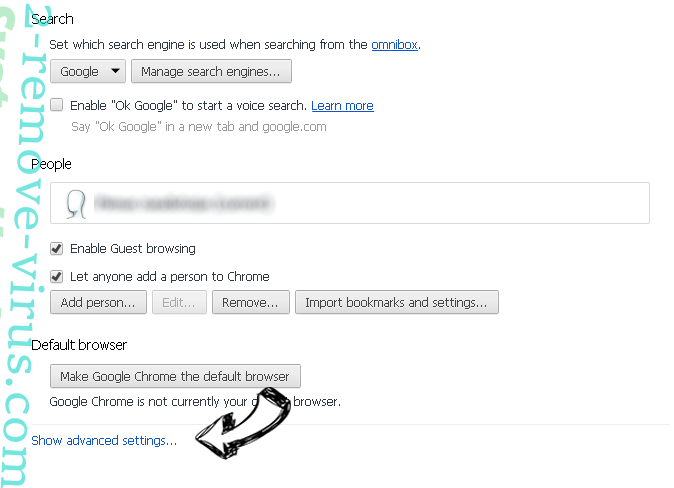
- If the browser still does not work the way you prefer, you can reset its settings.
- Open menu and navigate to Settings.
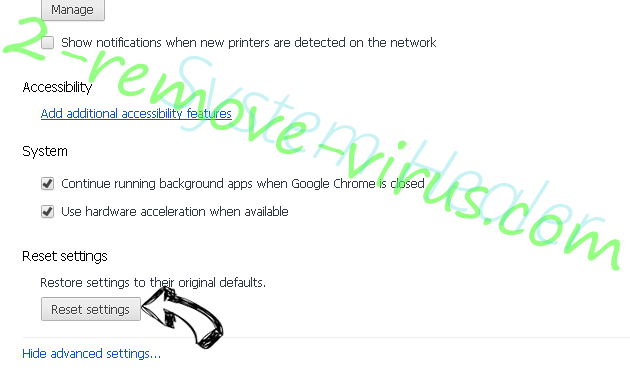
- Press Reset button at the end of the page.
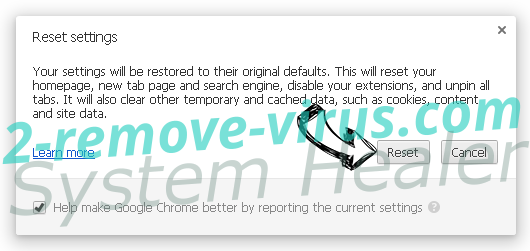
- Tap Reset button one more time in the confirmation box.
- If you cannot reset the settings, purchase a legitimate anti-malware and scan your PC.
Remove Remove Google redirects to Bing from Mozilla Firefox
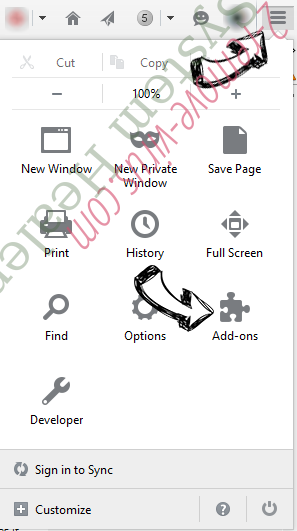
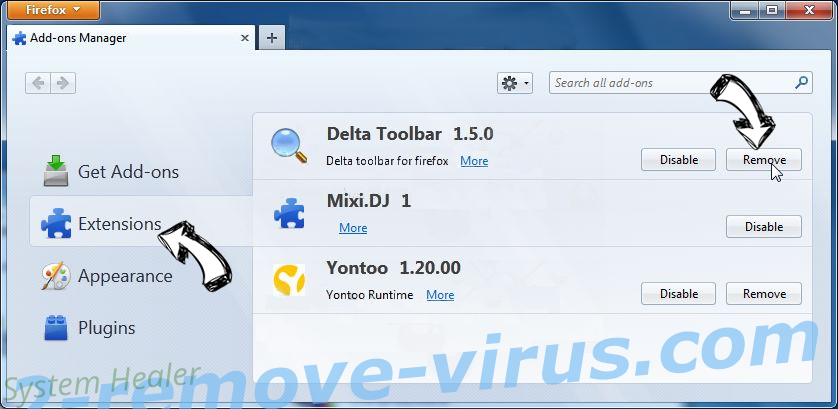
- In the top right corner of the screen, press menu and choose Add-ons (or tap Ctrl+Shift+A simultaneously).
- Move to Extensions and Add-ons list and uninstall all suspicious and unknown entries.
Change Mozilla Firefox homepage if it was changed by virus:
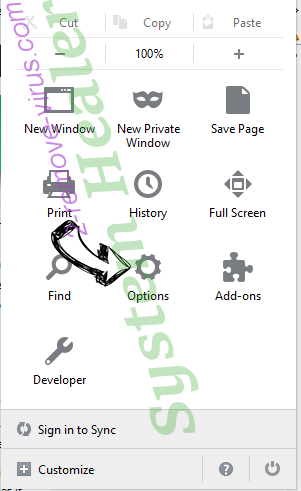
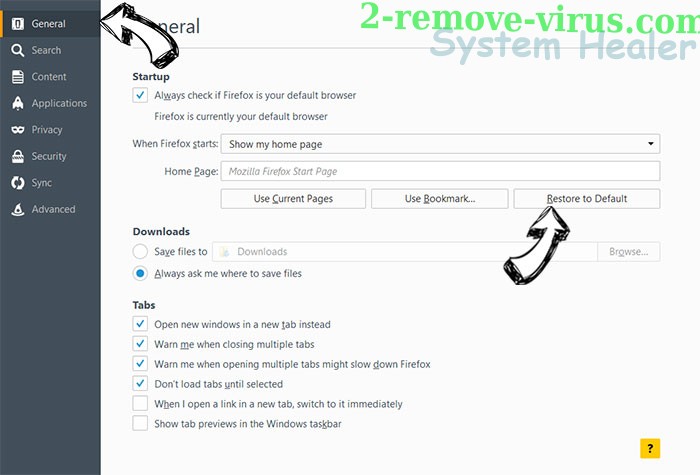
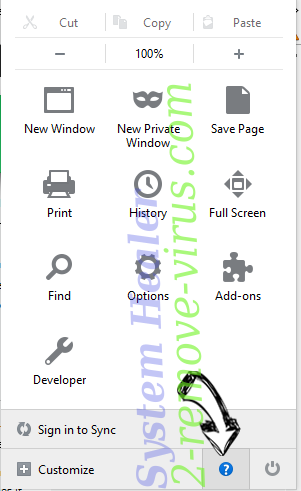
- Tap on the menu (top right corner), choose Options.
- On General tab delete malicious URL and enter preferable website or click Restore to default.
- Press OK to save these changes.
Reset your browser
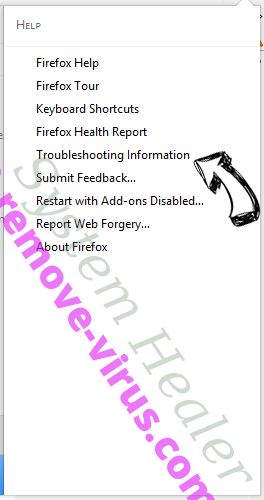
- Open the menu and tap Help button.
- Select Troubleshooting Information.
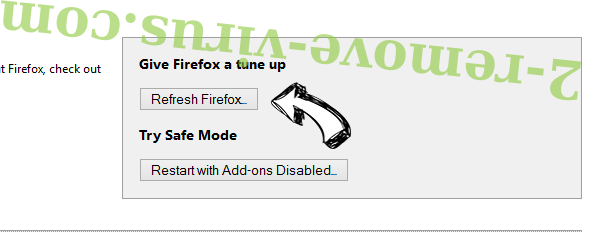
- Press Refresh Firefox.
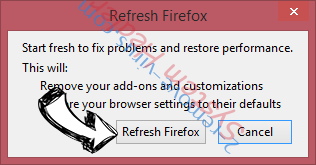
- In the confirmation box, click Refresh Firefox once more.
- If you are unable to reset Mozilla Firefox, scan your entire computer with a trustworthy anti-malware.
Uninstall Remove Google redirects to Bing from Safari (Mac OS X)
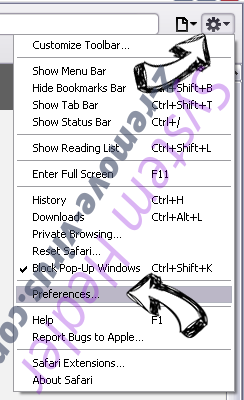
- Access the menu.
- Pick Preferences.
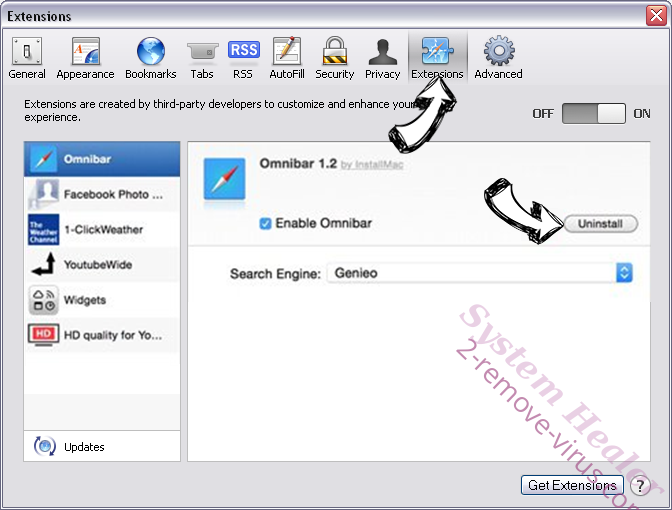
- Go to the Extensions Tab.
- Tap the Uninstall button next to the undesirable Remove Google redirects to Bing and get rid of all the other unknown entries as well. If you are unsure whether the extension is reliable or not, simply uncheck the Enable box in order to disable it temporarily.
- Restart Safari.
Reset your browser
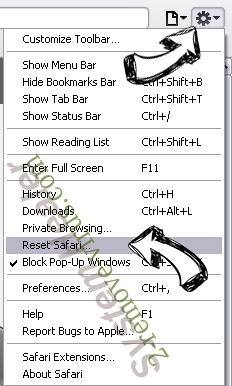
- Tap the menu icon and choose Reset Safari.
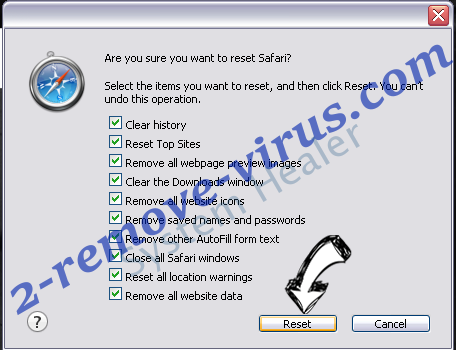
- Pick the options which you want to reset (often all of them are preselected) and press Reset.
- If you cannot reset the browser, scan your whole PC with an authentic malware removal software.
Incoming search terms:
Site Disclaimer
2-remove-virus.com is not sponsored, owned, affiliated, or linked to malware developers or distributors that are referenced in this article. The article does not promote or endorse any type of malware. We aim at providing useful information that will help computer users to detect and eliminate the unwanted malicious programs from their computers. This can be done manually by following the instructions presented in the article or automatically by implementing the suggested anti-malware tools.
The article is only meant to be used for educational purposes. If you follow the instructions given in the article, you agree to be contracted by the disclaimer. We do not guarantee that the artcile will present you with a solution that removes the malign threats completely. Malware changes constantly, which is why, in some cases, it may be difficult to clean the computer fully by using only the manual removal instructions.