

Is xHIlEgqxx ransomware a serious infection
The ransomware known as xHIlEgqxx ransomware is classified as a highly damaging infection, due to the possible harm it could do to your system. File encrypting malware isn’t something every user has heard of, and if it is your first time encountering it, you will learn quickly how how much damage it might do. Ransomware tends to use powerful encryption algorithms for the encryption process, which stops you from accessing them any longer. Ransomware is believed to be one of the most dangerous malware because data decryption isn’t always likely. You will be provided the option of recovering files if you pay the ransom, but that option is not recommended for a couple of reasons. 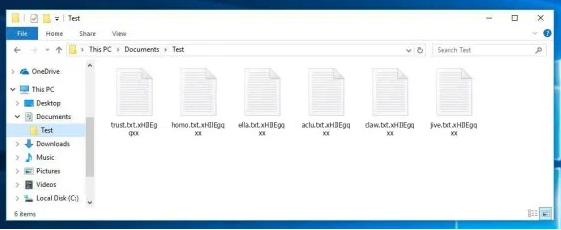
Giving into the demands will not necessarily guarantee that your data will be restored, so there is a possibility that you might just be wasting your money. Think about what is preventing criminals from just taking your money. The future activities of these crooks would also be financed by that money. Do you really want to support the kind of criminal activity that does damage worth billions of dollars. And the more people give into the demands, the more profitable ransomware gets, and that attracts increasingly more people to the industry. Consider investing that money into backup instead because you might end up in a situation where data loss is a risk again. If you had backup available, you could just fix xHIlEgqxx ransomware virus and then recover data without being worried about losing them. If you haven’t ran into file encrypting malicious software before, you may not know how it managed to get into your computer, in which case you should cautiously read the following paragraph.
xHIlEgqxx ransomware spread methods
You could generally see data encrypting malware added to emails as an attachment or on dubious download web pages. There is usually no need to come up with more sophisticated ways since many people aren’t careful when they use emails and download something. Nevertheless, some ransomware do use sophisticated methods. Cyber crooks write a pretty credible email, while using the name of a known company or organization, add the malware to the email and send it off. You will often come across topics about money in those emails, because users are more inclined to fall for those kinds of topics. If hackers used a big company name such as Amazon, people lower down their defense and may open the attachment without thinking as cyber crooks could just say there’s been dubious activity in the account or a purchase was made and the receipt is attached. There a couple of things you ought to take into account when opening email attachments if you want to keep your device secure. Before anything else, check the sender’s identity and whether they could be trusted. Even if you know the sender, don’t rush, first investigate the email address to make sure it matches the address you know to belong to that person/company. The emails could be full of grammar errors, which tend to be pretty obvious. Take note of how you are addressed, if it is a sender with whom you’ve had business before, they’ll always include your name in the greeting. Infection is also possible by using not updated computer program. Vulnerabilities in programs are regularly discovered and software developers release patches to fix them so that malware developers cannot take advantage of them to corrupt computers with malware. Unfortunately, as proven by the WannaCry ransomware, not all people install fixes, for one reason or another. It’s very essential that you frequently update your software because if a weak spot is severe enough, Severe enough weak spots could be easily used by malicious software so make sure you patch all your programs. You can also make updates install automatically.
What can you do about your data
Your data will be encoded as soon as the data encoding malicious program gets into your system. If you haven’t noticed anything strange until now, when you’re unable to open files, you will see that something is going on. All encrypted files will have a weird file extension, which can help users find out the ransomware’s name. Some ransomware might use powerful encryption algorithms, which would make data decryption potentially impossible. In a note, cyber criminals will tell you that they’ve locked your data, and offer you a way to restore them. Their suggested method involves you paying for their decryptor. If the ransom amount is not clearly stated, you’d have to use the given email address to contact the crooks to find out the amount, which could depend on the value of your data. Clearly, we do not believe paying is a wise choice, for the reasons already discussed. Before even considering paying, try all other options first. Maybe you have just forgotten that you have backed up your files. Or maybe there is a free decryption utility. If the file encrypting malware is decryptable, a malware researcher may be able to release a tool that would unlock xHIlEgqxx ransomware files for free. Look into that option and only when you are sure there’s no free decryptor, should you even consider complying with the demands. If you use some of that sum for backup, you would not face possible file loss again as you could always access copies of those files. If backup is available, you could recover files after you delete xHIlEgqxx ransomware completely. Try to familiarize with how a data encoding malware is distributed so that you do your best to avoid it. You primarily need to update your software whenever an update becomes available, only download from secure/legitimate sources and not randomly open files added to emails.
Methods to remove xHIlEgqxx ransomware
Obtain an anti-malware tool because it’ll be necessary to get the file encrypting malicious software off your computer if it still remains. When attempting to manually fix xHIlEgqxx ransomware virus you may cause additional damage if you are not the most computer-savvy person. Thus, picking the automatic method would be what we encourage. A malware removal tool is designed for the purpose of taking care of these threats, depending on which you have decided on, it might even stop an infection from doing harm. So check what matches what you require, install it, execute a scan of the system and permit the utility to eliminate the ransomware, if it is found. It ought to be mentioned that a malware removal utility is meant to fix xHIlEgqxx ransomware and not to unlock xHIlEgqxx ransomware files. When your system is infection free, begin to routinely back up your data.
Offers
Download Removal Toolto scan for xHIlEgqxx ransomwareUse our recommended removal tool to scan for xHIlEgqxx ransomware. Trial version of provides detection of computer threats like xHIlEgqxx ransomware and assists in its removal for FREE. You can delete detected registry entries, files and processes yourself or purchase a full version.
More information about SpyWarrior and Uninstall Instructions. Please review SpyWarrior EULA and Privacy Policy. SpyWarrior scanner is free. If it detects a malware, purchase its full version to remove it.

WiperSoft Review Details WiperSoft (www.wipersoft.com) is a security tool that provides real-time security from potential threats. Nowadays, many users tend to download free software from the Intern ...
Download|moreIs MacKeeper a virus? MacKeeper is not a virus, nor is it a scam. While there are various opinions about the program on the Internet, a lot of the people who so notoriously hate the program have neve ...
Download|moreWhile the creators of MalwareBytes anti-malware have not been in this business for long time, they make up for it with their enthusiastic approach. Statistic from such websites like CNET shows that th ...
Download|more



Quick Menu
Step 1. Delete xHIlEgqxx ransomware using Safe Mode with Networking.
Remove xHIlEgqxx ransomware from Windows 7/Windows Vista/Windows XP
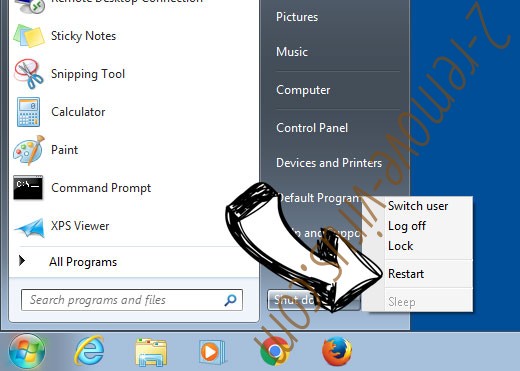
- Click on Start and select Shutdown.
- Choose Restart and click OK.
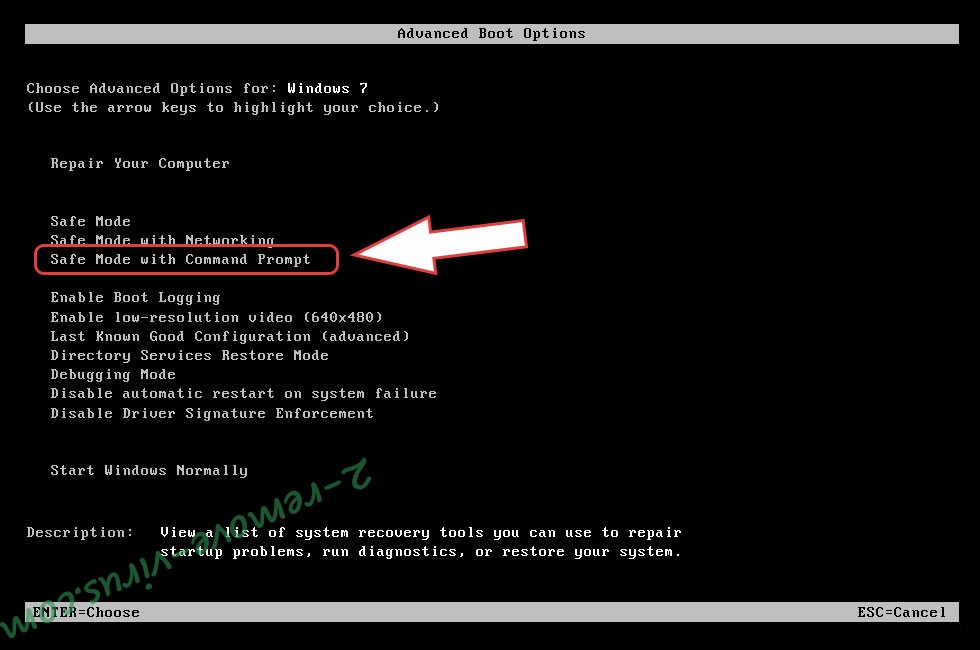
- Start tapping F8 when your PC starts loading.
- Under Advanced Boot Options, choose Safe Mode with Networking.
- Open your browser and download the anti-malware utility.
- Use the utility to remove xHIlEgqxx ransomware
Remove xHIlEgqxx ransomware from Windows 8/Windows 10
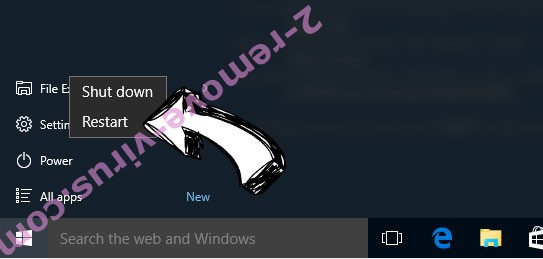
- On the Windows login screen, press the Power button.
- Tap and hold Shift and select Restart.
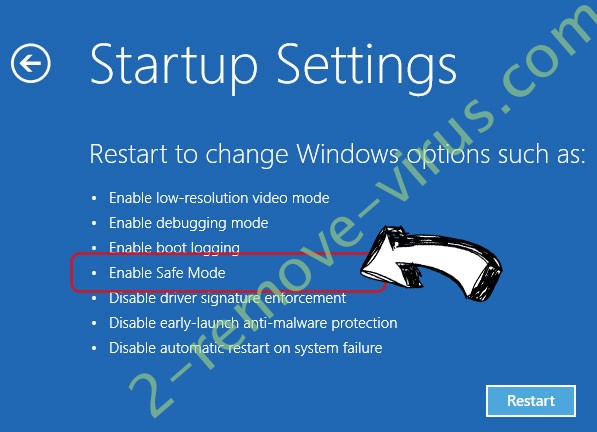
- Go to Troubleshoot → Advanced options → Start Settings.
- Choose Enable Safe Mode or Safe Mode with Networking under Startup Settings.
- Click Restart.
- Open your web browser and download the malware remover.
- Use the software to delete xHIlEgqxx ransomware
Step 2. Restore Your Files using System Restore
Delete xHIlEgqxx ransomware from Windows 7/Windows Vista/Windows XP
- Click Start and choose Shutdown.
- Select Restart and OK
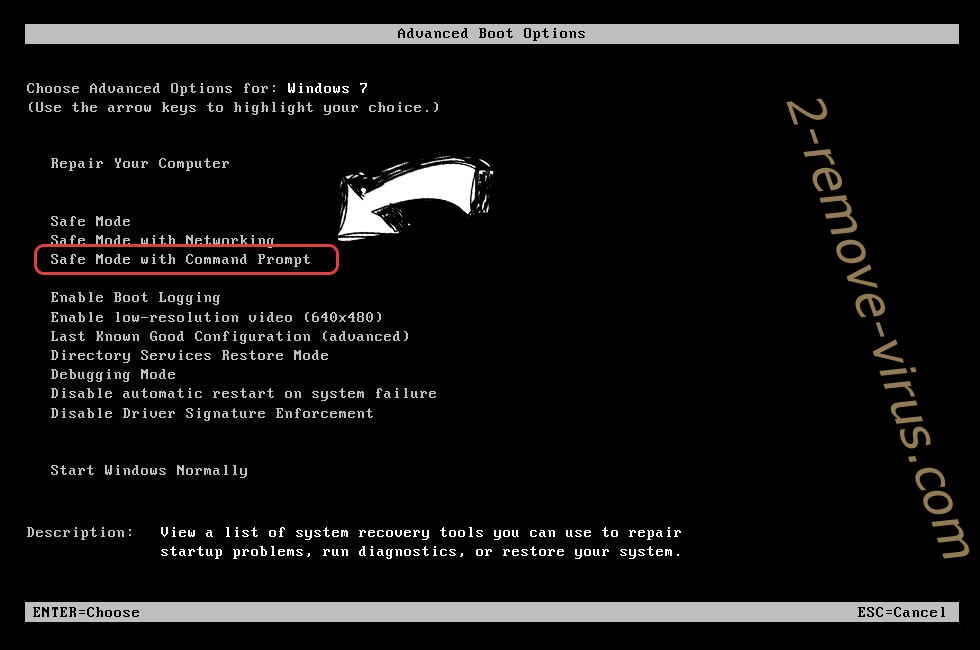
- When your PC starts loading, press F8 repeatedly to open Advanced Boot Options
- Choose Command Prompt from the list.
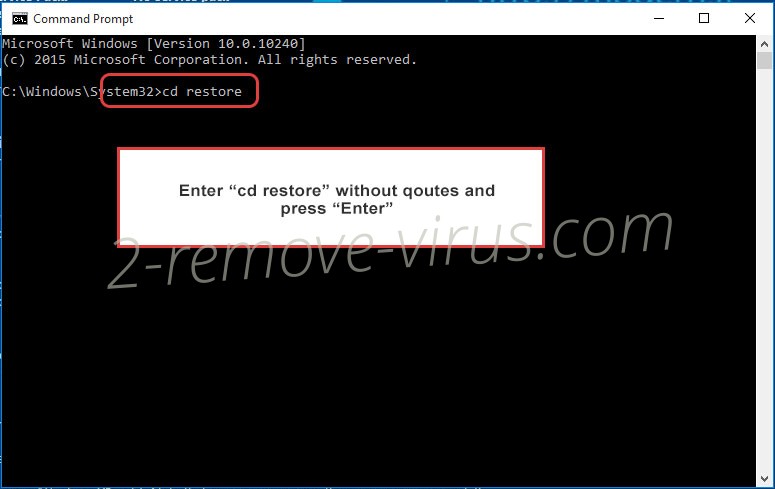
- Type in cd restore and tap Enter.
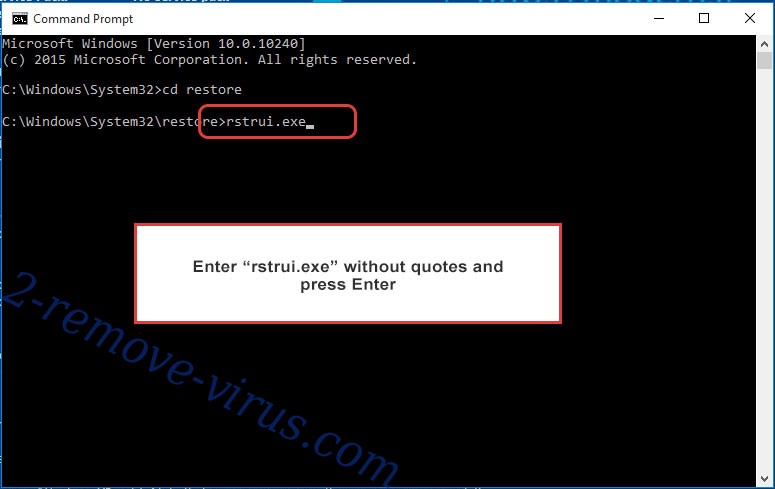
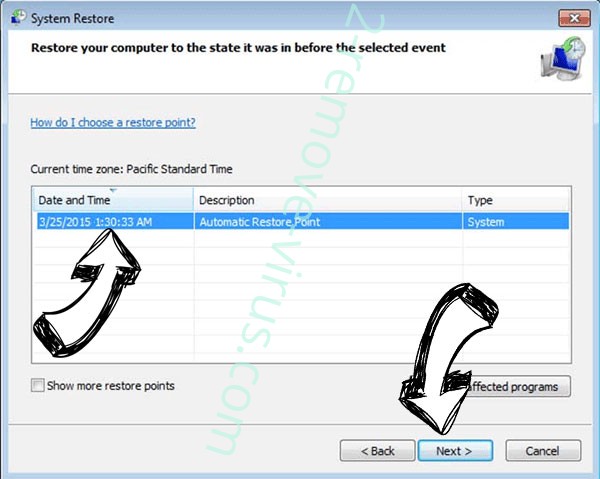
- Type in rstrui.exe and press Enter.
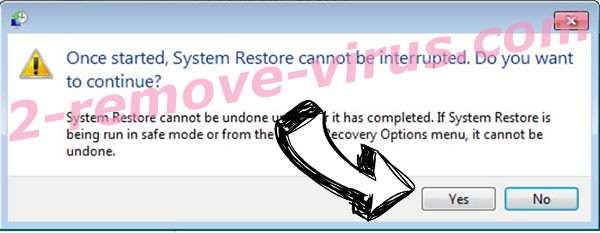
- Click Next in the new window and select the restore point prior to the infection.
- Click Next again and click Yes to begin the system restore.
Delete xHIlEgqxx ransomware from Windows 8/Windows 10
- Click the Power button on the Windows login screen.
- Press and hold Shift and click Restart.
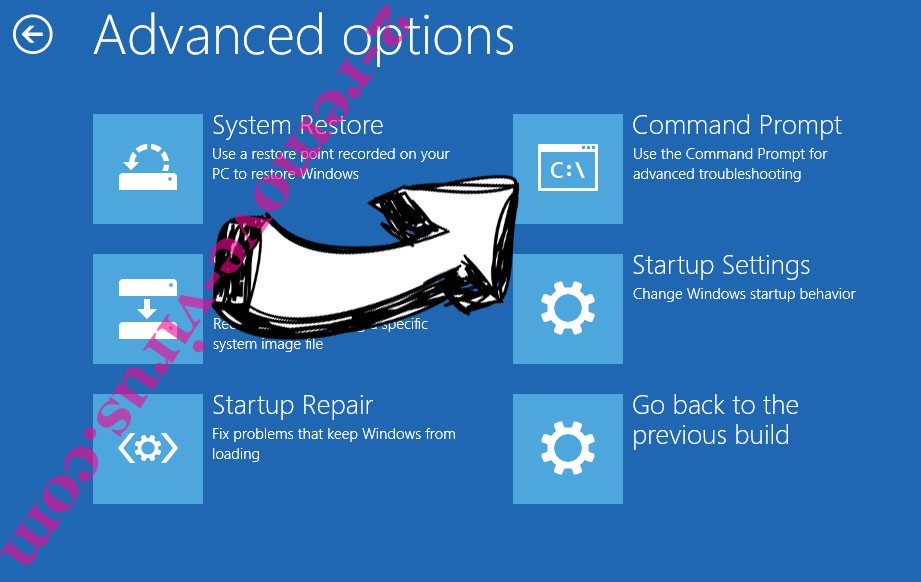
- Choose Troubleshoot and go to Advanced options.
- Select Command Prompt and click Restart.
- In Command Prompt, input cd restore and tap Enter.
- Type in rstrui.exe and tap Enter again.
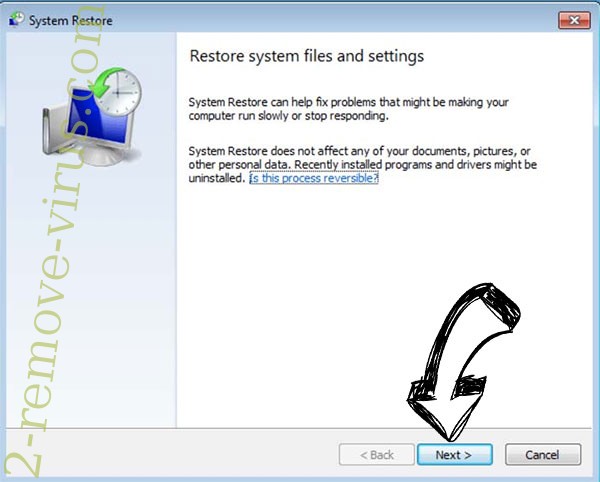
- Click Next in the new System Restore window.
- Choose the restore point prior to the infection.
- Click Next and then click Yes to restore your system.
Site Disclaimer
2-remove-virus.com is not sponsored, owned, affiliated, or linked to malware developers or distributors that are referenced in this article. The article does not promote or endorse any type of malware. We aim at providing useful information that will help computer users to detect and eliminate the unwanted malicious programs from their computers. This can be done manually by following the instructions presented in the article or automatically by implementing the suggested anti-malware tools.
The article is only meant to be used for educational purposes. If you follow the instructions given in the article, you agree to be contracted by the disclaimer. We do not guarantee that the artcile will present you with a solution that removes the malign threats completely. Malware changes constantly, which is why, in some cases, it may be difficult to clean the computer fully by using only the manual removal instructions.