

California lawmakers are considering legislation that would restrict the use of smart glasses and other wearable recording devices in businesses where people have a reasonable expectation of privacy.
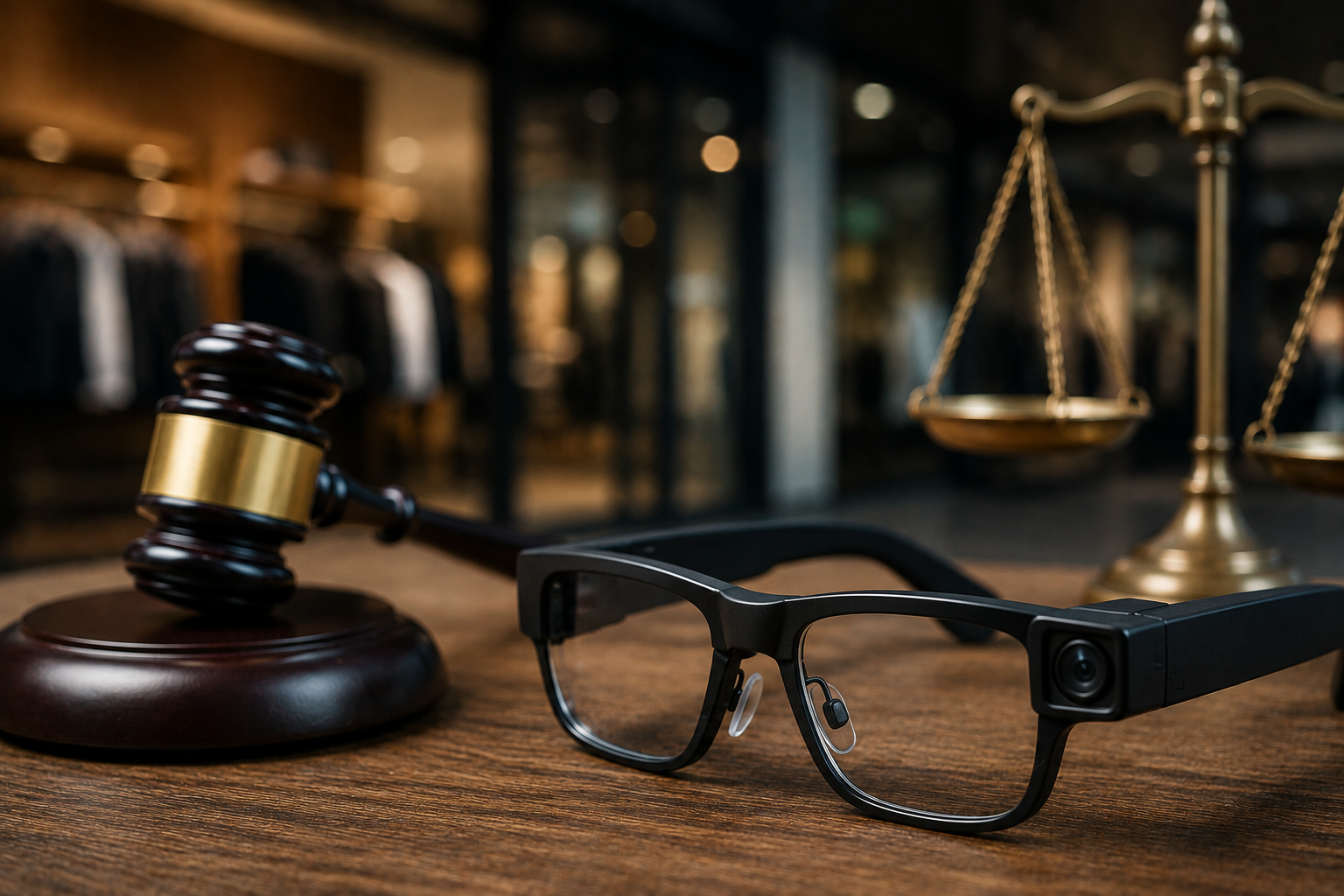
Senate Bill 1130, introduced by Democratic Senator Eloise Gómez Reyes with bipartisan support, would make it illegal to intentionally record another person’s audio or video using a wearable device in covered areas without that person’s explicit consent. Lawmakers face an August 31, 2026 deadline to vote on active legislation.
The proposal applies to recording technology designed to be worn on or attached to the body rather than held by the user. This definition puts devices such as camera-equipped smart glasses at the center of the legislation while apparently excluding conventional smartphones.
SB 1130 would also prohibit users from disabling lights, sounds, or other indicators designed to inform nearby people that recording is taking place. Violations could result in a fine of up to $1,500, imprisonment in a county jail for up to one year, or both.
The legislation would additionally affect manufacturers and sellers. Wearable recording devices would need an indicator sufficiently noticeable to alert nearby individuals when audio or video is being captured. If the bill becomes law, the proposed restriction on manufacturing and selling devices without such indicators would take effect on January 1, 2028.
One of the more complicated elements is determining precisely where someone has a “reasonable expectation of privacy.” California law already applies the concept to locations including bathrooms, bedrooms, fitting rooms, dressing rooms, changing rooms, and tanning booths. SB 1130, however, applies specifically to qualifying spaces within a “place of business,” defined as a physical office or retail establishment where the public receives goods or services.
Criminal defense attorney Joel Brand has pointed to an important distinction between the proposal and existing provisions of California’s Penal Code. According to Brand, SB 1130 does not require someone to have intended to invade another person’s privacy for the consent requirement to be violated. This could make its application broader than situations involving deliberately concealed recording.
Another unresolved issue is what constitutes explicit consent. Brand argues that the wording may make it difficult to assume that simply displaying a notice and receiving no objection would satisfy the requirement.
Privacy attorney Cobun Zweifel-Keegan has similarly noted that a reasonable expectation of privacy depends heavily on context. While that flexibility allows the law to account for different situations, it could also produce uncertainty over which areas of a business qualify and how individual businesses should apply the rules.
The proposal does not establish a general prohibition on recording with smart glasses in public. That distinction is significant because restrictions on recording in ordinary public spaces can raise First Amendment concerns.
The California debate comes as governments and institutions elsewhere introduce their own restrictions on wearable cameras. New York State courts have prohibited smart glasses and other recording-equipped eyewear and headwear, while judicial buildings in England and Wales have also introduced restrictions on the devices.
California’s proposal instead focuses on recording in specific business environments, consent, and visible recording indicators. Whether SB 1130 becomes law will depend on its progress through the legislature before the August 31 deadline.