

A bipartisan group of US lawmakers has unveiled draft legislation that would establish federal oversight requirements for developers of advanced artificial intelligence models while temporarily preventing states from enforcing their own laws governing AI model development.
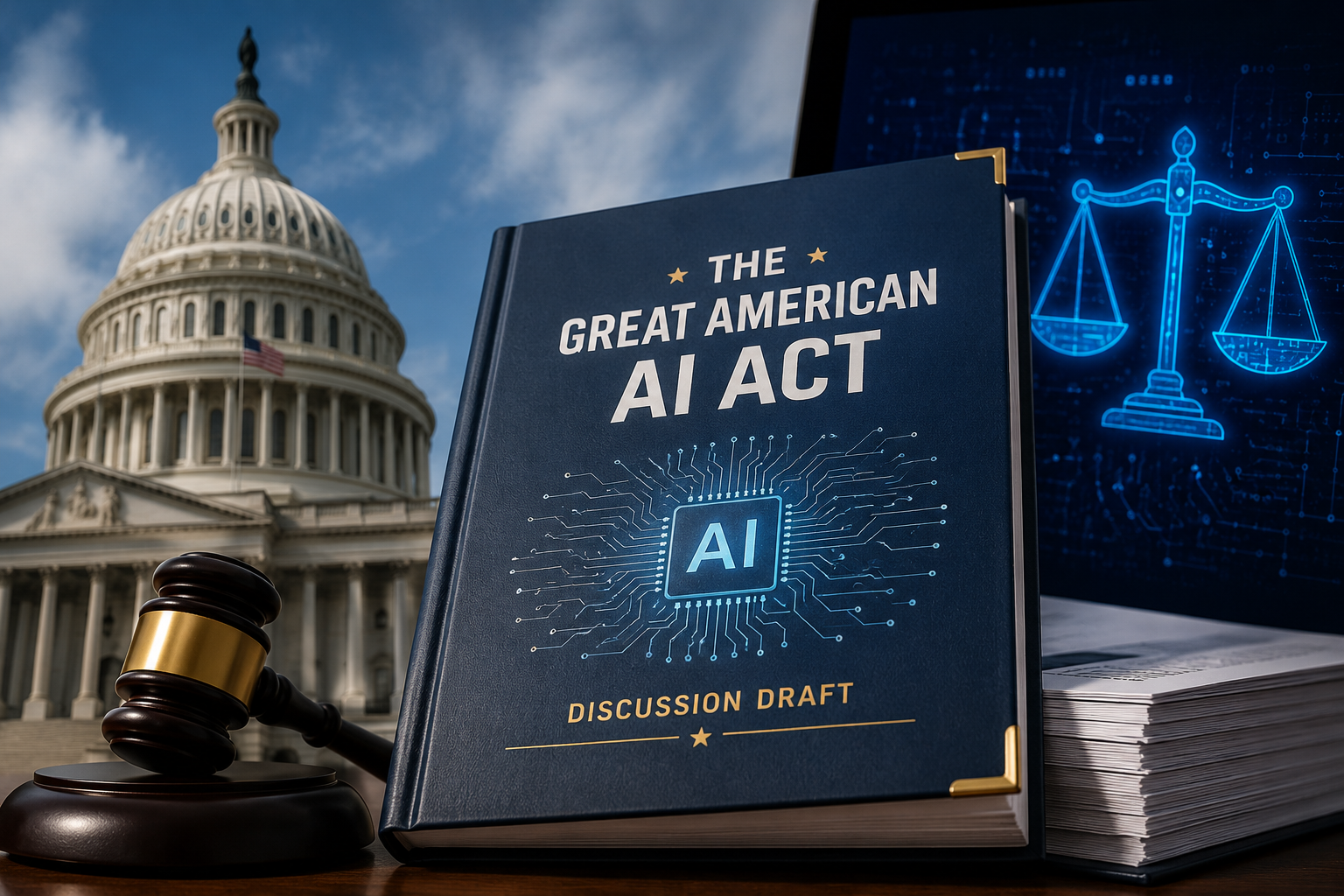
The proposal, known as the Great American AI Act, would create a national framework for frontier AI systems, including reporting requirements, audits, cybersecurity obligations, and worker protections. If enacted, the legislation would also preempt certain state-level AI model regulations for three years, leaving Washington responsible for setting rules governing the development of the most advanced AI systems.
The release of the draft comes days after President Donald Trump signed an executive order focused on advanced AI innovation and security. Both efforts emphasize federal coordination and cooperation with private industry as the United States seeks to expand AI development while addressing security and safety concerns associated with increasingly capable models.
The discussion draft was released by Representatives Lori Trahan and Jay Obernolte, along with Representatives Suhas Subramanyam, Scott Franklin, Scott Peters, and Erin Houchin. Lawmakers said the proposal is being published to gather feedback from industry participants, researchers, workers, and the public before formal introduction in Congress.
Under the proposal, developers of large frontier AI models would be required to publish and implement plans addressing catastrophic risks, report critical safety incidents, and undergo independent audits.
The draft defines a critical safety incident as events including unauthorized access to, modification of, or exfiltration of frontier model weights, failures of risk-mitigation measures, or loss of control of a frontier model.
Developers would be required to report critical safety incidents within 15 days of discovery. Incidents presenting an imminent risk of death or serious physical injury would have to be reported within 24 hours to law enforcement authorities.
Companies that fail to comply with reporting requirements could face civil penalties of up to $1 million per violation, with continuing violations treated as separate offenses for each day they remain unresolved.
The legislation would place oversight responsibilities within a new federal structure responsible for developing AI safety standards, cybersecurity requirements, reporting deadlines, and risk-management practices for frontier AI systems.
A central component of the proposal would prevent states from enforcing laws that specifically regulate AI model development. According to the draft, states would be barred from establishing or maintaining separate regulatory requirements governing the development of AI models while the federal framework remains in effect.
The proposal would not prevent states from regulating how AI systems are used after deployment. State governments would retain authority over areas including labor protections, civil rights, privacy, copyright, and child sexual abuse material enforcement.
The preemption provision would automatically expire three years after enactment unless Congress extends it.
The draft also includes workforce-related provisions requiring frontier AI developers to implement whistleblower protections and conduct assessments examining how advanced AI systems could affect jobs, labor demand, and economic conditions in critical sectors.